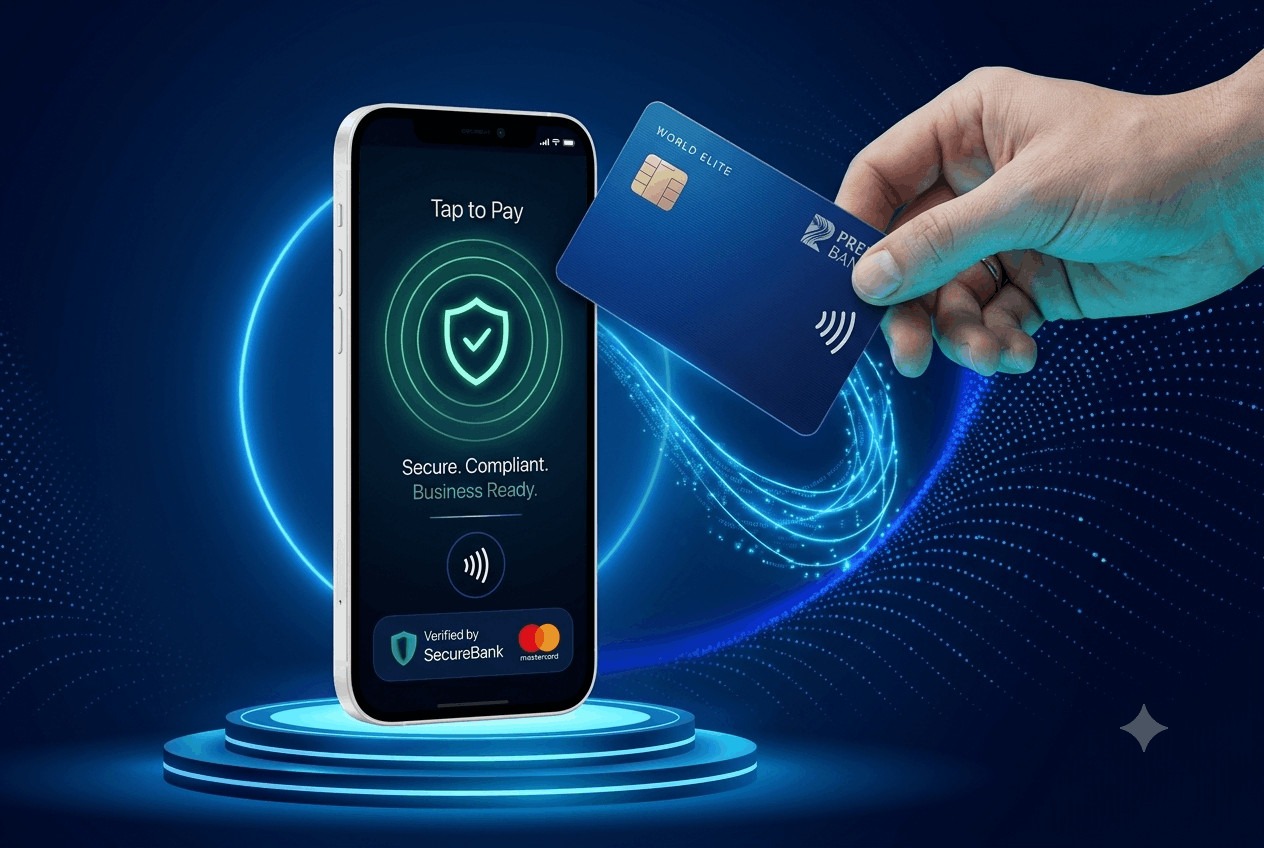
The global payments industry is rapidly evolving toward contactless, mobile-first, and software-driven commerce experiences. Businesses across banking, fintech, retail, transportation, logistics, hospitality, and enterprise commerce are increasingly replacing traditional hardware POS terminals with Software Point-of-Sale (SoftPoS) platforms that enable secure payment acceptance directly on Android smartphones and tablets.
SoftPoS technology transforms NFC-enabled Android devices into secure payment terminals capable of accepting contactless cards, mobile wallets, and wearable payments without requiring dedicated payment hardware. This innovation significantly reduces infrastructure costs, accelerates merchant onboarding, and expands digital payment accessibility for businesses of all sizes.
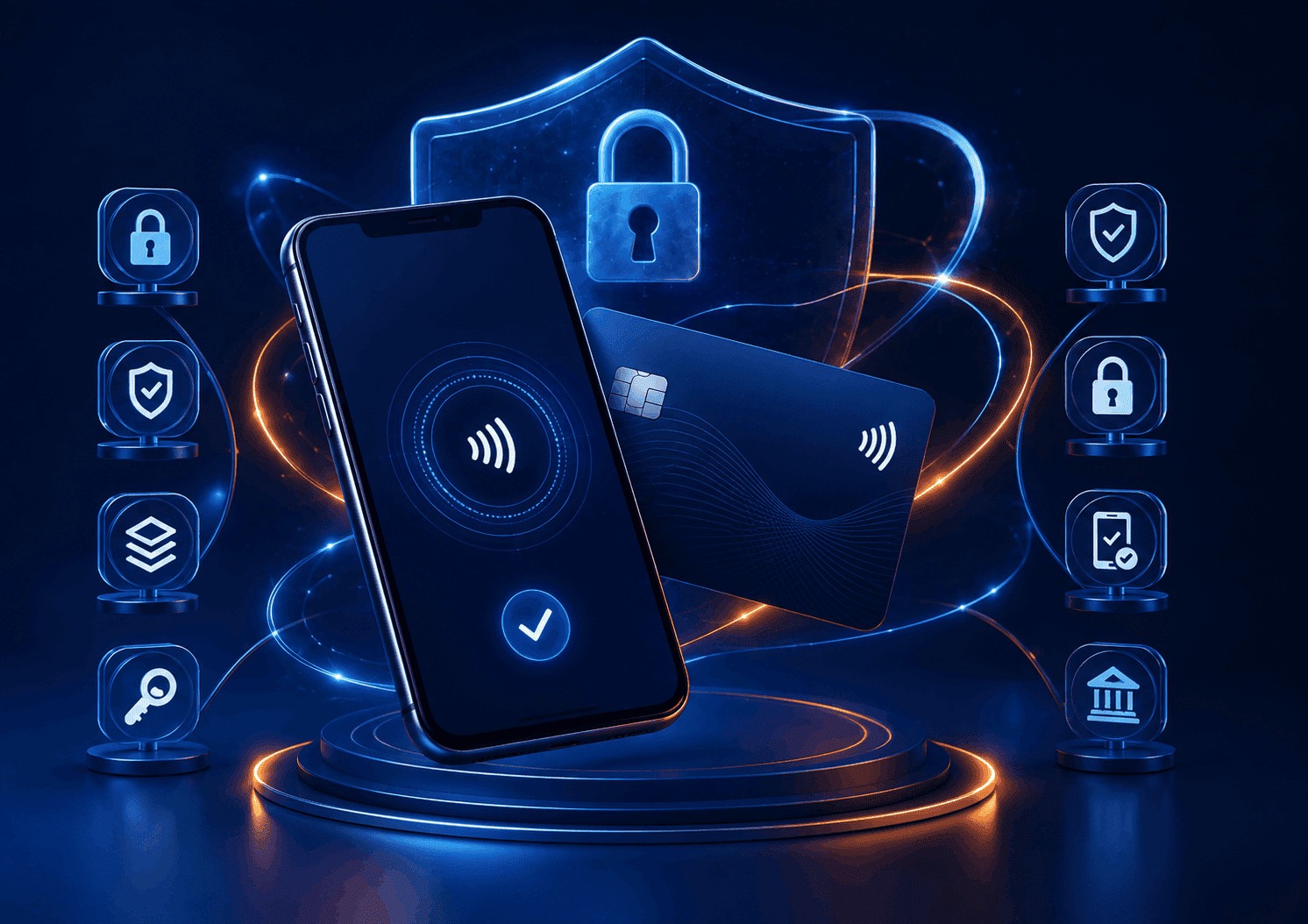
Modern enterprise-grade SoftPoS platforms are designed using cloud-native architecture, AI-powered fraud prevention, advanced cryptographic security, real-time device attestation, and intelligent transaction routing while maintaining compliance with global standards such as PCI MPoC, PCI DSS, and EMVCo.
Unlike traditional payment infrastructures that rely on expensive hardware deployment and operational maintenance, SoftPoS ecosystems combine Android mobility, secure transaction orchestration, and intelligent middleware to create highly scalable payment environments capable of supporting millions of secure digital transactions daily.
As contactless commerce continues growing globally, SoftPoS platforms are becoming the foundation of next-generation payment acceptance.
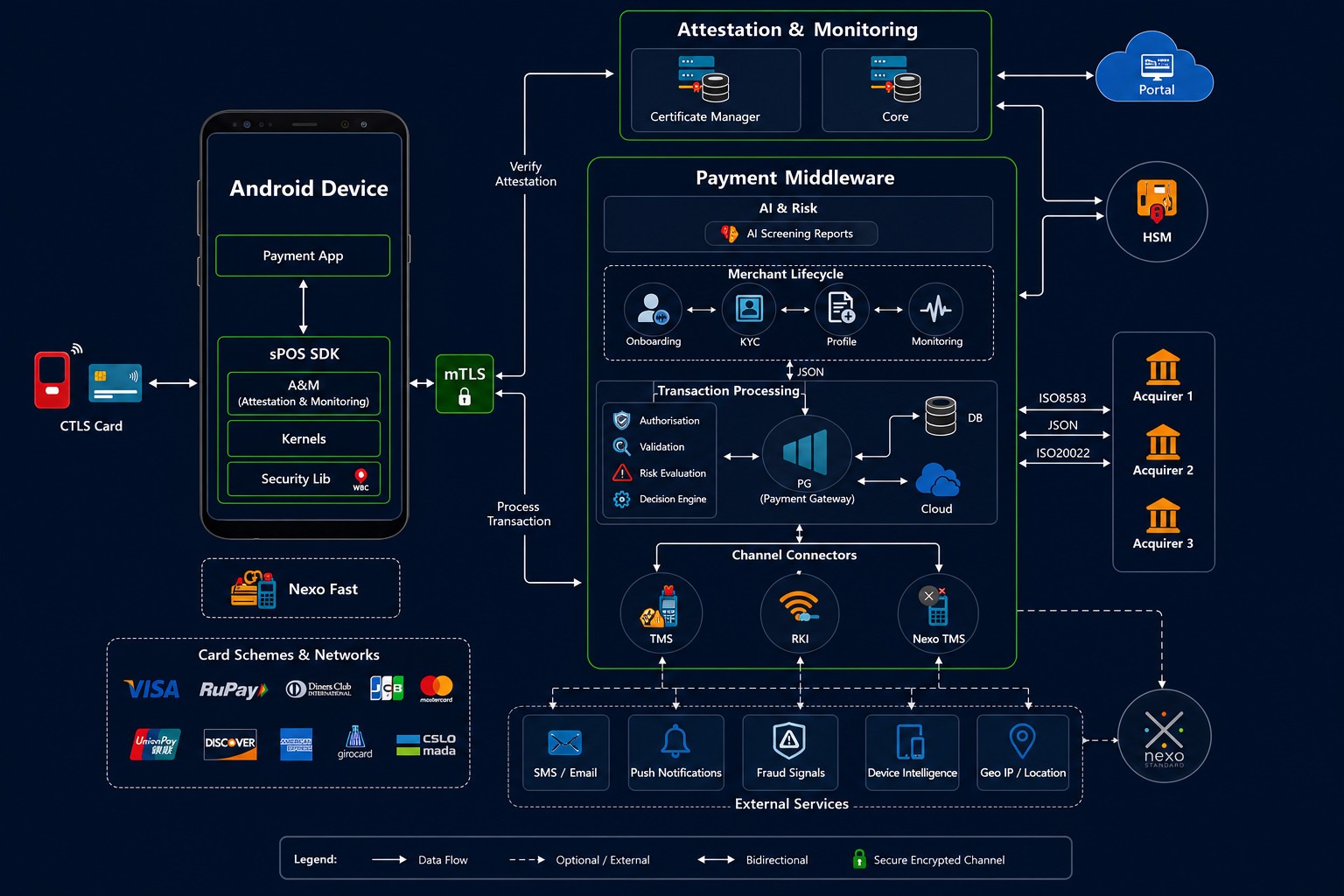
Android Device Layer – Enabling Mobile Payment Acceptance
At the core of the SoftPoS ecosystem is the Android Device Layer, where merchants process contactless transactions using NFC-enabled smartphones and tablets.
This layer eliminates the dependency on traditional POS hardware and enables businesses to deploy payment capabilities rapidly across retail stores, delivery fleets, transportation services, restaurants, field sales operations, and small business environments using commercially available Android devices.
By transforming ordinary smartphones into payment terminals, SoftPoS improves operational flexibility while reducing deployment complexity and hardware costs.
Payment Application
The Payment Application serves as the merchant-facing interface responsible for managing the complete payment experience. It handles transaction initiation, payment confirmation, digital receipt generation, refunds, reversals, and transaction history management.
Core capabilities include:
- Capturing transaction amounts
- Initiating contactless payment requests
- Displaying approval and decline responses
- Generating SMS and email receipts
- Managing refunds and reversals
- Merchant authentication and session management
- Synchronizing securely with backend systems
A streamlined payment experience improves customer satisfaction, merchant adoption, and transaction efficiency.
NFC Technology for Contactless Payments
Near Field Communication (NFC) technology enables Android devices to function as secure contactless payment readers. When customers tap a contactless card, smartphone, or wearable device against the merchant device, encrypted payment data is exchanged securely for authorization processing.
Supported payment methods include:
- Contactless credit cards
- Contactless debit cards
- Mobile wallets such as Google Pay and Apple Pay
- NFC-enabled smart watches and wearable devices
- Corporate and prepaid payment cards
NFC eliminates the need for external card readers, enabling merchants to accept payments virtually anywhere using only a smartphone and the SoftPoS application.
SoftPoS SDK Layer – The Security and Transaction Core
The SoftPoS SDK represents the technological foundation of the ecosystem. It delivers secure transaction processing, EMV communication, runtime monitoring, cryptographic protection, and compliance enforcement required for operating safely on commercial Android devices.
Without the SDK layer, payment applications would lack the advanced security controls necessary for regulated payment environments.
Attestation and Monitoring Framework
The Attestation and Monitoring framework continuously validates whether the Android device remains secure before allowing transactions to proceed.
Because SoftPoS operates on consumer-grade smartphones instead of dedicated PCI-certified terminals, device trust validation becomes critical for preventing fraud, malware attacks, and unauthorized modifications.
Key security capabilities include:
- Root and jailbreak detection
- Emulator identification
- Malware scanning
- Runtime behavior monitoring
- Operating system integrity verification
- Device tampering analysis
- Threat telemetry generation
This continuous monitoring approach ensures compromised devices are identified before sensitive payment data becomes vulnerable.
EMV Kernel Integration
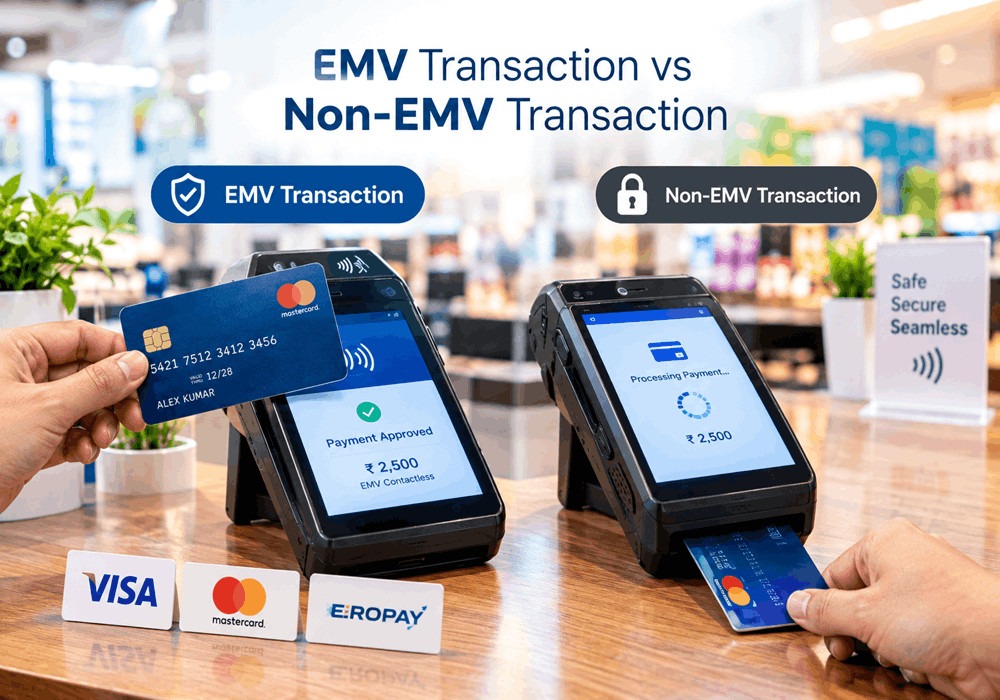
EMV Kernels manage communication with payment cards and ensure interoperability with global card schemes including Visa, Mastercard, RuPay, Discover, American Express, and JCB.
Their responsibilities include:
- Reading EMV card data
- Card authentication
- Cardholder verification
- Cryptogram generation
- Online and offline transaction processing
- Terminal risk management
Certified EMV kernels are essential for secure and compliant global payment acceptance.
Security Library and Cryptographic Protection
The Security Library protects payment information, certificates, authentication credentials, and transaction payloads through advanced cryptographic security.
Core security functions include:
- End-to-end encryption
- Secure key management
- Certificate management
- Cryptographic signing and validation
- Tokenization support
- Anti-tampering protection
This layered approach ensures sensitive financial data remains secure throughout the transaction lifecycle.
Mutual TLS Layer – Secure Communication Infrastructure
The Mutual TLS (mTLS) layer establishes encrypted and authenticated communication channels between Android devices and backend payment systems.
Unlike traditional TLS, which validates only the server identity, mTLS performs bidirectional authentication using digital certificates, ensuring both the client device and backend server are trusted before communication begins.
Benefits of mTLS include:
- Prevention of man-in-the-middle attacks
- Blocking unauthorized device communication
- Protection of transaction payloads
- Secure API connectivity
- Certificate-based authentication
Because payment traffic often travels across public mobile networks, encrypted communication is essential for maintaining transaction integrity and data confidentiality.
Backend Attestation and Monitoring Infrastructure
The backend attestation infrastructure functions as the centralized trust management system responsible for monitoring device integrity, analyzing telemetry, enforcing compliance policies, and maintaining operational visibility across deployed SoftPoS devices.
Certificate Manager
The Certificate Manager controls the lifecycle of digital certificates used for secure communication and device authentication.
Responsibilities include:
- Certificate issuance and renewal
- Revocation of compromised certificates
- Trust chain management
- Public key management
- Certificate rotation enforcement
This ensures only trusted devices are authorized to communicate with payment infrastructure.
Monitoring Core
The Monitoring Core continuously analyzes telemetry generated by deployed devices to identify suspicious behavior, operational anomalies, and fraud indicators.
Capabilities include:
- Device health monitoring
- Runtime anomaly detection
- Fraud intelligence analysis
- Security event monitoring
- Compliance validation
- Risk score generation
This real-time visibility helps payment operators proactively identify threats and maintain ecosystem integrity.
Payment Middleware and Transaction Processing
The Payment Middleware Layer acts as the operational brain of the SoftPoS ecosystem. It coordinates merchant onboarding, fraud prevention, transaction routing, backend integrations, and operational workflows.
AI-Powered Risk and Fraud Prevention
The AI-driven Risk Engine continuously evaluates transaction behavior, merchant activity, device intelligence, and geolocation patterns to detect fraudulent activity before financial losses occur.
Capabilities include:
- Transaction risk scoring
- Behavioral analytics
- Velocity monitoring
- Device anomaly detection
- Merchant risk profiling
- Fraud pattern identification
AI-powered fraud prevention significantly improves detection accuracy while minimizing false transaction declines.
Merchant Lifecycle Management
Merchant Lifecycle Management governs the operational journey of merchants from onboarding to ongoing compliance monitoring.
Core processes include:
- Merchant registration
- KYC verification
- Settlement configuration
- Device mapping
- Compliance monitoring
- Fraud and chargeback analysis
Efficient lifecycle management accelerates merchant acquisition and improves operational scalability.
Transaction Processing Layer
The Transaction Processing Layer validates, routes, authorizes, and completes payment transactions securely and efficiently.
Core functions include:
- Authorization request processing
- Acquirer connectivity management
- Transaction validation
- Smart routing and failover management
- Load balancing and retry orchestration
The platform also supports multiple acquiring banks using ISO8583, ISO20022, and JSON-based integrations to improve authorization success rates and operational resilience.
HSM Security and External Integrations
The Hardware Security Module (HSM) layer provides tamper-resistant cryptographic protection for highly sensitive payment operations including key generation, PIN encryption, certificate signing, and tokenization.
HSM infrastructure is essential for maintaining PCI compliance and protecting critical payment assets.
SoftPoS platforms also integrate with external services such as:
- SMS and email notification systems
- Push notification platforms
- Fraud intelligence providers
- Device intelligence services
- Geo-location platforms
These integrations create a more intelligent and responsive payment ecosystem.
Benefits of Enterprise SoftPoS Platforms
Enterprise-grade SoftPoS solutions provide several strategic advantages for banks, fintech providers, acquirers, and merchants.
Key benefits include:
- Reduced hardware and maintenance costs
- Faster merchant onboarding
- Improved payment accessibility
- Enhanced transaction security
- Better operational scalability
- Increased transaction success rates
- Support for mobile-first commerce
SoftPoS enables businesses to modernize payment infrastructure while reducing operational complexity.
The Future of SoftPoS and Tap-on-Phone Payments
The future of payment acceptance is increasingly software-defined, mobile-driven, and AI-powered.
As contactless commerce continues growing worldwide, SoftPoS platforms will play a central role in enabling secure and scalable payment ecosystems across retail, transportation, fintech, healthcare, and enterprise commerce sectors.
Emerging technologies such as AI-based fraud intelligence, cloud-native orchestration, real-time analytics, and advanced device trust management will continue strengthening SoftPoS capabilities and expanding global adoption.
Organizations investing in enterprise-grade SoftPoS ecosystems today will be strategically positioned to lead the next generation of digital payment innovation.
SoftPoS represents the future of digital payment acceptance in a world increasingly driven by mobility, scalability, and contactless commerce.
By combining Android mobility, EMV processing, AI-powered fraud prevention, intelligent middleware, device attestation, and advanced cryptographic protection into a unified ecosystem, SoftPoS platforms enable organizations to modernize payment infrastructure while significantly reducing deployment costs and operational complexity.
For banks, fintech companies, acquirers, and enterprise merchants, SoftPoS offers a secure and scalable foundation for delivering frictionless payment experiences across modern digital commerce environments.
As consumer demand for tap-to-pay experiences continues to rise globally, organizations adopting enterprise-grade SoftPoS solutions today will be well-positioned to lead the future of intelligent payment acceptance.
EazyPay Tech delivers secure and scalable payment solutions for banks, fintechs, and enterprises with advanced:
- SoftPoS Solutions
- EMV Kernel Development
- EMV Certification Services
From Tap-on-Phone technology to globally compliant EMV payment infrastructure, we help businesses accelerate digital payment innovation with enterprise-grade security and seamless payment experiences.
Partner with EazyPay Tech to power the next generation of contactless commerce.