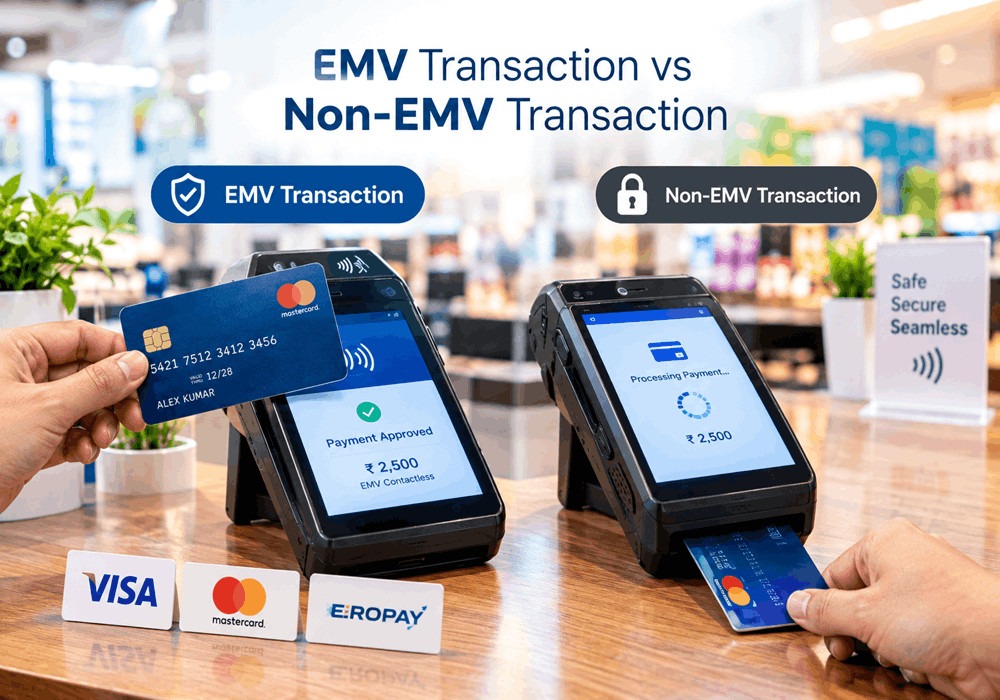


In the rapidly evolving global payments landscape, where digital transactions are becoming the backbone of commerce and financial inclusion, the importance of achieving robust, secure, and compliant payment infrastructure has never been more critical. At the heart of this infrastructure lies EMV Certification, a globally recognized framework that ensures payment devices, applications, and transaction flows adhere to strict standards of security, interoperability, and reliability.
As payment technologies continue to advance driven by innovations such as SoftPOS, Tap-to-Phone, NFC-enabled smartphones, QR-based transactions, and integrated payment soundbox solutions the certification process has become significantly more complex and layered. Organizations are no longer dealing with simple card-present environments; instead, they must validate multi-channel transaction flows, multi-scheme acceptance, and real-time processing capabilities across diverse hardware and software ecosystems.
Despite its critical importance, EMV certification is widely regarded as one of the most challenging and time-consuming phases in the payment product lifecycle. For many organizations, it becomes a bottleneck that delays product launches, increases operational costs, and ultimately impacts revenue generation and market competitiveness.
This blog provides a comprehensive, expert-level exploration of the most common EMV certification bottlenecks and, more importantly, outlines actionable, technically sound strategies to overcome them efficiently and accelerate time-to-market.
EMV Certification: A Multi-Layered Compliance Framework
Before diving into bottlenecks and solutions, it is essential to understand the layered structure of EMV certification, governed by EMVCo, which defines the specifications and testing requirements for payment systems worldwide.
EMV Level 1 (L1): Physical and Electrical Compliance
EMV Level 1 certification focuses on the physical characteristics of the payment device, including electrical signals, card interface compatibility, and communication protocols. This level ensures that the device can reliably detect and communicate with chip cards, contactless cards, or NFC-enabled devices under various environmental and operational conditions.
EMV Level 2 (L2): Kernel-Level Transaction Processing
EMV Level 2 certification validates the functionality and compliance of the EMV Kernel, which is responsible for managing transaction logic, application selection, card authentication, risk management, and cryptographic operations. This is often considered the most complex stage due to the intricate decision-making logic involved.
EMV Level 3 (L3): End-to-End Transaction Validation
EMV Level 3 certification ensures that the entire transaction flowfrom card interaction to host communication—is functioning correctly. It validates integration between the terminal application, EMV kernel, and backend host systems, ensuring real-world transaction scenarios are handled accurately.
Each of these levels introduces its own technical challenges, dependencies, and potential delays, making the certification journey a multi-dimensional process that requires careful planning and execution.
The Real Business Impact of EMV Certification Bottlenecks
While EMV certification is a technical process, its implications are deeply rooted in business outcomes. Delays in certification can have cascading effects across the organization, impacting product timelines, partnerships, and revenue streams.
In highly competitive markets such as Southeast Asia, Africa, and the Middle East—where digital payment adoption is accelerating rapidly—being late to market can result in lost opportunities that are difficult to recover. Fintech companies and OEMs that fail to achieve timely certification often struggle to secure partnerships with banks, payment processors, and acquirers, as compliance is a non-negotiable requirement.
Moreover, repeated certification failures can significantly increase development and testing costs, as teams must invest additional time and resources into debugging, rework, and retesting. This not only affects profitability but also places additional pressure on engineering and product teams.
Key EMV Certification Bottlenecks Explained in Detail
- Inefficient EMV Kernel Development and Integration
One of the most critical bottlenecks in the certification process is the development and integration of the EMV Kernel. Since the kernel serves as the core engine of transaction processing, any inefficiencies, inaccuracies, or non-compliance issues can lead to repeated test failures.
Organizations that attempt to build kernels in-house without deep domain expertise often encounter challenges such as incomplete support for card schemes, incorrect implementation of transaction flows, and improper handling of edge cases. These issues typically surface during Level 2 testing, resulting in multiple iterations and prolonged timelines.
- Lack of Structured Pre-Certification Testing
Another major bottleneck is the absence of a well-defined pre-certification testing strategy. Many organizations rely heavily on certification labs for validation, sending their devices for testing without conducting comprehensive internal testing.
This approach leads to high failure rates during official testing, as issues that could have been identified early remain unresolved. The result is a cycle of testing, failure, debugging, and retesting, which significantly delays the certification process.
- Misinterpretation of EMV Specifications
EMV specifications are highly detailed and require precise interpretation. Even minor misunderstandings can lead to incorrect implementation of critical functionalities such as card authentication methods (SDA, DDA, CDA), risk management parameters, and transaction decision logic.
Without expert guidance, development teams may inadvertently introduce compliance gaps that only become apparent during certification testing, leading to costly rework.
- Integration Challenges Between Kernel and Application Layers
The EMV kernel must seamlessly integrate with the terminal application, user interface, and hardware components. Any inconsistencies in data exchange, API communication, or transaction state management can cause failures during Level 3 testing.
These integration challenges are often complex to diagnose, as they involve interactions between multiple system components, making debugging time-consuming and resource-intensive.
- Limited Access to Certification Labs and Scheduling Delays
Certification labs operate under high demand, and securing testing slots can be challenging, especially during peak periods. Organizations that do not plan their certification timelines in advance may face significant delays due to limited lab availability.
Additionally, communication gaps between development teams and certification labs can further slow down the process, as feedback cycles become longer and less efficient.
- Frequent Updates from EMVCo and Scheme Requirements
The EMV ecosystem is continuously evolving, with EMVCo releasing updates, bulletins, and new requirements that must be incorporated into certified solutions.
Organizations that fail to stay updated with these changes risk non-compliance, which may require re-certification or additional testing, further extending timelines.
- Inadequate Debugging Tools and Documentation
Effective debugging is essential for resolving certification issues quickly. However, many organizations lack detailed logging mechanisms, structured documentation, and traceability, making it difficult to identify root causes of failures.
This results in longer issue resolution times and increased dependency on certification labs for troubleshooting.
Proven Strategies to Accelerate EMV Certification
- Adopt Pre-Certified EMV Kernel Solutions
Leveraging pre-certified and field-proven EMV kernels can significantly reduce development complexity and certification timelines. These solutions are already validated against EMV standards, minimizing the risk of failures during testing.
- Implement Comprehensive Pre-Certification Testing Frameworks
Organizations should invest in robust internal testing frameworks that simulate real-world transaction scenarios. This includes executing full EMV test case suites, validating edge cases, and ensuring compliance before submitting devices for certification.
- Engage EMV Experts and Certification Consultants
Collaborating with experienced EMV consultants can provide valuable insights into specification interpretation, debugging strategies, and certification workflows. This expertise can greatly improve first-time pass rates.
- Optimize Kernel Performance and Transaction Flow
Performance optimization plays a crucial role in certification success. Efficient transaction processing, reduced latency, and optimized cryptographic operations contribute to smoother testing and better user experience.
- Conduct Early and Continuous Integration Testing
Instead of waiting until the final stages, organizations should perform integration testing early in the development cycle. This includes validating communication between the kernel, application, and host systems to identify issues proactively.
- Plan Certification Timelines and Lab Engagement Strategically
Advance planning is key to avoiding delays. Organizations should book certification lab slots early, prepare test-ready builds, and maintain clear communication with labs throughout the process.
- Stay Updated with EMVCo and Scheme Requirements
Regularly monitoring updates from EMVCo ensures that solutions remain compliant with the latest standards, reducing the risk of rework and re-certification.
- Enhance Logging, Debugging, and Documentation Practices
Implementing detailed logging mechanisms and maintaining structured documentation can significantly improve debugging efficiency and reduce certification timelines.
Advanced Optimization Techniques for Faster Certification
Parallel Development and Testing
Adopting parallel workflows allows organizations to develop and test multiple components simultaneously, reducing overall project timelines.
Automation in EMV Testing
Automation tools can streamline test execution, improve accuracy, and reduce manual effort, enabling faster identification and resolution of issues.
Global Certification Strategy for Multi-Market Deployment
For organizations targeting multiple regions, a strategic approach to certification can help reuse artifacts, align with regional requirements, and minimize duplication of efforts.
The Future of EMV Certification in a Digital-First World
As the payments industry continues to evolve, EMV certification will remain a critical requirement for ensuring secure and interoperable transactions. However, the increasing adoption of software-based payment solutions, mobile acceptance technologies, and real-time payment systems will further complicate the certification landscape.
Organizations that invest in robust certification strategies, advanced testing frameworks, and expert partnerships will be better positioned to navigate these challenges and capitalize on emerging opportunities.
EMV certification does not have to be a bottleneck. With the right approach, tools, and expertise, it can become a strategic enabler that accelerates product launches, enhances customer trust, and drives business growth.
By addressing common bottlenecks, implementing best practices, and adopting a proactive certification strategy, organizations can significantly reduce timelines and achieve faster market entry.
If you are facing challenges with EMV certification, integration, or testing, now is the time to take action.
At EazyPayTech, we specialize in:
- End-to-end EMV L1, L2, and L3 certification support
- Pre-certified EMV Kernel solutions
- Advanced testing and debugging frameworks
- Global compliance and consulting services
Accelerate your certification process, Reduce time-to-market,
Gain a competitive edge in the payments industry
Contact us today to transform your EMV certification journey into a success story.