
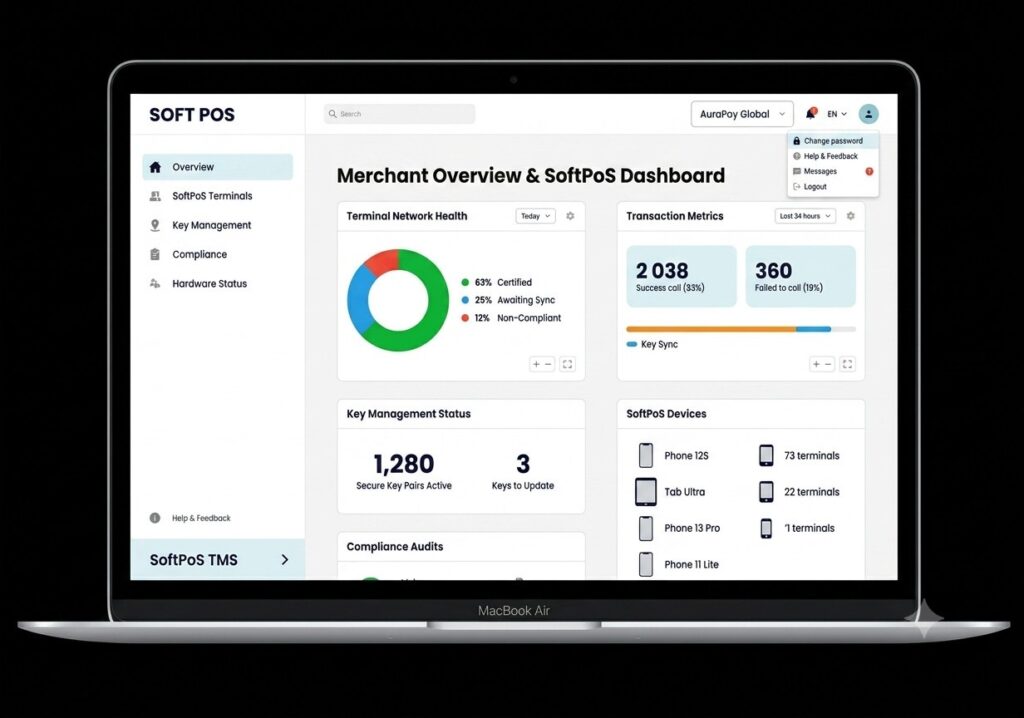
As digital payment ecosystems continue to evolve, organizations are deploying thousands of SoftPoS-enabled smartphones and Android payment devices across multiple regions. Managing these devices individually is inefficient, expensive, and introduces operational as well as security risks. Businesses require a centralized platform capable of monitoring, configuring, updating, and securing every payment endpoint from a single dashboard.
A SoftPoS Terminal Management System (TMS) provides exactly this capability through centralized device management. It enables payment service providers (PSPs), banks, fintech companies, acquirers, and enterprises to remotely control their payment infrastructure, automate device lifecycle management, and ensure compliance with payment industry standards.
Instead of treating each device as an isolated payment terminal, centralized management allows organizations to operate an entire payment ecosystem as a unified network. This approach improves operational efficiency, reduces maintenance costs, accelerates deployments, and strengthens payment security.
Whether managing hundreds or tens of thousands of SoftPoS devices, centralized management has become an essential component of modern payment infrastructure.
What is Centralized Device Management in SoftPoS TMS?
Centralized Device Management refers to the ability to remotely administer, monitor, configure, secure, and maintain every SoftPoS-enabled device through a single cloud-based Terminal Management System.
Rather than requiring technicians to physically access individual smartphones or Android payment terminals, administrators perform all operational tasks remotely through an administrative console.
These tasks include:
- Device registration
- Merchant provisioning
- Application deployment
- Configuration management
- Security policy enforcement
- OTA software updates
- Remote diagnostics
- Performance monitoring
- Compliance management
- Device retirement
The centralized approach transforms payment device management from a manual, reactive process into an automated, scalable operation.
Why Centralized Management Matters
Large payment deployments often include thousands of merchants operating across different cities or countries. Without centralized management, IT teams face challenges such as:
- Manual device onboarding
- Inconsistent software versions
- Delayed security updates
- Configuration errors
- Increased maintenance costs
- Limited visibility into device health
- Compliance risks
- Operational downtime
A centralized TMS eliminates these challenges by providing complete visibility and control over every payment device in real time.
How Centralized Device Management Works
A SoftPoS Terminal Management System operates through several interconnected layers that continuously exchange information between payment devices and cloud services.
Device Enrollment
Every SoftPoS device is securely registered with the TMS during onboarding.
Registration typically includes:
- Device identity
- Merchant information
- Terminal profile
- Authentication credentials
- Security certificates
- Geographic location
- Device capabilities
Once registered, the device becomes part of the managed payment ecosystem.
Secure Communication Layer
After enrollment, every device establishes an encrypted communication channel with the cloud-based TMS.
Communication generally includes:
- TLS encryption
- Certificate authentication
- Device authentication
- Secure APIs
- MQTT or HTTPS messaging
This secure channel enables continuous synchronization between devices and the management platform.
Policy Distribution
Administrators define operational policies from the central dashboard.
Policies may include:
- Transaction limits
- Supported payment methods
- Network settings
- Merchant configurations
- Security rules
- Device restrictions
- Application permissions
The TMS automatically distributes these configurations to selected devices or groups.
Continuous Monitoring
Every managed device periodically reports operational information.
Examples include:
- Battery health
- Storage usage
- Network connectivity
- CPU utilization
- Transaction activity
- Software versions
- Error logs
- Security status
This data provides complete visibility into the health of the payment infrastructure.
Remote Actions
Administrators can remotely execute operational tasks without visiting merchant locations.
Common actions include:
- Restart applications
- Update configurations
- Install applications
- Remove applications
- Lock devices
- Suspend terminals
- Reset configurations
- Push certificates
- Rotate encryption keys
These capabilities significantly reduce field support requirements.
SoftPoS TMS Architecture for Centralized Management
A modern centralized management platform typically consists of multiple integrated components.
|
Component |
Purpose |
|
Device Layer |
Android smartphones and SoftPoS terminals |
|
Communication Layer |
Secure MQTT or HTTPS communication |
|
API Gateway |
Authentication and API management |
|
Device Registry |
Stores device identities and metadata |
|
Configuration Engine |
Distributes settings and policies |
|
OTA Update Server |
Delivers software and firmware updates |
|
Monitoring Engine |
Tracks device health and performance |
|
Reporting Module |
Generates analytics and compliance reports |
|
Administrator Dashboard |
Centralized operational control |
Each layer contributes to a secure, scalable, and resilient payment infrastructure.
Key Features of Centralized Device Management
Remote Device Provisioning
New payment devices can be activated remotely without requiring technical personnel onsite.
Administrators can:
- Assign merchants
- Configure terminals
- Install payment applications
- Enable payment methods
- Apply security policies
This significantly reduces deployment time.
Device Inventory Management
A centralized dashboard maintains a complete inventory of all payment devices.
Typical inventory information includes:
- Device ID
- Merchant name
- Device model
- Android version
- Software version
- Location
- Status
- Last online timestamp
This provides accurate asset visibility across the organization.
Centralized Configuration Management
Instead of configuring each device individually, administrators create reusable configuration templates.
These templates can include:
- Regional settings
- Language preferences
- Network configurations
- Merchant branding
- Payment options
- Transaction parameters
Configuration consistency reduces operational errors.
Remote Application Deployment
Payment applications evolve continuously with new features, bug fixes, and security improvements.
Centralized deployment allows administrators to:
- Install applications
- Update applications
- Roll back versions
- Schedule deployments
- Perform staged rollouts
Application lifecycle management becomes significantly more efficient.
OTA Software Updates
Over-the-Air (OTA) updates eliminate manual software installation. Benefits include:
- Faster deployments
- Reduced downtime
- Consistent software versions
- Improved security
- Lower operational costs
Updates can be scheduled during non-business hours to minimize disruption.
Device Health Monitoring
Continuous monitoring enables proactive maintenance before issues impact merchants.
Health metrics include:
- Battery condition
- Memory usage
- CPU performance
- Connectivity status
- Storage utilization
- Transaction failures
- Device uptime
Automated alerts notify administrators of abnormal conditions.
Remote Troubleshooting
Support teams can diagnose problems remotely using real-time diagnostic tools.
Capabilities include:
- Log collection
- Configuration inspection
- Connectivity testing
- Application debugging
- Error reporting
Many issues can be resolved without dispatching field technicians.
Automated Policy Enforcement
Centralized policies ensure all devices follow organizational standards. Examples include:
- Password requirements
- Screen lock policies
- Root detection
- Application whitelisting
- Certificate validation
- Security patch enforcement
Automation reduces human error and improves compliance.
Benefits of Centralized Device Management
Improved Operational Efficiency: Centralized administration reduces repetitive manual tasks and enables IT teams to manage thousands of payment devices from a single interface.
Lower Maintenance Costs: Remote management minimizes onsite service visits, significantly reducing travel expenses, labor costs, and device downtime.
Faster Device Deployment: Automated provisioning enables merchants to begin accepting payments much sooner, improving onboarding efficiency and customer satisfaction.
Higher Security: Centralized enforcement of security policies helps protect payment credentials, sensitive transaction data, and device integrity across the entire fleet.
Better Scalability: Organizations can expand from hundreds to tens of thousands of devices without proportionally increasing operational complexity or support resources.
Centralized device management becomes even more valuable in SoftPoS deployments, where standard Android smartphones function as contactless payment terminals. Because these devices are widely distributed and frequently mobile, a Terminal Management System provides centralized visibility, policy enforcement, and remote lifecycle management. This combination helps payment providers maintain consistent configurations, streamline updates, and support merchants without requiring frequent onsite intervention.
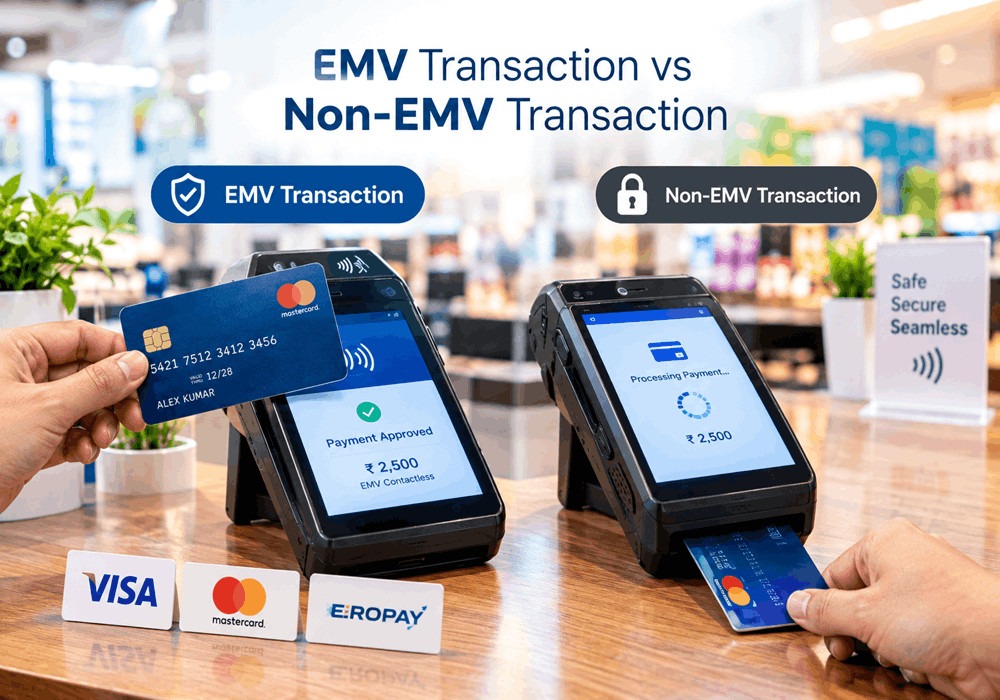
An EMV Kernel is responsible for processing EMV-compliant card transactions on payment devices, ensuring consistent execution of contact and contactless payment flows. When integrated into a centrally managed SoftPoS environment, administrators can remotely distribute compatible kernel versions, monitor deployment status, and verify that devices are running approved software. This simplifies version control and supports secure, standardized payment acceptance across the entire device fleet. Security & Compliance in Centralized Device Management
Security is the cornerstone of any payment acceptance ecosystem. Since SoftPoS devices process sensitive cardholder data and payment credentials, organizations must ensure that every managed device adheres to strict security policies throughout its lifecycle. A centralized Terminal Management System (TMS) plays a critical role by continuously monitoring device health, enforcing security configurations, and enabling rapid responses to emerging threats.
Unlike traditional manual management approaches, centralized device management allows security policies to be implemented uniformly across thousands of payment devices. This reduces the likelihood of configuration errors, minimizes operational risks, and helps organizations maintain compliance with evolving payment industry regulations.
Why Security is Essential for SoftPoS TMS
A distributed payment network exposes organizations to several operational and cybersecurity risks if devices are not centrally managed.
Common risks include:
- Unauthorized application installation
- Outdated software versions
- Weak authentication mechanisms
- Device rooting or jailbreaking
- Malware infections
- Lost or stolen devices
- Expired security certificates
- Configuration inconsistencies
- Unpatched operating systems
A centralized TMS continuously identifies these risks and enables administrators to take corrective actions before they affect merchants or customers.
Device Authentication
Every SoftPoS device should possess a unique digital identity before joining the payment ecosystem. Authentication mechanisms ensure that only authorized devices communicate with the Terminal Management System.
Typical authentication methods include:
- Device certificates
- Mutual TLS (mTLS)
- Secure device identifiers
- API authentication tokens
- Hardware-backed cryptographic keys
This prevents unauthorized devices from accessing sensitive payment infrastructure.
Secure Communication
All communication between SoftPoS devices and the Terminal Management System should be encrypted to protect payment-related information from interception or tampering.
Best practices include:
- TLS 1.2 or higher
- End-to-end encryption
- Certificate pinning
- Secure API gateways
- Encrypted configuration files
Encrypted communication protects transaction metadata, configuration updates, and management commands while devices remain connected over public or private networks.
Role-Based Access Control (RBAC)
Not every administrator requires access to every management function. Role-Based Access Control enables organizations to assign permissions based on job responsibilities.
Example roles include:
|
User Role |
Typical Permissions |
|
System Administrator |
Full platform management |
|
Operations Manager |
Device monitoring and provisioning |
|
Support Engineer |
Diagnostics and troubleshooting |
|
Compliance Officer |
Audit logs and compliance reports |
|
Merchant Support |
Limited device management |
Granular permissions reduce insider threats and improve operational governance.
Audit Logging
Every administrative action performed within the TMS should be recorded for traceability and regulatory compliance. Typical logged events include:
- Device registration
- Configuration changes
- Software deployments
- Security policy updates
- Login attempts
- User access changes
- Remote lock commands
- Device retirement
Comprehensive audit trails simplify forensic investigations and regulatory audits.
Remote Lock and Device Wipe
If a payment device is lost, stolen, or compromised, administrators should be able to remotely secure it immediately. Common security actions include:
- Remote device lock
- Application disablement
- Credential revocation
- Certificate invalidation
- Selective data removal
- Factory reset
- Complete device wipe
These capabilities reduce the risk of unauthorized payment processing.
Compliance Requirements
Payment ecosystems operate under strict regulatory frameworks. A centralized TMS helps organizations maintain compliance by ensuring that devices consistently follow approved configurations and security policies.
Depending on deployment requirements, organizations may need to comply with standards such as:
- PCI MPoC
- PCI DSS
- EMV specifications
- Regional payment regulations
- Data privacy requirements
- Financial institution security policies
Centralized monitoring simplifies compliance reporting by providing a complete inventory of software versions, security status, and configuration history.
As payment applications evolve through software updates, maintaining compliance with EMV Certification requirements becomes increasingly important. Certification validates that payment applications, kernels, and transaction flows operate according to card scheme specifications and interoperability standards. Within a centrally managed SoftPoS environment, organizations can verify certified software versions before deployment, maintain version consistency across devices, and simplify audit preparation during certification or recertification cycles.
Business Use Cases of SoftPoS
Centralized device management supports a wide range of payment deployments across industries. Whether managing hundreds or thousands of devices, organizations benefit from unified visibility, faster support, and lower operational costs.
Banks
Banks deploy SoftPoS solutions to expand merchant acceptance without investing heavily in dedicated payment terminals.
Centralized management enables banks to:
- Onboard merchants remotely
- Configure payment applications
- Monitor device health
- Roll out security updates
- Maintain compliance across branches
Payment Service Providers (PSPs)
PSPs often manage geographically distributed merchant networks. A centralized TMS enables them to deliver consistent payment services while reducing support costs. Typical benefits include:
- Faster merchant activation
- Centralized application deployment
- Automated policy enforcement
- Remote troubleshooting
- Fleet-wide reporting
Fintech Companies
Fintech providers frequently introduce new payment features and digital services. Centralized management supports rapid software rollouts without disrupting merchants. Advantages include:
- Continuous feature delivery
- Controlled beta deployments
- Version rollback capabilities
- Performance analytics
- Operational scalability
Retail Chains
Retail businesses operating multiple locations require consistent payment experiences across all stores.
Centralized device management allows retailers to:
- Standardize payment configurations
- Schedule software updates
- Monitor transaction availability
- Reduce downtime
- Improve operational efficiency
Logistics and Delivery Services
Mobile workers require secure payment acceptance while operating outside traditional retail environments.
SoftPoS TMS enables organizations to:
- Provision field devices remotely
- Track device status
- Maintain software consistency
- Resolve issues without recalling equipment
Hospitality and Restaurants
Restaurants, hotels, and service businesses increasingly use mobile payment acceptance for customer convenience. Centralized management supports:
- Mobile checkout
- Table-side payments
- Device health monitoring
- Remote configuration updates
Many payment ecosystems now combine SoftPoS with QR Payment SoundBox solutions to support both contactless card acceptance and QR-based digital payments. While SoftPoS enables NFC card transactions on Android devices, QR Payment SoundBoxes provide instant voice confirmations for UPI and QR payments. A unified Terminal Management System can centrally monitor, configure, update, and maintain both device types from a single platform, improving operational efficiency and simplifying payment infrastructure management.
Best Practices for Centralized Device Management
Successful SoftPoS deployments rely not only on technology but also on operational discipline. Following proven best practices helps maximize security, performance, and scalability.
Implement Automated Device Provisioning : Automate onboarding workflows to reduce manual configuration errors and accelerate merchant activation.
Use Configuration Templates : Create reusable templates for different merchant categories, regions, or device models to ensure consistent settings across deployments.
Schedule Regular OTA Updates: Keep applications, operating systems, and security components up to date through scheduled over-the-air updates during non-peak business hours.
Continuously Monitor Device Health: Use dashboards and alerts to identify abnormal conditions such as low storage, battery degradation, or connectivity failures before they impact payment acceptance.
Enforce Strong Security Policies: Apply organization-wide policies for:
- Device authentication
- Screen lock
- Certificate management
- Root detection
- Application whitelisting
- Encryption standards
Segment Device Fleets Group devices by:
- Region
- Merchant type
- Device model
- Software version
- Business unit
Segmentation simplifies large-scale deployments and targeted updates.
Maintain Detailed Audit Records: Store comprehensive logs of administrative actions, software updates, and security events to support troubleshooting and regulatory compliance.
Plan for Scalability: Choose a TMS architecture capable of supporting future growth without compromising performance. Cloud-native deployments, API-driven integrations, and automation frameworks help organizations scale from hundreds to hundreds of thousands of managed devices.
Future Trends in Centralized SoftPoS Device Management
As digital payments continue to evolve, Terminal Management Systems are becoming more intelligent, automated, and data-driven. Several emerging trends are shaping the future of centralized device management.
AI-Powered Predictive Maintenance: Artificial intelligence can analyze device telemetry to predict failures before they occur, enabling proactive maintenance and reducing downtime.
Zero-Touch Provisioning: Future SoftPoS deployments will increasingly rely on zero-touch enrollment, allowing devices to automatically register, authenticate, and configure themselves when first powered on.
Advanced Analytics: Real-time analytics dashboards will provide deeper insights into:
- Transaction performance
- Device utilization
- Software adoption
- Regional trends
- Merchant productivity
Unified Payment Device Management: Organizations are moving toward platforms that manage multiple payment device categories—including Android POS terminals, SoftPoS smartphones, self-service kiosks, and QR payment devices—from a single centralized console.
Cloud-Native TMS Platforms: Cloud-native architectures provide greater scalability, resilience, and availability while simplifying software maintenance and global deployments.
Enhanced Security Automation: Future systems will increasingly automate:
- Threat detection
- Certificate rotation
- Compliance validation
- Vulnerability assessment
- Policy enforcement
Automation reduces manual effort while improving the overall security posture.
As digital payment ecosystems continue to expand, managing distributed SoftPoS devices manually is no longer practical. Centralized Device Management within a SoftPoS Terminal Management System enables organizations to efficiently provision, configure, monitor, secure, and maintain thousands of payment devices through a unified platform.
Beyond simplifying day-to-day operations, centralized management strengthens security, supports regulatory compliance, reduces operational costs, and improves the overall merchant experience. Features such as remote provisioning, OTA updates, real-time monitoring, policy enforcement, and automated diagnostics help organizations maintain a reliable and scalable payment infrastructure.
Whether you are a bank, Payment Service Provider (PSP), fintech company, enterprise retailer, or terminal manufacturer, implementing a centralized SoftPoS TMS is a strategic investment that enhances operational agility and prepares your payment ecosystem for future growth.
As technologies such as AI-driven analytics, zero-touch deployment, cloud-native platforms, and unified device management continue to evolve, organizations that adopt centralized management today will be better positioned to meet tomorrow’s payment demands securely and efficiently.
Looking to modernize your payment device management infrastructure?
EazyPay Tech provides end-to-end payment technology solutions designed for banks, fintech companies, payment service providers, OEMs, and enterprises. Our expertise includes:
- SoftPoS Solutions for secure Tap-to-Pay on Android devices
- Android POS Terminal Management Systems (TMS) for centralized device lifecycle management
- EMV Level 2 Kernel integration for contact and contactless payment acceptance
- EMV Certification Services to support compliant payment application deployment
- QR Payment SoundBox Solutions with centralized monitoring and remote management
- Custom Payment Software Development tailored to modern digital payment ecosystems
Whether you are deploying hundreds or thousands of payment devices, our team can help you build a secure, scalable, and future-ready payment infrastructure. Contact EazyPay Tech to discuss your SoftPoS, Android POS, EMV, QR Payment SoundBox, or Terminal Management System requirements.