A successful SoftPOS (Software Point of Sale) solution requires a highly secure and scalable architecture that goes beyond a simple mobile payment application. It requires seamless integration between multiple components, including the SoftPOS application, EMV Kernel, API Gateway, acquiring platforms, banking systems, payment networks, fraud management engines, settlement platforms, and analytics infrastructure. Each layer performs a critical role in ensuring that payment transactions are processed securely, authenticated in real time, compliant with global payment standards, and capable of supporting large-scale deployments across multiple industries.
A modern API-driven SoftPOS architecture enables financial institutions, fintech companies, payment service providers, and enterprises to build flexible payment ecosystems that support high transaction volumes while maintaining security, interoperability, and operational efficiency. Through APIs, organizations can integrate new payment methods, automate merchant onboarding, connect with banking infrastructure, perform real-time transaction processing, and remotely manage thousands of SoftPOS devices without major infrastructure changes.
SoftPOS Mobile Application Layer
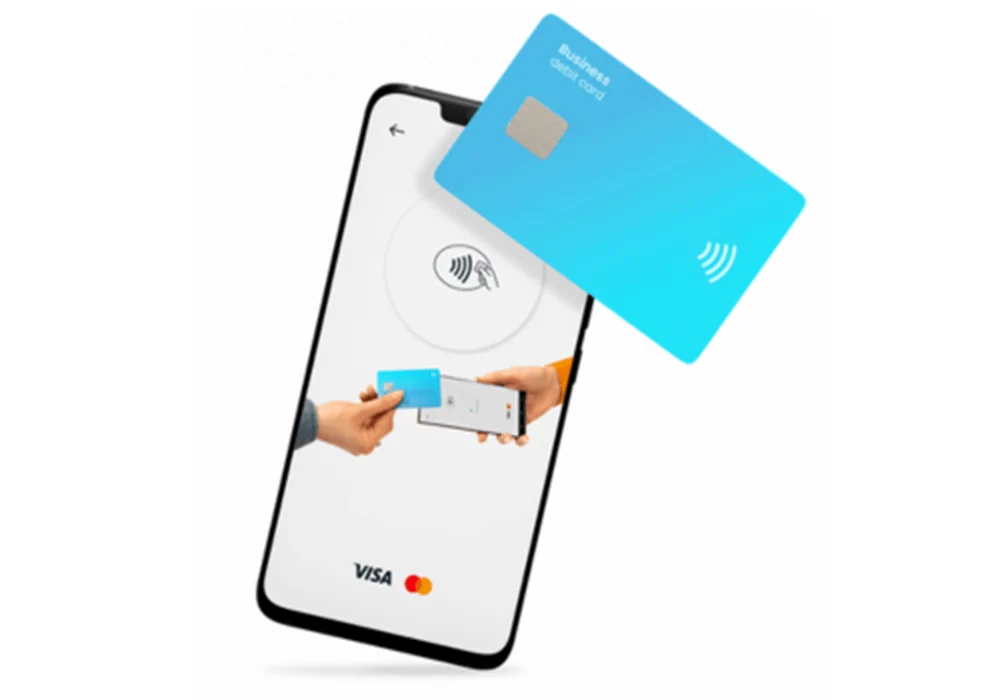
The SoftPOS Mobile Application Layer acts as the primary interface between merchants and the digital payment ecosystem. Installed on NFC-enabled Android smartphones or tablets, the application enables merchants to accept contactless card payments, mobile wallets, and other NFC-based transactions without requiring dedicated payment terminals.
The application performs multiple security and transaction management functions before communicating with backend payment systems, including:
- Merchant authentication and user verification
- Device security validation and integrity checks
- Secure transaction data preparation
- NFC communication management
- Encryption of sensitive payment information
- Secure API communication with backend services
- Digital receipt generation and transaction history management
- Support for multiple payment methods and merchant applications
A well-designed SoftPOS application ensures smooth user experience while maintaining strict security controls required for modern digital payment acceptance.
EMV Kernel Layer: Core Payment Transaction Engine
The EMV Kernel is the central processing component responsible for executing EMV transaction logic between the contactless payment card or digital wallet and the SoftPOS application. It ensures that every payment transaction follows international EMVCo specifications and payment scheme requirements.
The EMV Kernel performs critical transaction operations such as:
- Contactless application selection and processing
- Card authentication and cryptographic validation
- Terminal risk management
- Processing restriction checks
- Cardholder Verification Method (CVM) evaluation
- Generation of transaction cryptograms
- Offline and online transaction decision processing
A certified EMV Kernel supports major global payment schemes, including Visa, Mastercard, American Express, Discover, JCB, RuPay, UnionPay, and Troy, ensuring interoperability between merchants, acquiring banks, issuing banks, and payment networks.
For banks, fintech companies, and payment providers, selecting a reliable EMV Kernel is essential for developing secure, compliant, and globally deployable SoftPOS solutions.
API Gateway and Integration Layer
The API Gateway works as the secure communication bridge between the SoftPOS application and backend banking infrastructure. Instead of connecting directly with multiple payment systems, all requests are routed through the API Gateway, which manages authentication, validation, monitoring, and service communication.
Key responsibilities include:
- Secure API authentication and authorization
- Request routing and transaction orchestration
- API performance monitoring
- Rate limiting and traffic management
- Transaction logging and auditing
- API version control
- Integration with payment processors and banking platforms
This centralized approach improves security, simplifies system management, and enables organizations to scale payment services efficiently.
Banking Services and Payment Processing Layer
The Banking Services Layer manages the complete transaction lifecycle after receiving requests from SoftPOS applications. It connects with acquiring systems, payment processors, card networks, and financial institutions to complete authorization and settlement activities.
Major functions include:
- Payment authorization and transaction routing
- Merchant account validation
- Fraud analysis and risk evaluation
- Settlement processing
- Refund and chargeback management
- Compliance reporting
- Transaction reconciliation
This layer provides the foundation required for reliable, secure, and uninterrupted payment processing.
Security, Fraud Management, and Compliance Layer
Security is a critical requirement for SoftPOS deployments because payment systems process sensitive financial information. A comprehensive security framework combines multiple technologies to protect transactions throughout their lifecycle.
Important security mechanisms include:
- Encryption: TLS 1.3, AES-256, RSA, and ECC protect transaction data during communication.
- Tokenization: Replaces sensitive card information with secure tokens to reduce fraud exposure and simplify compliance.
- Device Attestation: Verifies that COTS Android devices are secure, trusted, and free from unauthorized modifications.
- Authentication: OAuth 2.0, JWT, mTLS, digital certificates, and MFA ensure secure access control.
Additionally, EMV Certification validates that the complete SoftPOS solution complies with EMVCo standards, payment network specifications, and security requirements. It ensures transaction reliability, interoperability, and global acceptance across different payment environments.
By combining secure API integration, certified EMV Kernel technology, advanced security mechanisms, and compliant payment infrastructure, SoftPOS enables banks, fintech companies, and enterprises to deliver scalable, secure, and future-ready digital payment solutions.
Business Benefits of API Integration
Organizations investing in API-driven SoftPOS ecosystems gain significant technical and commercial advantages.
Some of the key benefits include:
- Faster real-time payment authorization
- Improved customer experience
- Accelerated merchant onboarding
- Enhanced fraud prevention
- Automated settlements and reconciliation
- Reduced operational costs
- Cloud-native scalability
- Multi-bank interoperability
- Support for Open Banking initiatives
- Easier integration with emerging payment technologies
These benefits enable financial institutions to launch innovative payment services while maintaining operational efficiency and regulatory compliance.
Challenges to Consider
Despite its advantages, integrating SoftPOS with banking systems presents several challenges.
Financial institutions often deal with legacy core banking platforms that were not originally designed for modern APIs. Additionally, differences in API standards, evolving regulatory requirements, cybersecurity threats, and increasing transaction volumes add complexity to implementation projects.
Organizations can address these challenges by adopting API-first architectures, implementing microservices, standardizing API governance, conducting comprehensive security testing, and continuously monitoring API performance.
The Future of SoftPOS and Banking APIs
Digital payment ecosystems continue to evolve rapidly. Emerging technologies such as Open Banking, Banking-as-a-Service (BaaS), Embedded Finance, Artificial Intelligence, and Real-Time Payments are reshaping how financial services are delivered.
Future SoftPOS platforms will increasingly rely on cloud-native infrastructures, AI-powered fraud prevention, biometric authentication, ISO 20022 messaging, and API-driven financial ecosystems to deliver faster, safer, and more personalized payment experiences.
Organizations that embrace these innovations today will be well positioned to meet evolving customer expectations and remain competitive in the rapidly changing fintech landscape.
SoftPOS is redefining digital payment acceptance by transforming standard Android devices into secure payment terminals. However, its success depends on seamless API integration with banking systems, payment gateways, fraud management platforms, and settlement infrastructure. Secure APIs, combined with a certified EMV Kernel and successful EMV Certification, enable reliable, scalable, and compliant payment processing across global markets.
As digital payments continue to grow, businesses that adopt API-first SoftPOS architectures can deliver faster transactions, enhanced security, and improved customer experiences.
EazyPay Tech helps banks, fintech companies, PSPs, OEMs, and enterprises build secure payment ecosystems with expertise in:
- EMV Kernel Development & Integration
- EMV Certification Support (L1, L2 & L3)
- SoftPOS Application Development
- Terminal Management System (TMS)
- Remote Key Injection (RKI)
- Banking API & Payment Gateway Integration
- Payment Security Consulting
Partner with EazyPay Tech to develop scalable, compliant, and future-ready digital payment solutions.