

Contactless payments are changing how businesses accept digital transactions. From traditional Android POS terminals and handheld payment devices to mobile-based payment acceptance solutions, customers increasingly expect fast, secure and convenient ways to pay using contactless cards and NFC-enabled devices.
However, enabling contactless payment acceptance involves more than integrating an NFC reader into a payment device. A reliable payment solution requires a well-designed hardware and software architecture, a compliant contactless kernel, secure communication, transaction processing logic and integration with the acquiring infrastructure.
A modern POS Terminal brings these components together to support secure and reliable payment processing across different merchant environments.
This is where EMV Contactless Kernel C-8, defined in EMVCo Book C-8, becomes important.
EMV C-8 introduces a common contactless kernel specification designed to support the evolution of contactless and mobile payments. It provides a standardized framework for contactless payment processing across different terminal configurations, including traditional POS terminals, mobile POS and cloud-assisted payment architectures.
For POS terminal manufacturers, OEMs, fintech companies and payment technology providers, understanding EMV C-8 kernel architecture is important when developing new payment devices or upgrading existing terminal platforms.
In this article, we explore EMV C-8 kernel architecture, its major components, transaction processing workflow, security features, integration challenges and testing considerations.
1. What Is EMV C-8 Kernel?
EMV C-8 is the EMV Contactless Kernel 8 specification published by EMVCo under the EMV Contactless Specifications for Payment Systems.
An EMV contactless kernel is a software component within a payment acceptance device that manages the processing of contactless EMV transactions. It handles the communication and processing requirements between the contactless payment instrument and the POS terminal according to the applicable EMV specifications.
Traditionally, the contactless payment ecosystem has used multiple payment-scheme-specific kernels. Supporting and maintaining different implementations can increase development complexity for terminal manufacturers and payment solution providers.
EMV C-8 aims to simplify this environment by introducing a common contactless kernel specification to support global contactless acceptance.
Why Does EMV C-8 Matter for POS Terminal Manufacturers?
For a POS terminal manufacturer, implementing a contactless kernel involves several technical considerations:
- Supporting contactless payment cards and compatible mobile payment devices.
- Managing communication between the NFC reader and payment application.
- Implementing the required transaction processing logic.
- Supporting secure authentication and payment data handling.
- Maintaining compatibility with the terminal’s existing payment architecture.
- Preparing the implementation for applicable EMVCo evaluation and approval requirements.
EMV C-8 provides a standardized foundation for developing this contactless acceptance capability.
Importantly, C-8 is not simply another NFC driver or payment application. It is a defined EMV contactless kernel specification with specific implementation and testing requirements.
2. EMV C-8 Kernel Architecture in a POS Terminal
A POS terminal supporting EMV C-8 requires coordination between hardware, firmware, operating system services, payment application software and the contactless kernel.
The architecture can be divided into five functional components.
2.1 Contactless Reader and NFC Interface
The contactless reader provides the physical interface between the POS terminal and the contactless payment instrument.
Its responsibilities include:
- Generating the RF field required for contactless communication.
- Detecting a contactless card or compatible NFC device.
- Establishing communication with the payment instrument.
- Transmitting and receiving contactless protocol data.
- Managing reader-level communication and applicable timing requirements.
For Android POS terminals, the NFC interface must work reliably with the device’s hardware abstraction and operating system environment.
The quality of the reader implementation directly influences transaction stability and the overall payment experience.
2.2 Entry Point Software
The Entry Point is an important part of the EMV contactless architecture.
It performs initial transaction analysis and manages the selection and invocation of the appropriate contactless kernel based on the information received from the payment instrument and terminal configuration.
Its responsibilities include:
- Initiating contactless transaction processing.
- Identifying applicable payment application and kernel information.
- Managing kernel selection and invocation.
- Coordinating the transaction flow between the terminal and kernel.
- Handling relevant transaction processing requirements.
The Entry Point acts as a coordination layer between the contactless reader, terminal payment application and implemented kernel environment.
2.3 EMV C-8 Contactless Kernel
The EMV C-8 kernel performs the contactless transaction processing defined by the Kernel 8 specification.
It manages the required exchange of payment data and processing logic between the payment instrument and acceptance device.
Its functions include:
- Processing contactless transaction data.
- Managing the required EMV data exchanges.
- Applying applicable transaction processing rules.
- Supporting card authentication mechanisms.
- Managing transaction processing outcomes.
- Coordinating with the terminal payment application.
The implementation must follow the applicable Book C-8 specification and associated requirements.
2.4 Payment Application Layer
The payment application connects the contactless kernel with the wider POS terminal transaction environment.
It manages the business and application-level requirements needed to complete a payment transaction.
Typical responsibilities include:
- Transaction amount and currency management.
- Transaction initiation and user interaction.
- Payment application configuration.
- Communication with the acquiring host.
- Transaction status and response management.
- Receipt generation and transaction logging.
The payment application must correctly interpret and handle the results returned by the kernel.
2.5 Terminal Operating System and Hardware Platform
The underlying POS terminal platform provides the environment in which the payment application and kernel operate.
Depending on the terminal design, this may include:
- Android or Linux operating systems.
- Processor and memory resources.
- NFC controller and antenna.
- Secure storage and security-related hardware.
- Communication interfaces such as Wi-Fi, Ethernet, 4G or 5G.
- Hardware security components, where applicable.
For manufacturers developing Android POS terminals, integration between the operating system, NFC interface, payment application and kernel is particularly important.
A properly designed architecture helps maintain reliable communication, predictable transaction performance and long-term software maintainability.
3. Major Features of EMV C-8 Kernel
EMV C-8 introduces capabilities designed to support the next generation of contactless payment acceptance.
3.1 Common Contactless Kernel Specification
One of the important objectives of EMV C-8 is to provide a common contactless kernel specification.
Historically, payment terminal manufacturers have needed to manage multiple contactless kernel implementations to support different payment ecosystems.
A common specification can help reduce implementation and maintenance complexity while supporting broader contactless acceptance.
3.2 Secure Channel
EMV C-8 includes Secure Channel capabilities designed to protect communication and sensitive payment information.
Security considerations include:
- Protecting sensitive transaction information.
- Mitigating eavesdropping risks.
- Addressing man-in-the-middle threats.
- Supporting protection against relay attacks.
- Maintaining the integrity and confidentiality of applicable communication.
This is particularly important as contactless payment acceptance expands across traditional POS, mobile and distributed payment environments.
3.3 Elliptic Curve Cryptography (ECC)
EMV C-8 incorporates Elliptic Curve Cryptography (ECC) for card authentication.
ECC provides cryptographic mechanisms that can support secure authentication within the contactless payment environment.
For POS terminal developers, implementation must consider cryptographic processing requirements, supported algorithms, key management and compatibility with the relevant EMV specifications.
3.4 Support for Mobile and Biometric Cardholder Verification
Contactless payments increasingly involve mobile devices and advanced cardholder verification methods.
EMV C-8 is designed to support biometric and mobile card verification methods within its broader contactless framework.
This helps address the evolving requirements of digital payment instruments and modern payment experiences.
3.5 Cloud-Optimized Architecture
Another important capability is support for cloud-oriented and split-processing architectures.
Traditionally, much of the contactless payment processing was performed locally within the payment terminal. Modern payment environments can distribute certain processing functions between the acceptance device, payment instrument and remote infrastructure.
This provides opportunities for mobile POS, Tap-to-Mobile and other innovative payment acceptance models.
3.6 Optional On-Card Data Storage
EMV C-8 also provides support for optional on-card data storage with privacy and integrity protection.
This capability creates opportunities for future payment use cases where appropriate data may be securely stored and managed within the payment instrument.
Its use depends on the relevant implementation requirements and supported features.
4. How Does Contactless Payment Processing Work in an EMV C-8 POS Terminal?
Understanding the transaction flow is essential for POS terminal manufacturers and payment application developers.
A typical contactless payment process involves multiple stages.
Step 1: Transaction Initiation
The merchant enters the transaction amount into the POS terminal.
The payment application initiates the transaction and prepares the device for contactless acceptance.
Step 2: Contactless Card Detection
The NFC reader activates its contactless interface and detects a compatible payment card or mobile payment device.
The reader establishes communication with the payment instrument using the applicable contactless communication protocol.
Step 3: Initial Data Exchange
The POS terminal and payment instrument exchange the required information.
This information supports the identification and processing of the applicable contactless payment application.
Step 4: Entry Point Processing
The Entry Point performs the initial analysis of the contactless transaction.
It identifies the applicable processing path and invokes the appropriate kernel according to the terminal configuration and payment instrument information.
Step 5: EMV C-8 Kernel Processing
When Kernel 8 is selected, the EMV C-8 kernel performs the processing required by the applicable specification.
This includes the required payment data exchanges, processing logic and authentication-related functions.
The kernel evaluates the transaction based on the relevant parameters and returns the appropriate processing outcome to the terminal environment.
Step 6: Terminal Transaction Decision
The terminal payment application receives the processing result and handles the next stage of the transaction.
Depending on the applicable transaction rules, the payment application may continue with online authorisation or handle another permitted transaction outcome.
Step 7: Acquirer Host Communication
For an online authorization flow, the POS terminal securely communicates the required transaction information to the acquiring host.
The acquiring infrastructure processes the request through the relevant payment network and issuer infrastructure.
Step 8: Transaction Response
The authorization response is returned through the payment infrastructure to the POS terminal.
The payment application interprets the response and determines the final transaction status.
Step 9: Transaction Completion
The POS terminal displays the transaction result and generates the applicable receipt or confirmation.
The transaction is recorded in the terminal’s transaction management environment.
Note: This is a simplified conceptual transaction flow. Actual message exchanges, decision points, data elements and processing responsibilities must follow the applicable EMV C-8, Entry Point, terminal and payment system requirements.
5. EMV C-8 Kernel Integration in Different POS Terminal Architectures
Not every payment device uses the same hardware and software architecture.
POS terminal manufacturers must select an appropriate implementation model based on their target device, transaction environment and deployment requirements.
5.1 Traditional Android POS Terminal
An Android POS terminal generally includes an NFC reader, Android operating system, payment application and integrated contactless kernel.
The kernel can be integrated into the terminal’s software environment, with the payment application coordinating transaction processing.
Key development considerations include:
- NFC hardware integration.
- Android OS compatibility.
- Kernel software integration.
- Secure data handling.
- Payment application interfaces.
- Hardware performance and memory requirements.
- Firmware and software update management.
5.2 Linux-Based POS Terminal
Linux-based POS terminals can use a modular software architecture for contactless payment processing.
The implementation may separate reader interfaces, payment applications, kernel software and communication services into distinct modules.
This approach can help manufacturers maintain and update individual software components while keeping the overall payment architecture manageable.
5.3 Mobile POS and Tap-to-Mobile
Mobile payment acceptance is expanding beyond traditional dedicated POS hardware.
In Tap-to-Mobile implementations, compatible NFC-enabled smartphones can act as payment acceptance devices.
The evolution of contactless payments is also driving the adoption of SoftPOS, which enables compatible NFC-enabled smartphones to accept contactless payments without requiring dedicated POS hardware.
This creates opportunities for fintech companies, banks and payment service providers to expand digital payment acceptance.
EMV C-8’s support for split and cloud-oriented processing architectures creates opportunities for innovative mobile payment implementations.
However, using C-8 does not automatically make a smartphone a compliant Tap-to-Mobile acceptance solution. The complete solution must meet all applicable device, software, security and approval requirements.
5.4 Cloud-Assisted Payment Architecture
Cloud-assisted processing can distribute certain functions across the payment acceptance device and remote infrastructure.
Depending on the implementation, some processing may be performed locally while other functions may be handled remotely.
This approach can support flexible payment acceptance models, but developers must carefully address:
- Network availability.
- Transaction latency.
- Secure communication.
- Processing continuity.
- Sensitive data protection.
- System availability and recovery.
The selected architecture must remain compliant with the applicable EMV and payment acceptance requirements.
6. Contactless Payment Applications Beyond Traditional POS Terminals
EMV contactless technology is not limited to retail payment terminals. Its capabilities can support several payment acceptance environments, including mobile payments, public transportation and other unattended payment applications.
6.1 Retail and Merchant Payments
Traditional POS terminals support contactless card and mobile payment acceptance across retail stores, restaurants, supermarkets and other merchant environments.
A properly integrated EMV kernel helps provide consistent transaction processing and secure payment acceptance.
6.2 Mobile Payment Acceptance
SoftPOS enables compatible smartphones to accept contactless payments without requiring dedicated payment hardware.
This can benefit small merchants, field sales teams, delivery businesses and financial institutions looking to expand payment acceptance.
6.3 Public Transportation and Transit Payments
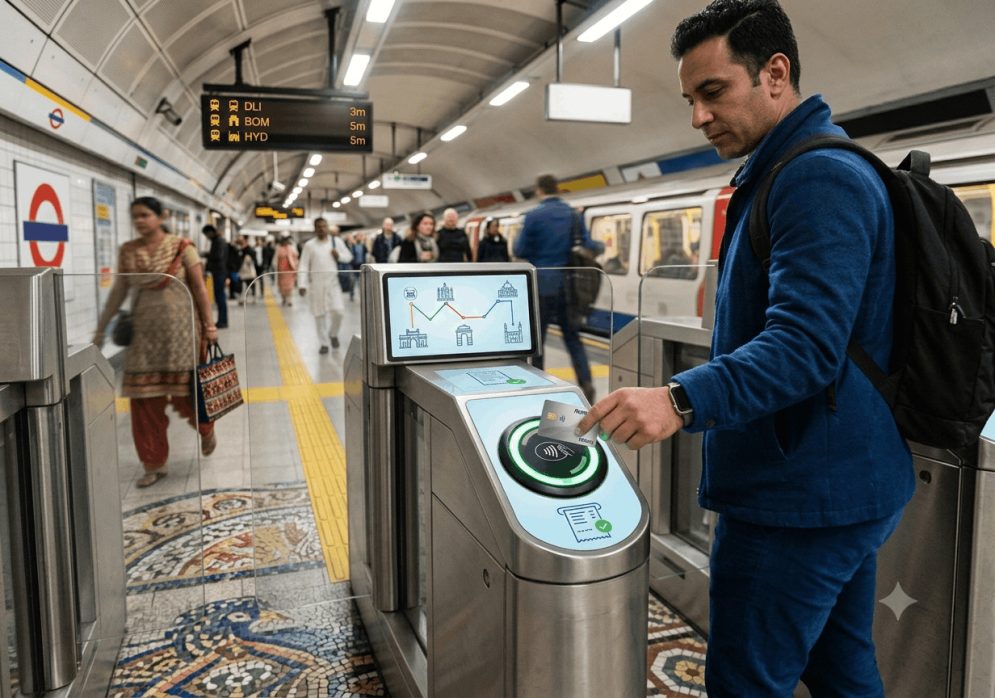
Contactless payment technology also plays an important role in public transportation.
An Automatic Fare Collection (AFC) system can integrate EMV contactless payments into bus, metro and transit environments, enabling passengers to use compatible payment cards and devices for convenient fare payments.
Such systems can support different fare collection environments, including:
- Bus validators.
- Metro entry and exit gates.
- Transit ticketing devices.
- Passenger payment infrastructure.
Integrating EMV contactless payment capabilities into transit infrastructure requires careful consideration of transaction speed, fare calculation, account-based ticketing, payment processing and system integration requirements.
These applications demonstrate how contactless payment technology can extend beyond traditional retail POS environments into broader digital payment ecosystems.
7. Key Technical Challenges in EMV C-8 Kernel Implementation
Although EMV C-8 provides a common specification, implementing it in a production-ready POS terminal requires detailed engineering.
7.1 NFC Hardware and Kernel Integration
The NFC controller, reader software and contactless kernel must work together correctly.
Incorrect integration can result in communication failures, inconsistent transaction behaviour and performance issues.
7.2 EMV Data Handling
The terminal must correctly manage the required EMV data exchanges and data elements.
Developers must understand the relevant data formats, processing rules and communication requirements.
7.3 Cryptographic Implementation
Security-related functions require careful implementation and validation.
Cryptographic processing, key management, secure communication and sensitive data protection must be considered as part of the complete terminal design.
7.4 Cross-Platform Compatibility
POS terminal manufacturers often develop devices using different processors, operating systems and NFC hardware configurations.
Kernel integration must be validated against the intended platform and supported configuration.
7.5 Transaction Performance
Contactless payment acceptance must provide a consistent transaction experience.
The implementation should be tested for processing efficiency, reader communication, transaction timing and recovery from unexpected conditions.
7.6 Certification and Testing Readiness
A kernel implementation must be tested against the applicable EMVCo requirements.
Developers need to prepare the required implementation documentation, testing configuration and product-specific integration.
Certification readiness should be considered during the architecture and development stages rather than after the software is completed.
8. EMV C-8 Testing and Certification Requirements
Testing is a critical part of developing an EMV C-8-compatible POS terminal.
EMVCo has established a contactless product approval process for implementations of the C-8 specification. Depending on the product configuration, the applicable testing and documentation requirements must be considered.
Important areas include:
8.1 Implementation Conformance Statement (ICS)
The ICS documents the implementation details and supported features of the kernel or contactless product.
8.2 Kernel Functional Testing
The implementation must be evaluated against the applicable C-8 test requirements.
8.3 Contactless Reader Testing
The contactless reader and product environment must be configured appropriately for the required testing.
8.4 EMVCo Laboratory Evaluation
The applicable product must undergo the required evaluation through an EMVCo-recognised testing process and laboratory.
8.5 Approval and Maintenance
Manufacturers must consider the approved implementation, applicable specification updates and product configuration throughout the device lifecycle.
Important distinction: EMV C-8 kernel approval and complete POS terminal or payment application compliance are not necessarily the same thing. The approval scope depends on the product submitted and the applicable EMVCo process.
9. POS Terminal Manufacturer Checklist for EMV C-8 Implementation
Before beginning development, POS terminal manufacturers and OEMs should evaluate the following areas.
| Implementation Area | Key Considerations |
|---|---|
| Hardware | NFC controller, antenna, processor and memory |
| Operating System | Android, Linux or supported platform |
| Kernel Software | C-8 implementation and integration |
| Entry Point | Kernel selection and transaction coordination |
| Payment Application | Transaction management and host integration |
| Security | Cryptographic functions and secure data handling |
| Architecture | Local, split or cloud-assisted processing |
| Testing | EMVCo test requirements and product configuration |
| Certification | ICS documentation and approval planning |
| Maintenance | Kernel updates and terminal lifecycle management |
Planning these areas early can help reduce integration risks, improve development efficiency and support a smoother certification process.
10. How EazyPay Tech Supports POS Terminal and EMV Kernel Development
Developing a payment-ready POS terminal application requires expertise across payment application software, EMV kernel development, hardware integration and certification.
EazyPay Tech supports payment technology companies, banks, fintech organizations, OEMs and POS terminal manufacturers with specialized payment engineering services.
Our capabilities include:
10.1 EMV Kernel Development and Integration
We support EMV kernel-related development and integration requirements for contact and contactless payment acceptance environments.
10.2 POS Terminal Application Software
Our team supports payment application development and integration for Android POS terminals and other payment acceptance platforms.
10.3 EMV L2 and L3 Certification Support
We support terminal manufacturers and payment solution providers with EMV Level 2 kernel and Level 3 terminal integration and certification requirements.
10.4 SoftPOS Solutions
We support mobile payment acceptance requirements through SoftPOS application development, SDK integration and related payment technology capabilities.
10.5 Automatic Fare Collection Solutions
We support payment technology integration for transit environments, including contactless payment acceptance across public transportation and fare collection infrastructure.
10.6 Payment Security and Compliance
We support payment technology organizations with relevant PCI compliance, payment security and certification-related requirements.
Whether you are developing a new POS terminal, upgrading an existing Android payment device, building a SoftPOS solution or integrating contactless payments into an Automatic Fare Collection system, selecting the right technical architecture is an important first step.
EMV C-8 represents an important development in the evolution of contactless payment acceptance.
Its common kernel specification, secure communication capabilities, ECC-based authentication support and flexibility for cloud-oriented processing provide opportunities for the next generation of payment acceptance devices.
For POS terminal manufacturers and payment technology providers, successful implementation requires more than kernel integration. It involves coordinated development across NFC hardware, Entry Point software, payment applications, operating systems, security components and certification requirements.
A well-planned POS terminal architecture can help manufacturers build scalable, secure and certification-ready contactless payment solutions across retail, mobile and transit payment environments.
Looking to Develop or Upgrade Your POS Terminal with EMV Contactless Kernel Capabilities?
Connect with EazyPay Tech to discuss your POS terminal architecture, EMV kernel development, SoftPOS integration, Automatic Fare Collection payment requirements and EMV certification needs.
Discuss Your POS Terminal and EMV Kernel Requirements with EazyPay Tech.