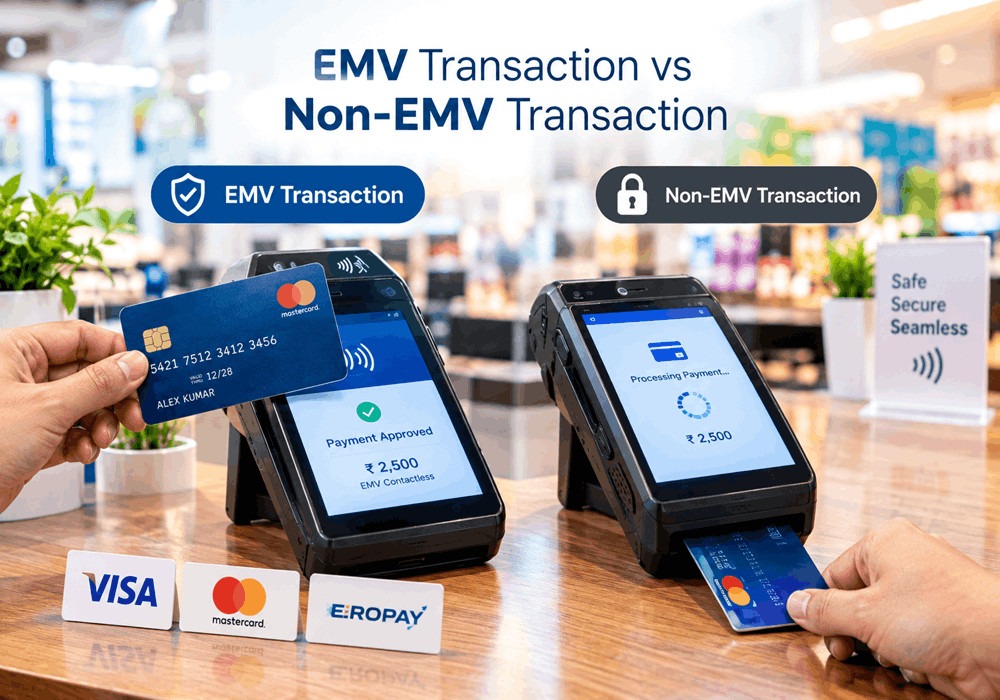
In the modern payments landscape, the transition from magnetic stripe transactions to EMV chip-based transactions represents one of the most significant leaps in financial security and interoperability. EMV, which stands for Europay, Mastercard and Visa, has evolved into the global standard for secure card-based transactions, ensuring that payment devices across the world follow a consistent set of rules when interacting with chip-enabled debit and credit cards.
For device manufacturers, fintech providers and banks, EMV Certification is not merely a compliance requirement; it is a strategic milestone that determines whether their payment terminals whether a traditional POS, a self-service ATM, an innovative SoftPOS application, or a contactless QR-enabled terminal can be deployed in the market, accepted by major card networks, and trusted by customers.
However, EMV Certification is a complex journey. It involves multiple levels of testing, coordination with EMVCo accredited labs, compliance with PCI DSS/PTS standards and a detailed review of the device’s software, hardware and kernel. Many OEMs underestimate the importance of prerequisites and documentation, leading to delays, rejections, or increased costs.
As a specialist in EMV software, EMV kernel development and certification consultancy, EazyPay Tech helps OEMs, banks and fintech providers navigate the intricate certification process. By ensuring that all documentation and prerequisites are in place before engaging with EMV labs and payment schemes, we enable faster certification, reduce rework, and optimize the time-to-market for payment solutions.
Understanding EMV Certification: Levels, Scope, and Relevance
EMV Certification is divided into three levels, each ensuring payment devices such as ATMs, POS terminals, SoftPOS apps, and contactless solutions meet global standards for security and interoperability. Level 1 validates the physical and electrical interface, confirming that devices can reliably communicate with EMV cards via contact (ISO 7816) and contactless (ISO 14443/NFC). Level 2 focuses on the EMV kernel software, which manages AIDs, CVMs, risk parameters, and transaction flows in compliance with EMVCo specifications. Level 3 ensures end-to-end transaction processing with payment schemes like Visa, Mastercard, RuPay, Amex, and UnionPay, using scheme-specific test plans to guarantee network interoperability.
Device-Specific Relevance
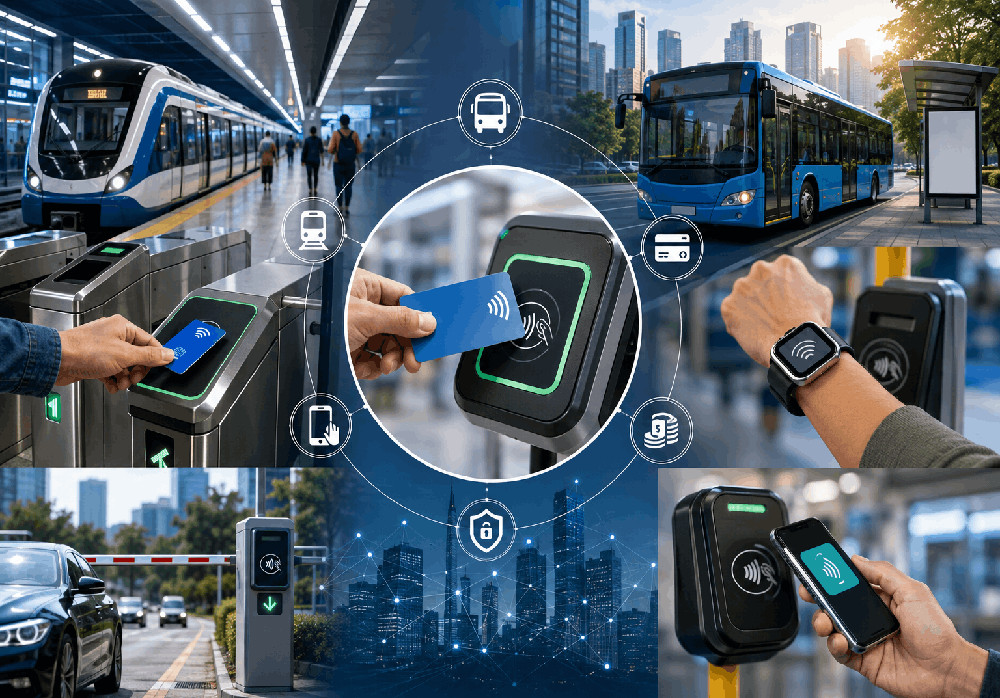
ATMs require L1 certification for chip readers and NFC modules, L2 for managing complex card functions, and L3 for scheme-level host validation. POS terminals undergo similar checks, with L1 ensuring hardware reliability, L2 confirming kernel accuracy, and L3 validating scheme compliance. SoftPOS solutions add complexity at L1 due to smartphone NFC and OS limitations, but must meet the same L2 and L3 standards as physical POS. For newer devices such as QR terminals, soundboxes, and transit validators, L1 and L2 confirm secure EMV card handling alongside alternative methods, while L3 testing ensures speed, reliability, and acceptance across multiple networks.
The Role of Prerequisites in EMV Certification
Why are prerequisites and documents so critical?
Because EMV Certification is not a trial-and-error process. Accredited labs and payment schemes rely on accurate, detailed documentation to configure test cases, validate kernel parameters, and ensure that the device behaves as expected under different transaction scenarios. Missing or incomplete documents can:
- Cause delays in scheduling tests with EMV labs.
- Lead to failed test cases, requiring costly retests.
- Increase the overall time-to-market, impacting product launches.
- Result in non-compliance penalties or scheme rejection.
In short, certification readiness begins with documentation readiness.
Business and Administrative Documentation
The first step in EMV Certification is ensuring that all business and administrative prerequisites are in place. These documents help certification bodies, labs, and payment schemes understand who you are, what your product is, and what its intended use case will be.
- Company Profile and Legal Documentation
- Includes company registration, legal entity proof, and key contacts.
- Labs and schemes require this to establish accountability and traceability.
- Product Description and Model Details
- Exact model numbers, device categories (ATM, POS, SoftPOS, terminal), and version control.
- Helps test labs configure the test environment correctly.
- Target Market and Usage Scenarios
- Whether the device is for retail, transit, self-service kiosks, or SoftPOS mobile use.
- Determines applicable AIDs, transaction flow, and certification scope.
- Lab Selection Agreements
- Confirmation of engagement with an EMVCo-accredited laboratory.
- Includes NDAs, commercial agreements, and timelines.
Without these documents, the certification process cannot formally begin.
Technical Design and Architecture Documentation
Once administrative requirements are fulfilled, the next focus is on technical documentation. This provides a blueprint of the device’s hardware and software architecture, ensuring that the certification lab understands its functionality.
- Hardware Specifications
- Processor, RAM, ROM, secure element, microcontrollers.
- Card reader design: contact slot (ISO 7816), NFC antenna (ISO 14443).
- Display, keypad, speaker (for Soundbox/payment terminals).
- Operating System and Platform
- Linux, Android, RTOS, or custom firmware.
- Impacts kernel integration and scheme test requirements.
- Communication Interfaces
- Ethernet, Wi-Fi, 4G/LTE, Bluetooth.
- Critical for testing end-to-end network transactions.
- Security Modules
- SAM (Secure Access Module) or HSM integration.
- Key injection and management documentation.
- Supported Card Types and Schemes
- Visa, Mastercard, RuPay, UnionPay, Amex.
- EMV debit, credit, prepaid, transit cards.
This stage highlights the engineering discipline behind EMV devices. Missing details can cause labs to misinterpret capabilities, leading to unnecessary test cycles.
EMV Software | Kernel Documentation
At the heart of EMV Certification lies the EMV Kernel the software module that processes transactions, applies EMV rules, and ensures compliance.
- What is an EMV Kernel?
- The EMV kernel is a software library that handles communication between the terminal application and the EMV card.
- Responsible for card authentication, risk management, CVM (Cardholder Verification Method), and transaction decision-making.
- Contact vs Contactless Kernels
- Contact kernel: ISO 7816 interface, chip-card insertion.
- Contactless kernel: NFC/ISO 14443 interface, tap-based transactions.
- Each requires separate EMV Level 2 certification.
- Kernel Documentation Required
- Version number, vendor details, and certification status.
- Source code or build version reference.
- EMV parameter files (AIDs, CVM lists, TACs, IACs, risk settings).
- Terminal Application Integration
- Flow diagrams showing kernel-application interaction.
- Logging and debugging tools for certification labs.
- EazyPay Tech’s Kernel Expertise
- EazyPay Tech provides ready-to-certify EMV kernels (both contact and contactless).
- Supports integration for POS, SoftPOS, ATMs, and innovative terminals like QR-enabled Soundboxes.
- Our kernels are designed to meet the latest EMVCo and scheme requirements, reducing time-to-certification.
Implementation Conformance Statement (ICS)
The ICS (Implementation Conformance Statement) is one of the most critical prerequisites. It is essentially a self-declaration document that describes exactly what your device supports.
- Level 1 ICS
- Covers physical and electrical interfaces for contact/contactless communication.
- Declares compliance with ISO standards.
- Level 2 ICS
- Covers EMV kernel features, supported AIDs, CVMs, limits, and transaction capabilities.
- Directly impacts which test cases the lab will execute.
- Why ICS is Crucial
- If incorrectly filled, labs will test wrong scenarios.
- Can lead to repeated test failures and certification delays.
- EazyPay Tech’s Role
- Our consultants help OEMs prepare accurate ICS documentation.
- We ensure that all kernel and terminal configurations are correctly mapped, avoiding unnecessary rework.
Security and Compliance Documentation
EMV Certification does not exist in isolation. It is often tied to PCI DSS, PCI PTS, and encryption requirements.
- PCI PTS Approval
- Required for POS and ATM devices.
- Validates secure PIN entry and hardware tamper-resistance.
- PCI DSS Compliance
- Required for systems handling cardholder data.
- Ensures data security across networks.
- Encryption and Key Management
- Documentation for SAM/HSM integration.
- Secure key injection processes.
- Regulatory Attestations
- OEM/kernel provider declarations of compliance.
Without these documents, devices may pass EMV tests but fail commercial deployment.
Scheme Specific Certification Documents
After EMV Level 1 and Level 2, each payment scheme requires Level 3 certification, which comes with its own prerequisites.
- Visa ADVT (Acquirer Device Validation Toolkit)
- Mastercard M-TIP
- RuPay Certification Scripts
- Amex and UnionPay Test Plans
Each requires:
- Acquirer host information (test environment setup).
- Scheme-specific certification request forms.
- Test card set documentation.
EazyPay Tech assists OEMs in preparing scheme-specific documentation, ensuring smooth approvals.
Challenges Faced Without Proper Documentation
- Delayed certification slots at labs.
- Test case failures due to misconfigured AIDs or ICS errors.
- Increased costs from retesting.
- Lost market opportunities due to launch delays.
For example, a SoftPOS provider failing to declare NFC antenna characteristics in L1 ICS may face weeks of rework before certification can continue.
How EazyPay Tech Simplifies EMV Certification
EazyPay Tech bridges the gap between device manufacturers, EMV labs, and payment schemes. Our role includes:
- Documentation Consulting
- Preparing ICS, kernel documentation, security compliance files.
- EMV Kernel Solutions
- Providing certification-ready EMV software for contact and contactless devices.
- Certification Support
- Coordinating with labs, schemes, and acquirers.
- Ensuring devices pass on the first attempt.
- Device Coverage
- Support for ATMs, POS, SoftPOS, and emerging QR/Payment Soundbox solutions.
By partnering with EazyPay Tech, OEMs and banks accelerate certification timelines, reduce costs, and achieve compliance with confidence.
EMV Certification is a rigorous but essential process for any payment device aiming to operate in today’s digital-first financial ecosystem. From administrative documents and hardware specifications to kernel integration files and scheme-specific forms, every prerequisite plays a role in shaping the success of certification.
Yet, for many OEMs, fintech startups, and even established banks, the documentation and preparation phase becomes a bottleneck. That is why working with a specialist like EazyPay Tech makes a decisive difference. With expertise in EMV software, EMV kernel development, and certification consulting, EazyPay Tech ensures that every device be it an ATM, POS, SoftPOS, or contactless payment terminal meets global standards efficiently and effectively.
When documentation, software, and certification expertise come together, the result is not just compliance it is market readiness, customer trust, and future-proof innovation.
To learn more about how EazyPay Tech can accelerate your EMV Certification journey, visit EazyPayTech.com.