
1. Why AFC Integration Requires More Than Payment Technology
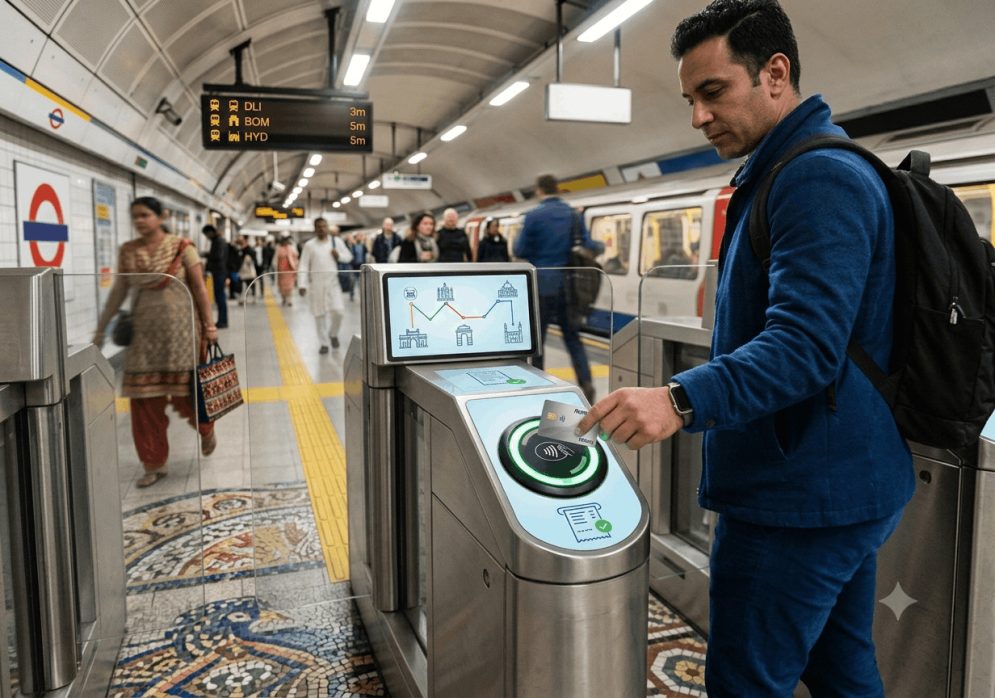
Public transportation infrastructure is becoming increasingly connected. Metro networks, city buses, railway systems, parking facilities and other mobility services are moving towards integrated digital payment environments.
However, implementing digital fare collection across these services presents a significant engineering challenge.
A transport operator may already have ticketing software, payment terminals, passenger applications, smart card infrastructure and financial processing arrangements. Introducing a new payment method or connecting another transport operator requires these existing systems to communicate without interrupting daily operations.
This is where Automatic Fare Collection (AFC) integration becomes essential.
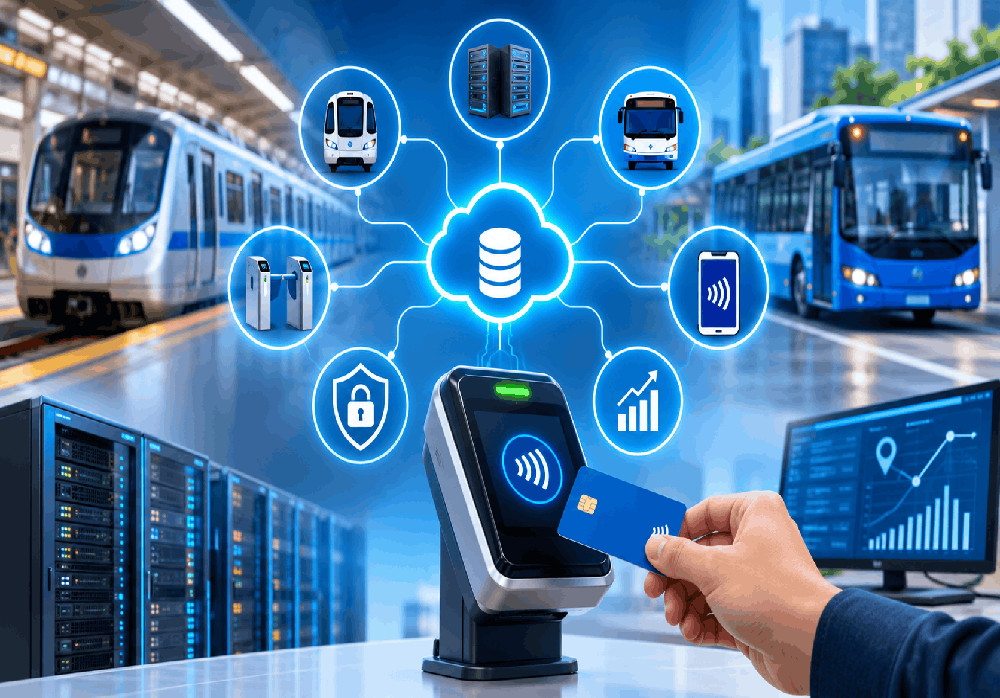
Rather than developing an entirely separate payment environment, successful integration connects different technology components through defined interfaces, transaction protocols, data exchange mechanisms and operational workflows.
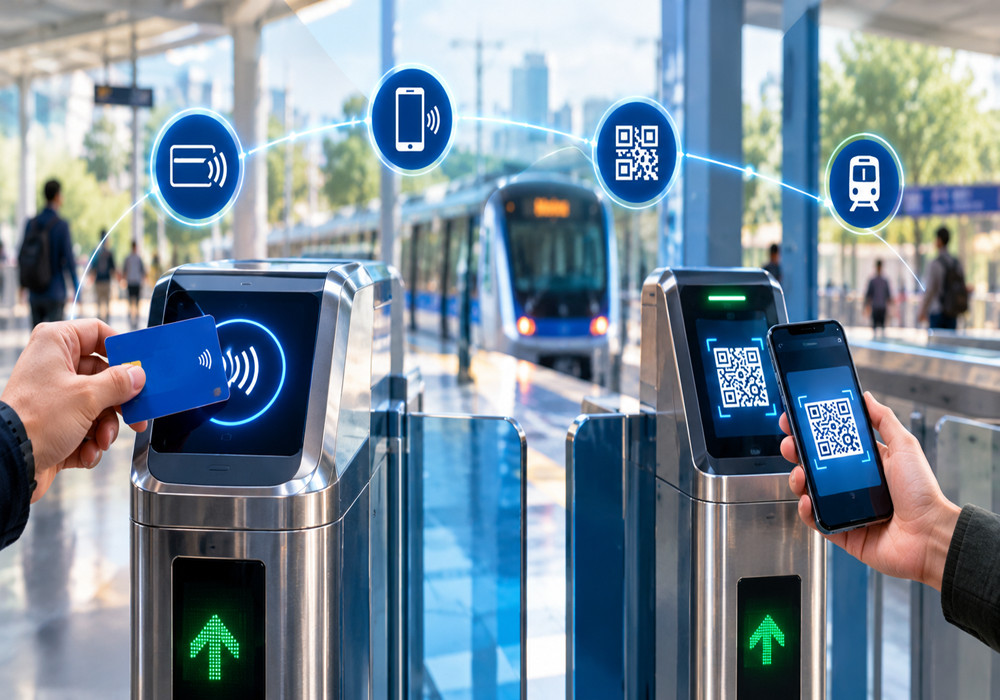
For example, integrating contactless payment acceptance into an existing metro network may require coordination between validators, payment applications, EMV kernels, acquiring infrastructure, fare management software and central transaction platforms.
Similarly, connecting a bus operator to an existing mobility ecosystem requires more than installing compatible terminals. Device configuration, route information, transaction synchronisation and financial reconciliation must also be addressed.
For transit authorities, banks, fintech companies, OEMs and system integrators, the objective is to establish an interoperable payment environment that can accommodate new technologies without repeatedly rebuilding the entire infrastructure.
This guide explores the technical and operational considerations involved in integrating AFC platforms with modern payment and mobility systems.
2. What Makes AFC Integration Different from Conventional Payment Integration?
A conventional retail payment environment generally focuses on completing a purchase between a customer, merchant and payment processor.
An AFC environment introduces additional operational requirements.
A single passenger journey may involve multiple transport operators, several validators, different fare structures and payment events recorded at separate locations.
Consider a passenger travelling from a residential area to a business district:
- The passenger boards a city bus.
- The passenger transfers to a metro service.
- The passenger completes the journey at another station.
- The payment platform receives transaction information from multiple acceptance devices.
- The central system determines applicable fares and processes the relevant financial records.
These events must be connected accurately.
An integration failure can create incomplete journey records, incorrect fare calculations, duplicate transactions or reconciliation differences.
Therefore, AFC integration must address three interconnected requirements:
Technical interoperability: Different devices, applications and platforms must exchange information correctly.
Operational consistency: Transport operators must apply agreed fare, journey and transaction rules.
Financial accuracy: Transaction records must support reliable reconciliation, settlement and dispute management.
This makes integration architecture one of the most important decisions in a large-scale transit payment project.
3. Key Integration Layers in an AFC Ecosystem
Before connecting different systems, project teams should identify the integration boundaries and responsibilities of every component.
3.1 Validator-to-Application Integration
The validator is responsible for capturing passenger interactions and initiating the relevant payment or ticket validation process.
Its application layer must communicate correctly with the underlying hardware, card reader, operating system and payment software.
Integration considerations include:
- Reader and NFC interface compatibility.
- Payment application communication.
- Device identification.
- Transaction status management.
- Local configuration.
- Error reporting.
- Secure application updates.
For OEMs and terminal manufacturers, this stage is particularly important because different hardware platforms may require different software integration approaches.
A reusable payment application architecture can simplify support across multiple terminal models, provided each implementation is validated for its intended hardware and deployment.
3.2 Payment Terminal-to-Host Integration
Payment terminals must communicate with the appropriate payment host or processing infrastructure.
This connection may involve a payment gateway, processor, acquiring bank or another designated host system.
The integration must establish consistent transaction messaging and response handling.
Important requirements include:
- Message format compatibility.
- Terminal and merchant identification.
- Transaction reference management.
- Request and response mapping.
- Timeout handling.
- Reversal and retry processing.
- Communication security.
- Transaction status synchronisation.
A well-designed interface should also handle situations where the terminal receives an incomplete response or loses connectivity while processing a transaction.
These conditions need clearly defined recovery rules to prevent inconsistent payment records.
3.3 AFC Backend-to-Fare Engine Integration
The fare engine manages the commercial rules governing passenger travel.
It may receive information from different validators, ticketing applications and transport operators.
The integration must ensure that journey events contain sufficient information for the fare engine to apply the correct business rules.
For example, a distance-based fare model may require entry and exit station information, while a fixed-fare bus model may require only a validated boarding event.
The architecture should support different fare models without forcing every transport operator to adopt identical operational rules.
3.4 AFC Backend-to-Financial Systems Integration
Payment transaction records must eventually be connected with financial reporting and reconciliation processes.
This integration becomes particularly important when several transport operators participate in one mobility network.
The financial system should support transaction traceability, settlement reporting, adjustment records and exception handling.
A reliable integration framework ensures that operational journey records and financial transaction records can be compared without relying on manual reconciliation.
4. API Integration: Connecting Different Transit and Payment Platforms
Application Programming Interfaces (APIs) provide a structured way for independent systems to exchange information.
In a modern AFC environment, APIs may connect validator management platforms, passenger applications, fare engines, payment gateways, transport operator systems and reporting applications.
However, simply providing an API does not guarantee interoperability.
The interface must define the information being exchanged, the format of each field, the authentication method and the expected response.
4.1 Designing Consistent API Contracts
Every integration partner should work with a documented API specification.
A payment or journey event may require information such as:
- Unique transaction reference.
- Device or validator identification.
- Operator identification.
- Route or station reference.
- Transaction timestamp.
- Payment method.
- Transaction status.
- Fare amount, where applicable.
- Relevant response or error code.
The exact fields depend on the payment model and integration scope.
The most important requirement is consistency across connected systems.
For example, if one operator identifies a station using an internal numeric code while another uses a different identifier format, the integration layer must maintain a reliable mapping.
Without standardised identifiers, reporting and reconciliation become difficult as the network expands.
4.2 API Authentication and Access Management
AFC infrastructure may contain multiple third-party systems with different access requirements.
APIs should therefore use suitable authentication and authorisation mechanisms.
Security considerations include:
- Authenticated system-to-system communication.
- Role-based access restrictions.
- Secure credential management.
- API access logging.
- Request validation.
- Rate limiting.
- Monitoring of unusual activity.
Administrative APIs should be separated from passenger-facing services wherever the architecture requires it.
4.3 Handling API Failures and Timeouts
A transit payment platform cannot assume that every API request will receive an immediate response.
Network interruptions, host unavailability and temporary backend failures can affect communication.
Integration design should define:
- Request timeout limits.
- Retry policies.
- Idempotency controls.
- Duplicate request detection.
- Error response mapping.
- Transaction recovery procedures.
Idempotency is especially important. If the same transaction request is submitted again after a timeout, the system should identify whether it has already been processed rather than creating another financial transaction.
This is a critical consideration for maintaining accurate payment records.
5. Integrating Existing AFC Infrastructure Without Disrupting Operations
Many transport authorities already operate established fare collection platforms.
Replacing every existing device and application may be expensive and operationally disruptive.
A practical integration strategy should identify which components can be retained, which require modification and which need replacement.
5.1 Legacy System Assessment
Before starting development, project teams should evaluate the existing environment.
The assessment should cover:
- Current validator hardware.
- Operating systems and software versions.
- Existing payment applications.
- Available communication interfaces.
- Database structures.
- Fare management rules.
- Payment processor connections.
- Device management capabilities.
This assessment helps identify compatibility gaps before implementation begins.
5.2 Building an Integration Adapter
In some projects, existing applications cannot directly communicate with a new platform because their data formats or interfaces are different.
An integration adapter can translate between the legacy system and the new platform.
For example, a legacy ticketing application may generate transaction records in a proprietary format.
An adapter can map those records into a standardised format expected by the central AFC platform.
This approach can reduce the need to rewrite an entire application.
However, the adapter must preserve transaction references, timestamps, status information and other important business data.
5.3 Managing Parallel System Operations
During migration, operators may need to run existing and new systems simultaneously.
This requires clear rules for transaction ownership, passenger validation and financial reporting.
The migration strategy should define:
- Which devices use the old platform.
- Which devices use the new platform.
- How transaction records are consolidated.
- How configuration changes are distributed.
- How exceptions are handled.
- When the old infrastructure can be retired.
A phased migration reduces the risk of introducing widespread operational issues during a single deployment.
6. Transaction Data Synchronisation and Reconciliation
Transaction synchronisation is one of the most important operational aspects of AFC integration.
Different validators may generate records independently and transmit them to the central system at different times.
A bus validator may upload its records after completing a route, while a metro validator may communicate through station infrastructure.
The central platform must process these records consistently.
6.1 Maintaining Transaction Identity
Every transaction should have a reliable reference that allows it to be traced across the connected systems.
This helps identify:
- Original transaction requests.
- Subsequent processing events.
- Repeated submissions.
- Reversals and adjustments.
- Final transaction status.
A consistent transaction identification strategy reduces ambiguity when several systems process the same payment event.
6.2 Managing Delayed Transaction Uploads
Delayed synchronisation can occur because of weak connectivity, device shutdowns or backend maintenance.
The integration architecture should support controlled transaction queues and reliable data upload.
It should also distinguish between a transaction that has not been transmitted and one that has already been received but has not completed processing.
This distinction helps prevent duplicate financial entries.
6.3 Reconciliation Across Multiple Operators
A multimodal AFC platform may receive transaction information from several operators.
The reconciliation framework should support comparison between device-level records, backend records and payment processing reports.
Where required, the platform should also maintain separate operator-level reporting.
This allows each participating organisation to understand its transaction activity and financial position.
7. Device Integration and Remote Management in Large AFC Networks
Connecting payment devices is only the beginning of a successful deployment.
Once validators are distributed across buses, stations and transport locations, maintaining consistent configurations becomes an operational challenge.
A Terminal Management System (TMS) can help manage the device lifecycle from a central platform.
7.1 Centralised Device Provisioning
New devices should be registered and configured through a controlled onboarding process.
The process may include:
- Device identification.
- Operator and location mapping.
- Application installation.
- Parameter configuration.
- Network settings.
- Server endpoint configuration.
- Activation and status verification.
This reduces the need for manual configuration at every deployment location.
7.2 Remote Application and Firmware Management
AFC operators may need to update applications, firmware or configuration parameters across a large device fleet.
A centralised management platform can distribute authorised updates and track deployment status.
Updates should be authenticated, version-controlled and monitored.
The system should also provide a recovery approach if a deployment fails or a device does not complete the update successfully.
7.3 Device Health and Operational Monitoring
Remote monitoring can help identify devices that are disconnected, running outdated software or experiencing repeated transaction failures.
Useful operational indicators may include:
- Device availability.
- Network connectivity.
- Application version.
- Firmware version.
- Last communication time.
- Error frequency.
- Transaction processing status.
These indicators help support teams prioritise maintenance and reduce unnecessary field visits.
For large transit networks, effective device management becomes an important part of overall payment infrastructure reliability.
Explore EazyPay Tech’s Terminal Management System solutions for Android POS and SoftPOS device management.
8. Testing an AFC Integration Before Production Deployment
Integration testing should validate the behaviour of connected systems rather than checking each component independently.
A validator may pass its hardware tests while still failing to communicate correctly with the payment host or central fare engine.
Therefore, testing should cover the complete integration lifecycle.
8.1 Interface Testing
Validate communication between individual components.
Check message formats, mandatory fields, authentication, response mapping and error handling.
8.2 Transaction Lifecycle Testing
Test different transaction outcomes, including:
- Successful transactions.
- Declined transactions.
- Host timeouts.
- Repeated requests.
- Reversals.
- Delayed transaction uploads.
- Invalid or incomplete records.
The objective is to confirm that each system maintains a consistent transaction status.
8.3 Device and Network Testing
Validate device behaviour under realistic operating conditions.
Include weak network connectivity, temporary disconnections, power interruptions and recovery after restart.
8.4 Load and Performance Testing
Simulate the expected volume of passenger interactions and backend requests.
Evaluate system response times, transaction throughput, database performance and queue processing.
8.5 End-to-End Acceptance Testing
Finally, validate the complete passenger and financial workflow.
The test should confirm that a passenger interaction generates the correct device event, reaches the required backend services and produces accurate transaction and reporting records.
9. Common AFC Integration Mistakes and How to Avoid Them
Even technically capable projects can face delays because of overlooked integration requirements.
Treating every terminal as identical: Different device models may have different hardware, operating system and payment software requirements. Validate each supported configuration.
Ignoring legacy data formats: Existing platforms may use proprietary message structures. Establish data mapping and validation rules before implementation.
Depending entirely on online communication: Define how the system behaves when a validator or backend becomes temporarily unavailable.
Using inconsistent transaction identifiers: Establish a common transaction traceability strategy across connected platforms.
Ignoring device lifecycle management: Plan for remote monitoring, application updates and configuration management before large-scale deployment.
Leaving reconciliation until the end: Financial reporting requirements should influence the integration architecture from the beginning.
Starting production without realistic testing: Validate complete transaction workflows, failure scenarios and recovery mechanisms before rollout.
10. AFC Integration Readiness Checklist for Project Teams
Before moving towards production, organisations should evaluate the following requirements.
| Integration Area | Key Validation |
|---|---|
| Existing infrastructure | Hardware, software and interface assessment |
| Payment terminals | Device and application compatibility |
| Host connectivity | Message format and response mapping |
| API architecture | Documented contracts and authentication |
| Data exchange | Standardised fields and identifiers |
| Fare engine | Correct fare and journey data mapping |
| Transaction management | Unique references and status tracking |
| Reconciliation | Device, backend and financial record matching |
| Device management | Provisioning, remote updates and monitoring |
| Security | Access controls and secure communication |
| Testing | Interface, load and end-to-end validation |
| Migration | Phased rollout and recovery planning |
Completing this assessment helps project stakeholders identify dependencies before they become deployment risks.
11. How EazyPay Tech Supports Payment Technology Integration for AFC Projects
A successful AFC deployment depends on the reliability of its payment acceptance technology and the ability to integrate that technology into the wider transit infrastructure.
EazyPay Tech works with organisations involved in payment technology development, terminal integration and certification.
Its relevant capabilities can support different stages of transit payment projects.
EMV Kernel Development and Integration
Payment terminal manufacturers and solution providers may require EMV contact and contactless kernel implementation for supported payment acceptance environments.
EazyPay Tech provides EMV Kernel development and integration capabilities for payment technology projects.
EMV L1, L2 and L3 Certification Support
Certification planning and technical validation are important when developing payment acceptance terminals.
EazyPay Tech supports EMV certification requirements for applicable payment terminal implementations.
POS and Android Payment Applications
Android POS and payment terminal applications can support different acceptance and operational requirements across transit and mobility environments.
SoftPOS Payment Technology
SoftPOS can provide flexible contactless payment acceptance on compatible NFC-enabled mobile devices for suitable transport use cases.
Terminal Management System
Centralised device management supports configuration, application deployment, monitoring and lifecycle administration across distributed terminal fleets.
By combining payment software expertise, terminal integration and certification support, EazyPay Tech can help OEMs, banks, fintech companies and system integrators address the payment technology requirements of modern mobility projects.
The future of public transportation depends on how effectively different mobility and payment platforms communicate.
Introducing a new validator, payment application or ticketing platform does not automatically create an integrated AFC ecosystem.
The real work lies in establishing consistent interfaces, reliable transaction synchronisation, accurate reconciliation, centralised device management and dependable communication between different stakeholders.
Organisations that plan these requirements early can reduce integration complexity and create infrastructure that accommodates future payment methods and additional transport operators.
For transit authorities, OEMs, banks, fintechs and system integrators, the priority should be to build an architecture that connects existing capabilities with new payment technologies while maintaining operational continuity.
Planning an AFC payment integration project?
EazyPay Tech can help you evaluate payment terminal software, EMV kernel integration, certification and device management requirements.
Contact EazyPay Tech:
Website: https://eazypaytech.com/
Email: info@eazypaytech.com
Discuss your transit payment technology requirements with our team.