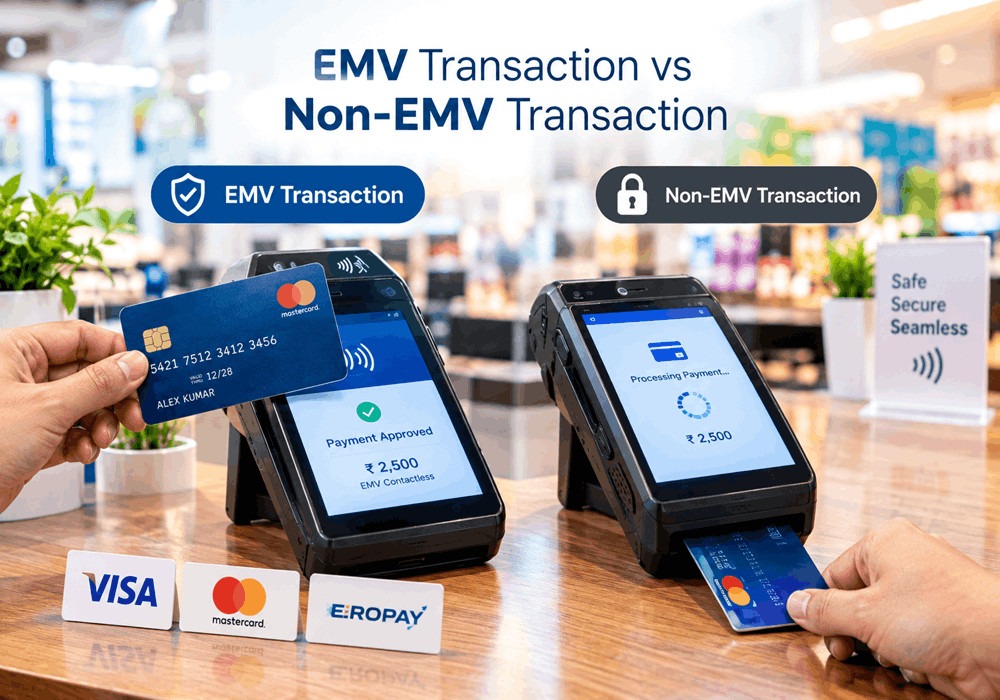
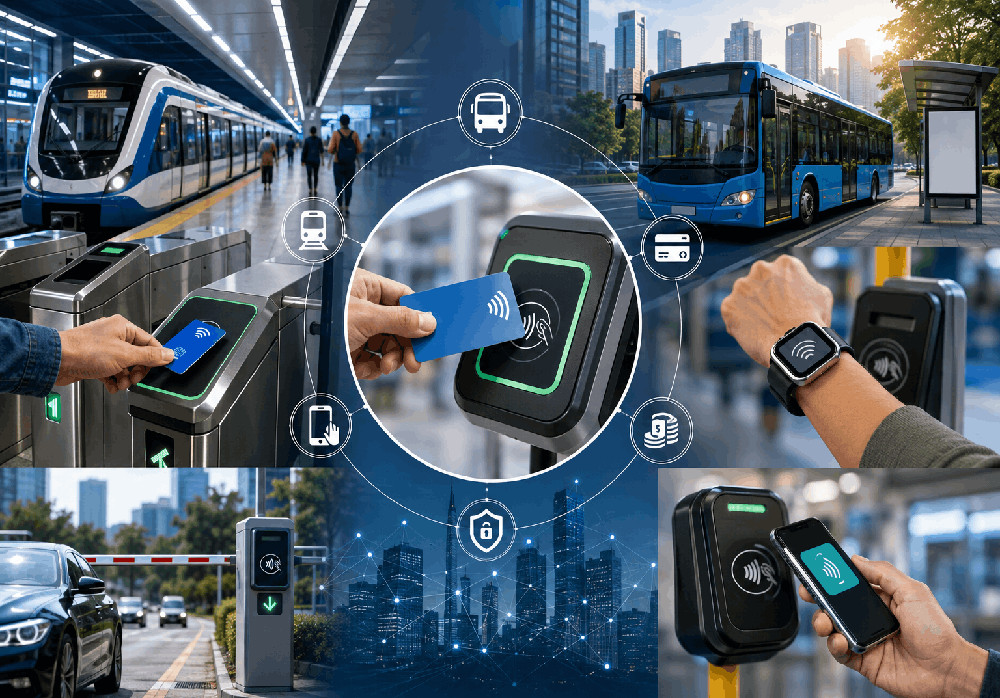
The global payments industry is evolving rapidly as consumers increasingly rely on chip cards, contactless payments, NFC-enabled smartphones, SoftPOS solutions, payment soundboxes, smart POS terminals, self-service kiosks, and digital banking applications. With billions of card transactions processed every day, payment security has become one of the highest priorities for banks, fintech companies, payment service providers (PSPs), terminal manufacturers, and merchants.
To know more about how we can support your EMV certification journey, Contact Us here.
At the center of this secure payment ecosystem is EMV Certification.
EMV Certification ensures that payment devices, software applications, and transaction processing systems comply with internationally recognized security and interoperability standards. Whether you’re developing an Android POS terminal, integrating an EMV Kernel, launching a SoftPOS application, or manufacturing an NFC payment soundbox, achieving EMV Certification is essential for accepting card payments securely and gaining approval from major payment schemes such as Visa, Mastercard, RuPay, American Express, Discover, JCB, and UnionPay.
Without proper EMV Certification, payment terminals may fail interoperability testing, experience transaction failures, increase fraud risks, or face delays in commercial deployment.
For business leaders, product managers, procurement teams, and executives without a deep technical background, terms such as EMV Level 1 (L1), Level 2 (L2), and Level 3 (L3) can appear complex. However, understanding these certification levels is critical for making informed decisions about payment device development, certification timelines, compliance, and market readiness.
This comprehensive guide explains everything you need to know about EMV Certification—from the fundamentals of EMV technology to the certification process, benefits, challenges, and how to accelerate certification successfully.
What is EMV Certification?
EMV Certification is a structured testing and validation process that verifies whether payment devices, software applications, and transaction systems comply with EMV specifications established by EMVCo.
EMV standards ensure that payment devices can securely process chip-based and contactless card transactions while maintaining compatibility across multiple payment networks worldwide.
The primary objective of EMV Certification is to guarantee:
- Secure payment transactions
- Global interoperability
- Fraud prevention
- Consistent customer experience
- Reliable communication between cards and terminals
- Compliance with international payment standards
Today, EMV Certification is considered mandatory for most payment acceptance devices, including:
- Android POS terminals
- Traditional POS terminals
- Smart POS devices
- Payment Soundboxes
- SoftPOS applications
- ATM machines
- Self-service kiosks
- Transit ticketing terminals
- Fuel payment terminals
- Retail payment systems
- Banking payment devices
What Does EMV Stand For?
EMV stands for:
- Europay
- Mastercard
- Visa
Originally developed through collaboration among these organizations, EMV has evolved into a globally accepted payment security standard managed by EMVCo.
Modern EMV specifications support:
- Contact chip cards
- Contactless NFC cards
- Mobile wallets
- Wearable payments
- QR-assisted payment solutions
- Tokenized payment credentials
- Secure cryptographic authentication
Today, virtually every major payment network—including Visa, Mastercard, American Express, Discover, JCB, RuPay, and UnionPay—relies on EMV technology to ensure secure and interoperable transactions.
Why is EMV Certification Important?
Digital payment fraud continues to evolve as cybercriminals target vulnerable payment infrastructures. EMV Certification plays a vital role in reducing these risks by ensuring payment devices follow standardized security protocols.
Key business benefits include:
- Enhanced Payment Security: EMV technology generates a unique cryptographic code for every transaction, making cloned or counterfeit cards significantly more difficult to use.
- Global Payment Acceptance: Certified devices can process payments from multiple international card schemes without compatibility issues.
- Regulatory Compliance: Many acquiring banks and payment networks require EMV Certification before approving commercial deployment.
- Improved Customer Trust: Consumers are more confident using payment devices that comply with internationally recognized security standards.
- Reduced Development Risks: Certification identifies hardware, software, and transaction issues before devices reach the market.
- Faster Market Entry: Proper planning and expert certification support help reduce testing cycles and accelerate product launches.
EMV Certification Levels
EMV Certification is divided into three independent certification levels, each validating a different component of the payment ecosystem.
EMV Level | Focus Area | Purpose |
EMV Level 1 (L1) | Hardware & Communication | Verifies physical communication between the card and terminal |
EMV Level 2 (L2) | EMV Kernel Software | Validates transaction processing logic and EMV rules |
EMV Level 3 (L3) | End-to-End Transaction | Ensures successful transaction processing with banks and payment schemes |
Each level builds upon the previous one to create a secure, reliable, and interoperable payment environment.
EMV Level 1 (L1) Certification Explained
What is EMV Level 1 Certification?
EMV Level 1 Certification focuses on the hardware communication layer between the payment terminal and the payment card.
Think of Level 1 as verifying whether the terminal can “hear” and “talk” to the card correctly before any transaction logic begins.
Without successful hardware communication, no payment transaction can proceed.
For contact cards, L1 validates:
- Chip reader communication
- Electrical interface
- Voltage stability
- Clock frequency
- Signal timing
- Card insertion detection
- Card removal detection
For contactless devices, Level 1 verifies:
- NFC antenna performance
- RF communication
- Power transfer
- Tap detection
- Communication stability
- Multiple card handling
- Environmental performance
Why EMV Level 1 Matters
A payment terminal with poor hardware performance may experience:
- Card read failures
- Transaction interruptions
- Slow tap response
- Customer frustration
- Increased maintenance costs
- Higher transaction failure rates
EMV Level 1 Certification ensures consistent performance across different environments and card types, improving reliability and user experience.
Typical Devices Requiring EMV Level 1 Certification
Level 1 Certification is essential for a wide range of payment acceptance devices, including:
- Android POS terminals
- Smart POS devices
- Traditional POS terminals
- ATM machines
- Self-service kiosks
- Payment Soundboxes with NFC
- Transit validators
- Parking payment terminals
- Fuel station payment terminals
- Ticket vending machines
What is Tested During EMV Level 1 Certification?
The Level 1 testing process evaluates hardware communication and electrical performance under various operating conditions.
Key validation areas include:
- Contact chip communication
- Contactless RF communication
- NFC antenna tuning
- Signal integrity
- Card activation
- Card deactivation
- Power stability
- Environmental testing
- Multiple insertion cycles
- Communication timing
- Electromagnetic compatibility
- Device reliability
These tests ensure the payment terminal can communicate accurately and consistently with EMV-compliant payment cards.
Ready to Certify Your Payment Device?
Whether you’re developing an Android POS terminal, NFC payment soundbox, SoftPOS solution, ATM, or self-service payment kiosk, EazyPay Tech provides end-to-end EMV Certification Services, including EMV Level 1, Level 2, and Level 3 certification support, EMV Kernel integration, pre-certification testing, debugging, and global scheme compliance.
Contact EazyPay Tech today to accelerate certification, reduce development risks, and bring your payment solution to market faster.
EMV Level 2 (L2) Certification:
Once the payment terminal successfully communicates with the card through EMV Level 1, the next step is processing the transaction securely. This responsibility belongs to EMV Level 2 (L2) Certification, which validates the EMV Kernel—the software component that manages payment logic and ensures compliance with EMV specifications.
If Level 1 is the “communication layer,” then Level 2 is the decision-making engine of the payment terminal.
Without a certified EMV Kernel, a terminal cannot process chip or contactless card transactions correctly, regardless of how advanced its hardware is.
What is EMV Level 2 Certification?
EMV Level 2 Certification verifies that the payment application’s EMV Kernel correctly interprets EMV card data and processes transactions according to EMVCo specifications.
The EMV Kernel is responsible for:
- Reading card application data
- Selecting supported payment applications
- Card authentication
- Cardholder verification (PIN, Signature, CDCVM)
- Risk management
- Transaction authorization flow
- Cryptographic processing
- Contact and contactless transaction management
- Offline and online processing
- Decline and approval logic
Simply put, the kernel ensures every payment follows internationally accepted EMV rules.
What is an EMV Kernel?
An EMV Kernel is certified software that enables payment terminals to process transactions for different card schemes. Each payment network has its own certified kernel requirements.
Typical supported payment schemes include:
- Visa
- Mastercard
- RuPay
- American Express
- Discover
- JCB
- UnionPay
- Troy
Modern payment devices often support multiple kernels simultaneously, allowing merchants to accept cards from customers worldwide.
Why EMV Level 2 Certification Matters
Without a certified EMV Kernel:
- Transactions may fail unexpectedly.
- Card authentication may be incorrect.
- PIN verification may not comply with standards.
- Contactless payments may become unreliable.
- Card scheme approval may be rejected.
- Banks may refuse deployment.
For banks, fintech companies, PSPs, OEMs, and payment terminal manufacturers, EMV Level 2 Certification significantly reduces implementation risks while ensuring global interoperability.
Devices That Require EMV Level 2 Certification
Level 2 Certification applies to virtually every modern payment acceptance device, including:
- Android POS terminals
- Smart POS devices
- SoftPOS applications
- NFC Payment Soundboxes
- Self-service kiosks
- ATM machines
- Unattended payment terminals
- Parking payment systems
- Transit ticketing machines
- Fuel dispensers
- Retail payment terminals
EMV Level 3 (L3) Certification
While Levels 1 and 2 certify the hardware and kernel, EMV Level 3 Certification validates the complete payment transaction between the terminal, acquiring bank, payment network, and issuing bank.
Level 3 ensures that customers experience successful transactions in real-world environments.
What is EMV Level 3 Certification?
EMV Level 3 Certification validates:
- Terminal application
- Host communication
- ISO 8583 messaging
- Acquirer integration
- Transaction routing
- Online authorization
- Decline processing
- Reversal handling
- Settlement compatibility
- Receipt generation
Unlike L1 and L2, which focus on device capabilities, L3 focuses on real transaction processing.
Why EMV Level 3 Certification Matters
A payment device can pass Level 1 and Level 2 but still fail during live banking transactions if:
- Host messages are incorrect
- Authorization requests are malformed
- Response codes are misinterpreted
- Transaction reversals fail
- Settlement messages are invalid
EMV Level 3 Certification eliminates these risks before commercial deployment.
EMV Level 1 vs Level 2 vs Level 3 Certification
Feature | EMV Level 1 | EMV Level 2 | EMV Level 3 |
Focus | Hardware | EMV Kernel Software | Terminal Application |
Validates | Card Reader & NFC | Transaction Logic | End-to-End Processing |
Tests | Electrical & RF | EMV Rules | Host Integration |
Required For | Device Hardware | Payment Software | Live Deployment |
Performed By | EMVCo Labs | EMVCo Labs | Card Schemes & Acquirers |
Business Benefit | Reliable Card Reading | Secure Transaction Processing | Successful Production Launch |
EMV Certification Process
Understanding the certification journey helps businesses estimate project timelines and allocate resources effectively.
Step 1 – Product Design & Development: Develop hardware, firmware, payment application, and EMV Kernel according to EMVCo specifications.
Step 2 – Pre-Certification Testing: Identify issues early through laboratory testing, debugging, and compliance verification.
Step 3 – EMV Level 1 Testing: Validate hardware communication for contact and contactless transactions.
Step 4 – EMV Level 2 Testing: Test the EMV Kernel against different card schemes and transaction scenarios.
Step 5 – EMV Level 3 Testing: Perform end-to-end transaction validation with acquiring banks and payment networks.
Step 6 – Scheme Certification: Obtain approvals from Visa, Mastercard, RuPay, American Express, Discover, JCB, UnionPay, or other supported payment schemes.
Step 7 – Commercial Deployment: Launch the certified payment solution into production.
Common Challenges During EMV Certification
Many organizations underestimate the complexity of EMV Certification. Common challenges include:
- EMV Kernel integration issues
- NFC antenna tuning problems
- Card communication failures
- Contactless transaction errors
- Host message mismatches
- Certification test case failures
- Multiple scheme compliance requirements
- Long approval timelines
- Software regressions after updates
- Interoperability issues with different issuers
Working with an experienced EMV Certification partner helps reduce delays, avoid repeated testing, and accelerate time to market.
EazyPay Tech provides comprehensive EMV Certification Services for banks, fintech companies, payment service providers, OEMs, terminal manufacturers, and system integrators.
Our expertise includes:
- EMV Level 1 Certification Support
- EMV Level 2 Kernel Development & Integration
- EMV Level 3 Certification
- Contact & Contactless EMV Kernels
- Android POS Solutions
- SoftPOS Development
- NFC Payment Soundbox Solutions
- NCMC Kernel Integration
- Terminal Application Development
- Pre-Certification Testing
- Debugging & Compliance Support
- Global Scheme Certification Assistance
We support payment solutions for:
- Retail
- Banking
- Transit
- Hospitality
- Healthcare
- Fuel Stations
- Government Projects
- Smart Cities
- Fintech Platforms
- Unattended Payment Systems
As digital payments continue to evolve, EMV Certification remains the foundation of secure, interoperable, and globally accepted payment solutions. Whether you are launching an Android POS terminal, SoftPOS solution, NFC payment soundbox, ATM, or self-service kiosk, achieving EMV Level 1, Level 2, and Level 3 Certification is essential for ensuring security, compliance, and a seamless customer experience.
Partnering with an experienced certification provider can streamline the process, minimize risks, and accelerate your product’s time to market.
Accelerate Your EMV Certification with EazyPay Tech
Planning to develop or certify a payment solution? EazyPay Tech offers end-to-end EMV Certification Services, including EMV Level 1, Level 2, and Level 3 certification support, EMV Kernel development, integration, pre-certification testing, debugging, and global payment scheme compliance.
Whether you’re a bank, fintech company, OEM, terminal manufacturer, PSP, or system integrator, our experts help you reduce certification time, improve product quality, and launch faster.
Contact EazyPay Tech today to discuss your EMV Certification requirements and bring secure, compliant payment solutions to market with confidence.
FAQ
EMV Certification is the process of validating payment hardware, software, and transaction processing against EMVCo standards to ensure secure and interoperable card payments.
Level 1 certifies hardware communication, Level 2 certifies the EMV Kernel, and Level 3 validates end-to-end transaction processing with banks and payment networks.
Most payment terminals and card acceptance devices require EMV Certification before deployment by acquiring banks and major payment schemes.
Android POS terminals, Smart POS devices, SoftPOS applications, NFC Payment Soundboxes, ATMs, self-service kiosks, transit validators, and other payment terminals.
The timeline depends on the product’s complexity, certification readiness, and the payment schemes involved. Proper planning and pre-certification testing can significantly reduce project duration.
EMV Certification is required for organizations that develop, manufacture, or deploy payment acceptance solutions, including banks, fintech companies, payment service providers (PSPs), OEMs, POS terminal manufacturers, SoftPOS providers, ATM manufacturers, payment soundbox manufacturers, self-service kiosk providers, and transit payment solution providers. Certification ensures secure, interoperable, and globally accepted card payment processing.
EMV Certification validates that a payment device or application complies with EMVCo standards for secure chip and contactless card transactions. PCI Certification focuses on protecting cardholder data and securing the payment environment according to PCI Security Standards. Most payment solutions require both EMV and PCI compliance to ensure complete payment security.
The timeline for EMV Certification depends on the product complexity, payment schemes, and readiness for testing. A well-prepared payment terminal or application may complete certification within a few weeks, while more complex projects requiring hardware modifications, kernel updates, or multiple payment scheme approvals can take several months.
The cost of EMV Certification varies based on the payment device, certification level (L1, L2, or L3), testing scope, laboratory fees, payment scheme requirements, and engineering effort. Working with an experienced EMV Certification partner can help reduce overall costs by minimizing rework and speeding up the certification process.
Yes. A modern EMV Kernel can support multiple global and domestic payment schemes, including Visa, Mastercard, RuPay, American Express, Discover, JCB, UnionPay, and Troy. Multi-scheme support enables payment terminals to accept cards from different networks using a single certified kernel.
Yes. SoftPOS applications that enable smartphones or tablets to accept contactless card payments require an EMV Level 2 certified kernel along with compliance with applicable payment scheme and security requirements. Certification ensures secure and reliable contactless payment acceptance.
If an NFC Payment Soundbox accepts contactless EMV card payments, it typically requires EMV Certification, including the appropriate Level 1 and Level 2 certifications, and in many cases Level 3 certification, depending on the payment application and acquiring bank requirements.
A payment terminal without EMV Certification may fail interoperability testing, experience transaction failures, be rejected by acquiring banks or payment schemes, and expose merchants to increased fraud risks. It may also be ineligible for commercial deployment in many markets.
Pre-certification testing helps identify hardware, software, and transaction issues before formal certification begins. This reduces the risk of test failures, shortens certification timelines, lowers development costs, and improves the likelihood of first-time certification success.
EazyPay Tech provides end-to-end EMV Certification support, including EMV Level 1, Level 2, and Level 3 certification, EMV Kernel development and integration, pre-certification testing, debugging, payment application development, and certification assistance for Visa, Mastercard, RuPay, American Express, Discover, JCB, UnionPay, and other payment schemes. Our expertise helps banks, fintechs, OEMs, and payment terminal manufacturers accelerate product launches while meeting global payment standards.
EMVCo is the global technical organization responsible for developing, maintaining, and managing the EMV Specifications used for secure chip-based and contactless payment transactions worldwide. It ensures that payment cards, terminals, mobile payment solutions, and payment software operate securely and consistently across different countries, banks, and payment networks.