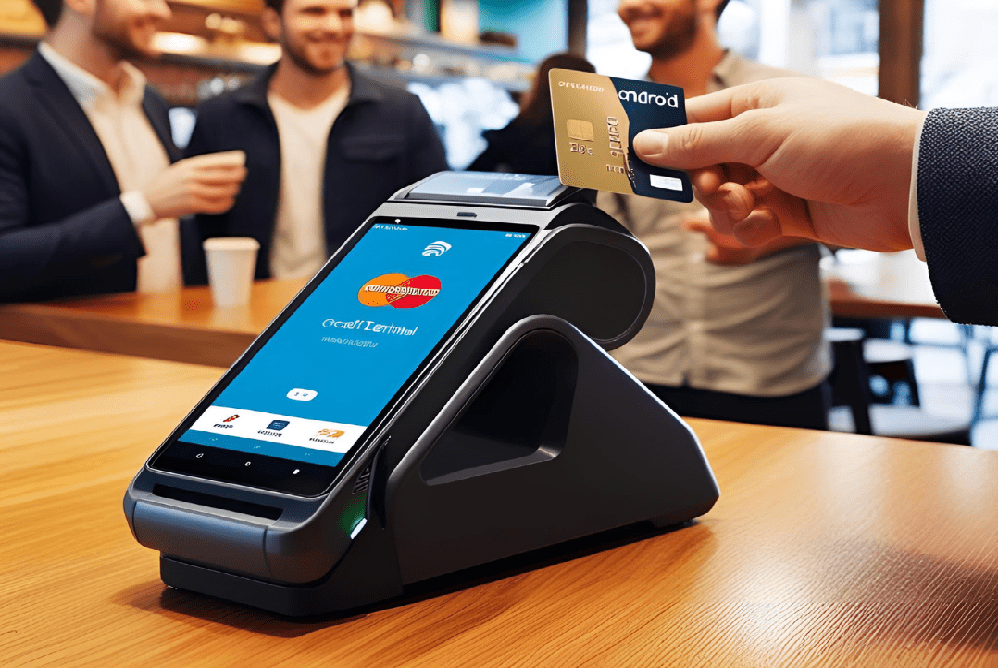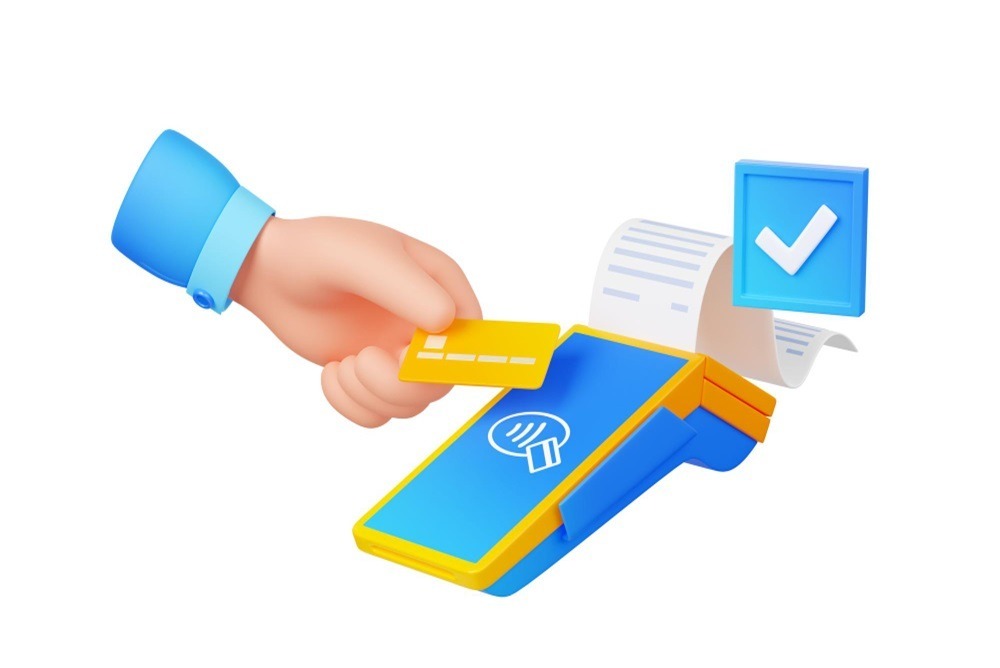

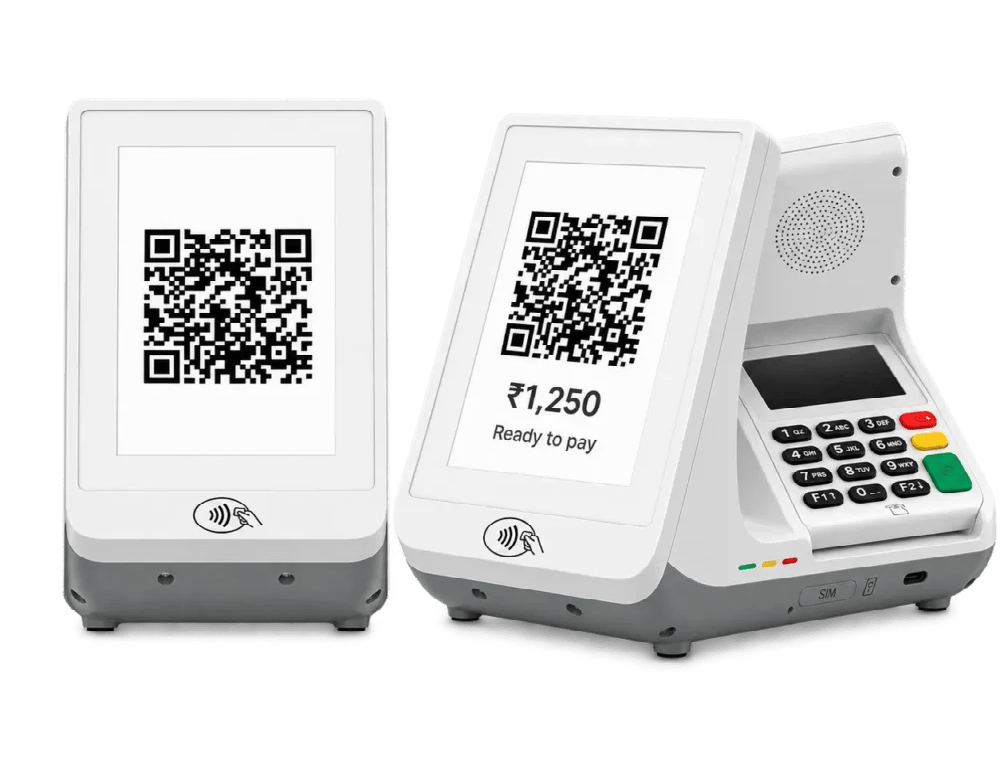
Payment acceptance devices are evolving beyond traditional QR-based payment announcers. Merchants increasingly need a single device that can accept QR payments, support NFC contactless transactions, provide instant voice confirmation and connect with payment applications and transaction management platforms.
What Is an All-in-One Payment Soundbox?
An All-in-One Payment Soundbox is an integrated payment acceptance device designed to support multiple payment methods and provide real-time transaction confirmation to merchants.
Unlike a conventional payment soundbox that primarily announces incoming QR-based payments, an integrated payment device can combine QR payment acceptance with NFC contactless card payment capabilities, depending on the hardware, software, payment scheme and certification requirements.
An All-in-One Payment Soundbox may support:
- Static QR payment acceptance
- Dynamic QR payment acceptance
- UPI payment integration where supported
- NFC contactless card acceptance
- EMV contactless transaction processing
- Voice-based payment confirmation
- LED and display-based status indication
- Cellular and Wi-Fi connectivity
- Remote device management
- Payment application and firmware updates
The objective is to combine multiple payment acceptance functions into one compact device, helping merchants reduce device complexity while offering a flexible payment experience.
The exact functionality depends on the device hardware, supported payment schemes, payment application, acquiring infrastructure and applicable certification requirements.
Why Is All-in-One Payment Soundbox Architecture Important?
Traditional payment acceptance infrastructure often separates QR payment notification devices from card acceptance terminals. Merchants may need multiple devices to accept different payment types, creating operational complexity.
An integrated payment architecture can bring these functions together within one device.
| Traditional Payment Setup | All-in-One Payment Device |
|---|---|
| Separate QR payment announcer | Integrated QR acceptance and transaction announcements |
| Separate NFC-enabled terminal | Integrated NFC acceptance where supported |
| Different merchant device workflows | Coordinated merchant payment workflow |
| Separate device management | Centralized device management capability |
| Multiple device maintenance requirements | Consolidated device management |
| Limited payment acceptance flexibility | Support for multiple payment technologies |
For banks, fintech’s and payment service providers, this architecture creates an opportunity to develop a unified payment acceptance ecosystem.
However, integrating multiple payment methods introduces technical requirements. QR processing, contactless transaction processing, payment communication, audio notifications and device management must operate independently where necessary while coordinating through a reliable software architecture.
All-in-One Payment Soundbox Architecture
An All-in-One Payment Soundbox architecture can be divided into six primary layers:
- Payment acceptance interface
- Hardware and communication layer
- Payment processing layer
- Transaction communication layer
- Acquiring host and payment backend
- Terminal management and monitoring layer
Each layer performs a specific function while interacting with other device components to process payment requests, communicate with payment infrastructure, receive transaction responses and generate merchant notifications.
Payment Acceptance Interface
The payment acceptance interface enables merchants and customers to initiate payment transactions using supported payment methods.
Depending on the device configuration, the interface may include:
- QR code display or printed QR interface
- NFC contactless reader
- Physical buttons
- Touchscreen or display
- Merchant transaction controls
- Audio notification interface
The interface determines how a payment is initiated and how the merchant interacts with the device.
For QR-based payments, customers may scan the merchant QR code using a mobile payment application.
For NFC-based contactless card payments, customers may tap a supported contactless card or payment-enabled device against the NFC interface.
The device must support the appropriate payment flow for each acceptance method.
Hardware and Communication Layer
The hardware layer provides the physical infrastructure required to execute payment applications, interact with payment interfaces, process transactions and deliver notifications.
A typical All-in-One Payment Soundbox hardware architecture may include:
| Hardware Component | Function |
|---|---|
| Main processor | Executes device software, payment application and communication services |
| NFC controller | Enables NFC communication with contactless cards and supported payment devices |
| NFC antenna | Establishes contactless communication |
| Secure element or security subsystem | Provides security functionality where required |
| QR interface | Supports QR display, scanning or QR-based payment workflows |
| Speaker | Delivers transaction confirmation and other audio notifications |
| Display or LED | Shows transaction status and device information |
| Cellular modem | Supports mobile network connectivity |
| Wi-Fi module | Provides wireless network connectivity |
| SIM or eSIM | Enables mobile network access where applicable |
| Battery and power management | Supports portable device operation |
| Flash storage and RAM | Stores software, configuration and operational data |
The hardware selection directly influences payment functionality, processing capability, security architecture, connectivity, battery life and certification requirements.
Payment Processing Layer
The payment processing layer manages payment acceptance logic and coordinates different payment technologies.
It typically contains separate modules for QR-based transactions and NFC contactless transactions.
QR Payment Processing Module
The QR payment module manages QR-based payment acceptance.
Depending on the payment model, the device may support:
- Static merchant QR
- Dynamic transaction QR
- Merchant identifier-based payment routing
- Transaction amount and reference generation
- QR configuration and provisioning
- Payment confirmation through backend communication
In a static QR workflow, the merchant QR code contains payment identifiers or merchant information. The customer scans the QR code and initiates payment through a supported payment application.
In a dynamic QR workflow, the payment device or connected payment application generates a transaction-specific QR code containing transaction-related information, where supported by the payment system.
The QR payment module is responsible for QR-related processing and device-side payment status coordination.
NFC Contactless Payment Module
The NFC module enables contactless card or payment-device interaction.
For card-based contactless payments, the architecture may include:
- NFC controller
- NFC antenna
- Contactless reader interface
- EMV contactless kernel
- Payment application interface
- Transaction data handling
- Acquiring host communication
The NFC communication interface detects and communicates with the contactless card or supported payment device. The contactless kernel manages the applicable EMV processing sequence according to the selected payment scheme and transaction requirements.
The payment application coordinates the transaction with the acquiring infrastructure.
NFC communication and EMV contactless transaction processing are separate architectural functions. The NFC controller enables contactless communication, while the EMV kernel manages the scheme-specific contactless processing logic.
This separation is important when developing a payment device that supports multiple contactless payment schemes.
Transaction Communication Layer
The transaction communication layer connects the device-side payment application to the payment infrastructure. It may include communication interfaces, networking services, transaction APIs and backend connectivity mechanisms.
The communication layer may support:
- Cellular network connectivity (2G, 4G depending on hardware and availability)
- Wi-Fi connectivity
- Secure API communication
- Transaction request and response exchange
- Device registration and authentication
- Configuration synchronization
- Network retry and recovery mechanisms
The device should be capable of managing network interruptions, delayed responses, communication failures and transaction status reconciliation.
For payment acceptance devices, connectivity reliability is critical because merchants need a clear transaction outcome whenever the payment infrastructure provides one.
Network and Transaction Handling
The payment application may implement:
- Connection monitoring
- Timeout management
- Retry policies
- Transaction reference tracking
- Duplicate transaction prevention
- Transaction status verification
- Response handling
- Communication logging
Retry policies should be designed carefully to prevent duplicate financial transactions. A communication timeout does not necessarily mean that a payment transaction has failed.
Acquiring Host and Payment Backend
The acquiring host or payment backend provides the infrastructure required to process payment requests and return transaction results.
Depending on the payment ecosystem, the backend may include:
- Payment switch
- Acquiring host
- UPI switch or payment network integration
- Card processing infrastructure
- Payment gateway
- Merchant transaction management
- Transaction reconciliation
- Settlement systems
- Merchant notification services
The device communicates with the appropriate payment infrastructure through its payment application and communication interfaces.
For QR transactions, the backend may process the payment through the relevant payment network or QR payment infrastructure.
For NFC card transactions, the payment application may communicate with the acquiring host through the supported card payment processing infrastructure.
The device architecture must accommodate the different processing requirements of QR and card transactions without treating both transaction types as identical.
Terminal Management System (TMS)
A Terminal Management System (TMS) can provide centralized management of deployed payment devices.
For an All-in-One Payment Soundbox, a TMS may support:
- Device registration and onboarding
- Merchant and device mapping
- Remote configuration
- Payment application updates
- Firmware updates
- QR configuration management
- Network configuration
- Device monitoring
- Battery and connectivity status
- Remote diagnostics
- Device lifecycle management
- Deployment tracking
For a fleet of payment devices deployed across merchants, centralized management reduces the need for manual device configuration and on-site intervention.
A TMS can also provide operational visibility into device health, connectivity and deployment status.
TMS functions are generally separate from financial transaction authorization and should not be confused with the payment processing engine.
QR Payment Processing in an All-in-One Payment Soundbox
QR payment acceptance is one of the primary functions of an integrated payment soundbox.
The payment flow depends on whether the device uses a static QR code, a dynamic QR code or a QR-based payment integration that includes additional device-side functions.
Static QR Payment Flow
In a static QR payment workflow, the merchant displays or provides a QR code that customers scan using their payment application.
The transaction flow typically works as follows:
- The merchant displays a static QR code.
- The customer scans the QR code using a supported payment application.
- The customer enters the payment amount, where applicable.
- The customer authorizes the payment.
- The payment application communicates with the relevant payment infrastructure.
- The payment transaction is processed.
- The payment system sends transaction confirmation to the merchant notification system or payment soundbox.
- The soundbox receives the transaction confirmation.
- The soundbox plays a voice announcement indicating the payment result.
The soundbox does not necessarily process the QR payment itself. In many architectures, the transaction is initiated and processed through the customer’s payment application and payment infrastructure, while the soundbox receives transaction confirmation through its connected service.
Dynamic QR Payment Flow
Dynamic QR payment acceptance may involve the device or payment application generating a QR code for a specific transaction.
A typical dynamic QR transaction flow is:
- The merchant enters the transaction amount or initiates a payment request.
- The device or payment application generates a transaction-specific QR code.
- The customer scans the QR code.
- The customer confirms and authorizes the payment.
- The payment network or backend processes the transaction.
- The payment system returns the transaction status.
- The soundbox receives the transaction result.
- The device announces the payment confirmation.
Dynamic QR can help improve transaction context by linking a payment request to a particular amount, reference or merchant transaction.
However, QR generation, payment routing and transaction confirmation mechanisms depend on the payment infrastructure being integrated.
NFC Contactless Payment Processing in a Soundbox
NFC contactless payment acceptance introduces an additional transaction processing architecture to the soundbox.
Unlike QR payment processing, which typically involves scanning a QR code and initiating payment through a mobile application, contactless card payments involve interaction between a contactless card or payment device and the NFC reader.
NFC Contactless Transaction Flow
A typical contactless card payment flow includes the following stages.
- Contactless card or device detection: The NFC reader detects a compatible contactless card or payment device within the supported operating range.
- NFC communication: The NFC controller and antenna establish communication with the card or payment device.
- EMV contactless processing: The applicable EMV contactless kernel performs the required processing according to the supported payment scheme and transaction configuration.
- Transaction data preparation: The contactless processing logic produces the required transaction data and results for the payment application.
- Payment application processing: The payment application manages the transaction flow, processing requirements, data handling and communication with the acquiring infrastructure.
- Acquiring host communication: The payment application transmits the required transaction request through the configured communication interface to the acquiring host or relevant payment infrastructure.
- Transaction response: The backend returns the transaction result.
- Merchant confirmation: The payment application interprets the transaction status and coordinates the merchant notification process.
- Audio confirmation: The soundbox announces the appropriate transaction outcome, depending on the configured audio notification logic.
The contactless transaction process requires integration between the NFC hardware, EMV kernel, payment application, communication interface and acquiring infrastructure.
QR and NFC Payment Processing: How Both Work in One Device
The primary architectural challenge of an All-in-One Payment Soundbox is managing multiple payment acceptance methods without creating separate, disconnected device workflows.
QR and NFC payments have different transaction initiation mechanisms, processing requirements and backend communication flows. The payment application must coordinate these workflows while maintaining consistent merchant notification, transaction tracking and device operation.
QR and NFC Payment Processing Comparison
| Processing Stage | QR Payment | NFC Contactless Payment |
|---|---|---|
| Payment initiation | Customer scans QR | Customer taps card or device |
| Payment interface | QR code | NFC reader and antenna |
| Payment processing | QR payment application or payment infrastructure | EMV contactless kernel and payment application |
| Transaction communication | QR payment network or backend | Acquiring host or card payment infrastructure |
| Transaction response | Payment status confirmation | Authorization or transaction response |
| Merchant notification | Audio, LED or display | Audio, LED or display |
The device may use separate QR and NFC modules, but both can integrate with shared device services such as connectivity management, merchant configuration, transaction status coordination, audio notification and device monitoring.
Unified Payment Device Workflow
This approach allows the device to support multiple payment acceptance workflows through a common payment application and device service architecture.
Voice Payment Confirmation and Audio Processing Architecture
Audio confirmation is a core feature of payment soundbox devices. It helps merchants receive transaction feedback without continuously checking their mobile phones or payment terminals.
The voice notification module is responsible for converting transaction status information into audible feedback.
How Voice Confirmation Works
- The payment transaction is initiated.
- The payment application sends the transaction request to the backend.
- The backend processes the transaction.
- The backend or integrated payment service returns the transaction result.
- The payment application validates and interprets the response.
- The device notification service receives the transaction status.
- The audio service selects the appropriate notification.
- The speaker announces the payment confirmation.
Audio Notification Components
| Component | Function |
|---|---|
| Audio service | Manages notification logic |
| Audio storage | Stores supported voice prompts |
| Audio decoder | Decodes supported audio formats |
| Speaker | Produces audible notifications |
| Volume control | Manages audio output levels |
| Language configuration | Selects supported language prompts |
| Notification queue | Manages concurrent or repeated notification events |
| Playback control | Handles playback, interruption and priority |
Examples of Audio Notifications
Depending on the payment status, the device may provide messages such as:
- Payment received
- Payment of ₹500 received
- Transaction successful
- Payment failed
- Network unavailable
- Device connected
- Low battery
The audio notification must be linked to a reliable transaction status. A soundbox should not announce a successful payment based merely on the customer initiating a payment or scanning a QR code.
Payment success announcements should be based on verified transaction status from an authorized payment source, not on unverified customer-side activity.
For merchants, the reliability of the audio confirmation is just as important as the payment acceptance capability itself.
Communication and Connectivity Architecture
An All-in-One Payment Soundbox requires reliable communication infrastructure to support payment transactions, backend services, merchant notifications and device management.
Cellular Connectivity
Cellular connectivity allows the device to operate independently of a merchant’s Wi-Fi network.
Depending on the hardware and deployment region, the device may support:
- 2G/4G LTE
- SIM or WIFI
Cellular connectivity can be particularly useful for small merchants, mobile merchants and businesses operating in locations where fixed broadband infrastructure is unavailable.
Wi-Fi Connectivity
Wi-Fi can provide an alternative communication channel where reliable wireless internet connectivity is available.
It may support:
- Payment backend communication
- Device configuration
- Software updates
- Device monitoring
- Diagnostics
- Remote management
Connectivity Management
The device software should manage network availability, connection status, communication timeouts and recovery.
A robust connectivity architecture may include:
- Network selection and management
- Connection monitoring
- Communication timeout handling
- Secure communication protocols
- Backend connection management
- Transaction recovery mechanisms
- Network diagnostics
- Configuration synchronization
The connectivity layer must support both payment processing and device management while ensuring that transaction handling remains reliable.
Security Architecture for an All-in-One Payment Soundbox
An integrated payment device requires a security architecture covering payment data, device communication, authentication, software integrity and operational management.
The security requirements depend on the device’s payment acceptance capabilities, payment scheme, deployment model and applicable standards.
Key Security Components
| Security Area | Implementation Considerations |
|---|---|
| Secure communication | Secure communication between device and backend |
| Device authentication | Device identity and authentication mechanisms |
| Secure boot | Verification of trusted device software where supported |
| Software integrity | Protection against unauthorized software modification |
| Payment data protection | Appropriate protection and handling of sensitive payment data |
| Key management | Secure key provisioning and lifecycle management |
| Access control | Restricted access to device configuration and administration |
| Firmware security | Controlled firmware updates and integrity verification |
| Application security | Protection of payment application components |
| Monitoring | Device security and operational monitoring |
NFC and EMV Security
For contactless card acceptance, the security architecture must address the applicable EMV contactless processing requirements, payment scheme requirements and certification obligations.
The NFC controller, contactless kernel, payment application and security infrastructure must be integrated according to the applicable payment acceptance architecture.
Depending on the device implementation, additional security components may include secure elements, trusted execution environments, cryptographic services and secure key storage.
QR Payment Security
QR-based payment acceptance also requires appropriate security controls.
These may include:
- Secure merchant QR configuration
- Merchant identity validation
- Backend authentication
- Transaction reference management
- Payment status verification
- Protection against unauthorized QR modification
- Secure device provisioning
Security should be considered throughout device development rather than introduced only during testing.
All-in-One Payment Soundbox Use Cases
An integrated payment device can support multiple merchant segments and payment acceptance environments.
- Retail Stores: Accept QR and supported contactless card payments through a unified device.
- Restaurants and Cafes: Provide transaction confirmation across different payment acceptance methods.
- Small and Micro Merchants: Use compact payment devices with mobile connectivity and audio notifications.
- Mobile Merchants: Support portable payment acceptance with battery-powered devices.
- Banks and Acquirers: Deploy integrated payment acceptance devices across merchant networks.
- FinTech’s and Payment Providers: Develop branded payment devices with integrated payment software.
Key Technical Considerations for Developing an All-in-One Payment Soundbox
Developing an All-in-One Payment Soundbox requires hardware, software, payment integration and operational planning.
- Hardware Selection: The hardware platform must support the required payment functionality, communication interfaces, audio output, power management and device performance.
- Payment Application Architecture: The payment application should coordinate QR and NFC workflows while maintaining appropriate transaction handling, backend integration and merchant notification.
- NFC and Contactless Integration: The NFC reader, antenna, contactless kernel and payment application must be integrated according to the applicable contactless payment requirements.
- QR Payment Integration: The device must support the relevant QR payment infrastructure, merchant configuration, transaction initiation and confirmation mechanisms.
- Backend Integration: The payment device must communicate with the appropriate payment switch, acquiring host, payment gateway or payment infrastructure.
- Audio and Notification Management: Audio notifications must be synchronized with reliable payment status information and managed appropriately during concurrent events or connectivity interruptions.
- Device Management: Remote configuration, software updates, monitoring and diagnostics are important for managing devices deployed across large merchant networks.
- Security and Certification: Security controls, payment scheme requirements, applicable certification and testing must be planned according to the device capabilities and intended deployment environment.
- Transaction Reliability: The device must handle communication failures, timeouts, transaction status verification, duplicate prevention and recovery scenarios.
- Scalability: The architecture should support future payment functionality, additional payment schemes, software updates and large-scale device deployment without requiring a complete redesign.
All-in-One Payment Soundbox Development: Implementation Approach
A structured development process helps payment providers and device manufacturers define the required architecture and integration responsibilities.
- Requirements Analysis: Define QR, NFC, audio, hardware, backend, payment scheme and deployment requirements.
- Hardware Evaluation: Evaluate processor, NFC reader, antenna, connectivity, speaker, battery and security architecture.
- Architecture Design: Define software modules, transaction workflows, APIs, payment application interfaces and device services.
- Payment Integration: Integrate QR payment workflows, NFC, EMV kernel, payment application and backend infrastructure.
- Security Integration: Implement applicable device security, authentication, data protection and key management.
- Testing and Validation: Validate payment flows, connectivity, audio, device behavior and required certification.
- Deployment: Configure device provisioning, merchant onboarding, backend connectivity and production readiness.
- Lifecycle Management: Support remote monitoring, updates, diagnostics and ongoing device maintenance.
Common Challenges in All-in-One Payment Soundbox Development
| Development Challenge | Technical Requirement |
|---|---|
| Integration of QR and NFC | Separate processing modules with coordinated payment application services |
| Contactless transaction processing | Appropriate EMV kernel integration and payment scheme compliance |
| Connectivity interruptions | Recovery, timeout handling and transaction status verification |
| Audio confirmation reliability | Verified transaction response and notification synchronization |
| Hardware limitations | Adequate processor, memory, NFC, power and speaker performance |
| Security requirements | Secure communication, device authentication and applicable security controls |
| Device deployment | Centralized provisioning, monitoring and remote management |
| Certification requirements | Scheme-specific, hardware-specific and applicable compliance testing |
| Backend integration | API, payment switch and acquiring host integration |
| Scalability | Maintainable architecture for software updates and fleet expansion |
These challenges need to be addressed during the architecture and development stages to avoid costly redesigns and deployment issues.
How EazyPay Tech Supports All-in-One Payment Soundbox Development
EazyPay Tech provides payment technology development, EMV integration, payment software and EMV certification support for banks, fintechs, payment service providers and payment device manufacturers.
For organizations developing an All-in-One Payment Soundbox, the development requirements may involve integrating QR payment acceptance, NFC contactless processing, EMV kernel functionality, payment applications, device communication and remote management.
Our technical capabilities include:
- Payment Application Development: Development and integration of payment applications for Android-based payment devices and payment acceptance hardware.
- EMV Contactless Kernel Integration: Integration support for EMV contactless kernels and payment scheme requirements.
- NFC Payment Integration: NFC interface and contactless transaction integration for supported payment device architectures.
- QR Payment Integration: Integration of QR-based payment acceptance workflows and payment backend connectivity.
- Payment Backend Integration: Integration with payment switches, acquiring hosts, payment gateways and payment service infrastructure.
- Terminal Management System (TMS): Remote device configuration, monitoring, application management and device lifecycle support.
- Payment Device Testing and Certification Support: Technical testing, integration validation and certification-related support for applicable payment requirements.
Whether you are developing a branded payment soundbox, integrating NFC contactless acceptance into an existing QR payment device, or building a new payment acceptance platform, the architecture must be designed around your hardware, payment infrastructure and business requirements.
Discuss your architecture, payment application, NFC/EMV kernel integration and software requirements with EazyPay Tech. Contact EazyPay Tech to discuss your All-in-One Payment Soundbox development and integration requirements.
Frequently Asked Questions
What is an All-in-One Payment Soundbox?
An All-in-One Payment Soundbox is a payment acceptance device that combines multiple payment technologies, such as QR-based payment acceptance and NFC contactless card acceptance, with audio confirmation and device connectivity features.
How does an All-in-One Payment Soundbox work?
The device accepts payment initiation through QR or NFC interfaces. The payment application manages the respective payment workflow, communicates with the relevant payment infrastructure, receives the transaction result and generates merchant confirmation through audio, display or LED notifications.
Can a payment soundbox accept contactless cards?
Yes, a payment soundbox can support contactless card acceptance if it incorporates compatible NFC hardware, the required payment application, an appropriate EMV contactless kernel and the applicable payment scheme approvals and certifications.
What is the role of an EMV kernel in an NFC payment soundbox?
The EMV contactless kernel manages the applicable contactless payment processing logic between the contactless interface and the payment application. It performs the scheme-specific processing required by the supported payment configuration.
Can one device support both QR and NFC payments?
Yes. A device can support QR-based and NFC-based payment acceptance through separate payment processing modules integrated with a common payment application or coordinated software architecture.
What hardware is required for an All-in-One Payment Soundbox?
Typical hardware includes a processor, NFC controller, NFC antenna, speaker, display or LED, cellular modem, Wi-Fi interface, battery, storage and the appropriate security components based on the device architecture.
What is the role of a TMS in an All-in-One Payment Soundbox?
A TMS manages deployed devices remotely. It can support device onboarding, configuration, application updates, firmware management, monitoring, diagnostics and lifecycle management.
Does an All-in-One Payment Soundbox require EMV certification?
If the device supports EMV contactless card payment acceptance, applicable EMV and payment scheme requirements may require testing, approvals and certifications depending on the product architecture, hardware, payment schemes and deployment model. QR-only functionality does not by itself require EMV contactless kernel certification.
Can an All-in-One Payment Soundbox support multiple languages?
Yes. The audio notification architecture can support configurable multilingual voice prompts, provided the audio service, stored prompts and device software are designed for those languages.
Can an All-in-One Payment Soundbox be developed with custom software?
Yes. Payment providers, banks, fintechs and OEMs can develop customized device software, payment applications, merchant workflows, backend interfaces, audio notifications and device management capabilities based on their requirements and hardware platform.