
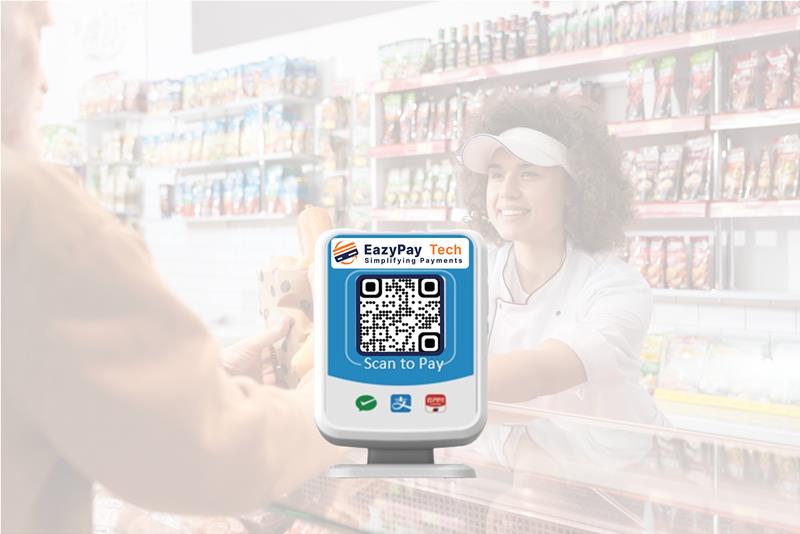
A Payment Soundbox is a specialized IoT device designed to give merchants instant, audible confirmation of digital payments such as UPI, QR code, NFC, and wallet transactions. While the hardware speaker, connectivity modules, and battery is visible, the real intelligence lies in the Embedded OS & Firmware that powers it.
The Embedded OS & Firmware layer acts as the device’s brain, orchestrating all tasks from secure data communication to voice announcements. This layer integrates multiple components, each serving a specialized role to ensure reliability, speed, and security.
RTOS / Embedded Linux – The Operating Core
The first layer of a Payment Soundbox’s intelligence is its operating system. Depending on device requirements, manufacturers use either:
- RTOS (Real-Time Operating System) – Lightweight and designed for predictable, low-latency performance. Ideal for devices with limited resources, ensuring payment notifications are processed within milliseconds.
- Embedded Linux – More powerful, capable of supporting complex networking stacks, multiple languages, and advanced OTA update systems. Suited for higher-end soundbox models.
Role in the Soundbox
- Manages CPU scheduling so critical tasks (e.g., payment alerts) get priority.
- Handles communication between hardware drivers, the MQTT stack, and application logic.
- Ensures real-time audio playback without lag, even during high network traffic.
MQTT Client Stack – Real-Time Payment Messaging
A Payment Soundbox must deliver instant voice notifications to merchants when a customer makes a payment. This is achieved via the MQTT Client Stack.
Why MQTT?
- Lightweight protocol with minimal bandwidth usage — perfect for mobile networks like 2G/4G or low-power Wi-Fi.
- Supports publish-subscribe communication, enabling payment servers to push notifications directly to the device.
- Built-in Quality of Service (QoS) levels ensure message delivery even in poor connectivity.
Process Flow:
- The soundbox subscribes to a unique merchant topic on the payment server.
- When a payment occurs, the server publishes a message to that topic.
- The MQTT client inside the soundbox receives the message, validates it, and sends it to the Command Processor for action.
Voice Engine – Converting Payments into Sound
The Voice Engine is the module that transforms digital payment confirmation data into human-readable (or rather, human-hearable) messages.
Key Features:
- Multi-language support for local and international markets.
- Preloaded audio clips for common phrases like “Payment Received” and dynamic text-to-speech (TTS) for announcing transaction amounts.
- Adjustable playback speed, tone, and volume for different environments.
Example Workflow:
- MQTT message arrives: { “amount”: “250.00”, “currency”: “INR” }
- Command Processor requests the Voice Engine to create the announcement.
- Voice Engine selects language settings (e.g., Hindi, English) and either plays a pre-recorded clip or generates speech dynamically.
- Audio is output through the device’s high-quality speaker.
OTA Module – Seamless Updates Without Downtime
The OTA (Over-The-Air) Module ensures that Payment Soundboxes remain secure, up-to-date, and compliant with evolving payment regulations.
Functions:
- Download and install new firmware versions over mobile or Wi-Fi networks.
- Apply security patches without disrupting active payment processing.
- Enable remote feature upgrades, such as adding new languages or integrating additional payment methods.
Security in OTA:
- Uses encrypted channels (TLS/SSL) for update delivery.
- Digital signature verification to ensure the firmware has not been tampered with.
- Version rollback capability in case an update fails.
Command Processor – The Central Decision Maker
The Command Processor is the device’s control hub. It receives instructions from the cloud server, processes them, and triggers appropriate actions in other modules.
Examples of Commands:
- Change the announcement language.
- Adjust volume or mute temporarily.
- Run diagnostics and send logs to the server.
- Activate firmware updates via the OTA Module.
Workflow Example:
- Merchant changes soundbox settings via a mobile app.
- Command sent from cloud → MQTT message received.
- Command Processor interprets the message and routes it to the correct subsystem.
- Changes take effect instantly without rebooting the device.
How These Components Work Together
In a live payment scenario:
- Customer pays via QR code or UPI → payment server processes the transaction.
- Payment server publishes MQTT message to the merchant’s topic.
- MQTT Client Stack receives the message and hands it to the Command Processor.
- Command Processor validates the payment details and calls the Voice Engine.
- Voice Engine generates the announcement in the merchant’s preferred language.
- Speaker plays the audio instantly, confirming the payment.
Meanwhile, the RTOS/Embedded Linux ensures all these tasks run in parallel without delays, and the OTA Module silently checks for any available firmware updates in the background.
The Embedded OS & Firmware in a Payment Soundbox is a tightly integrated ecosystem where each component plays a critical role in delivering fast, reliable, and secure payment notifications.
From the real-time responsiveness of an RTOS to the instant connectivity of MQTT, the clarity of the Voice Engine, and the flexibility of OTA updates, this technology stack ensures merchants get the one thing they value most — immediate, trustworthy confirmation of payments.