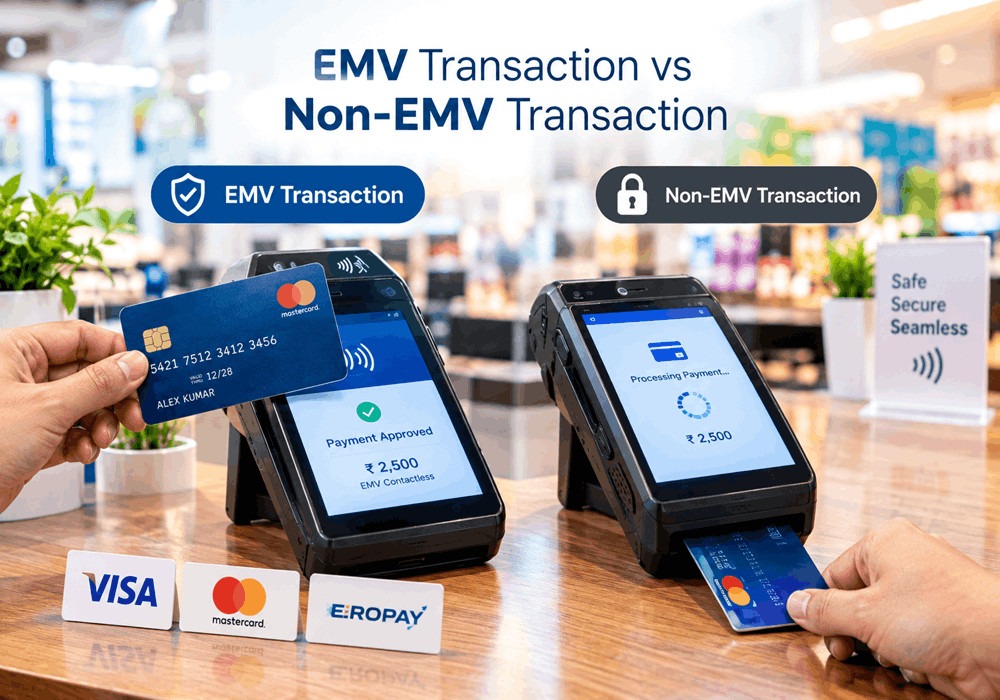


In the world of modern digital payments, where EMV card-based transactions have become the global benchmark of security, interoperability, and reliability, Data Integrity Verification represents one of the most critical, foundational, and deeply scrutinized dimensions of EMV Level 3 Certification, because it focuses on ensuring that every individual component, structure, object, tag, length, value, message, buffer, data field, and cryptographic parameter flowing through the terminal during the entire lifecycle of an EMV transaction is received, processed, generated, and transmitted without corruption, loss, truncation, misinterpretation, or unintended alteration, thereby guaranteeing a transaction experience that aligns with the operational expectations of schemes like Visa, Mastercard, RuPay, Amex, and Discover and upholding the industry’s promise of robust card–terminal–issuer communication.
As EMV L3 Certification evaluates the terminal-level behavior, it becomes necessary to validate that the terminal is not merely supporting the rigid L1 electrical interface and L2 kernel behavior but is also processing every EMV data element especially user input, EMV kernel outputs, card-generated values, issuer-generated scripts, and acquirer message structures with uncompromised precision, because any deviation from expected behavior creates risks of declining legitimate transactions, causing host rejections, compromising security, or violating scheme-specific technical standards.
Thus, Data Integrity Verification emerges as a crucial pillar, ensuring the payment terminal precisely maintains the integrity of transaction data from the moment the card is tapped, inserted, or swiped until the final authorization response is received from the issuer and appropriately acted upon.
What Is Data Integrity Verification in EMV L3?
Data Integrity Verification refers to the extensive set of validation procedures executed during EMV L3 Certification that are specifically designed to confirm that all data exchanged between the terminal, the EMV card, the issuer host, and the payment kernel remains complete, accurate, unmodified, and compliant with global EMV norms and scheme-specific rules.
To put it simply:
If any EMV tag, length, value, or cryptographic field deviates—even slightly—from the expected specification, the L3 test case fails immediately.
At its core, Data Integrity Verification ensures:
- Correct representation, transmission, and interpretation of EMV TLV objects, ensuring tags are correct, lengths accurate, and values not distorted.
- Accurate reconstruction of CDOL1 and CDOL2 data lists, preserving byte order and required input structures for cryptogram generation.
- Correct generation of cryptographic artifacts, such as ARQC, TC, AAC, UN, SDAD, and issuer script cryptograms.
- Reliable host messaging format, ensuring ISO 8583 message integrity, correct DE55 build, and adherence to scheme-defined data packaging.
- No internal corruption in buffers, which ensures consistent behavior across transaction logs, receipt printing, kernel processing, and host messaging.
- Accurate handling of issuer scripts, ensuring scripts are neither modified nor incorrectly executed.
This ensures the terminal is not only technically correct but interoperable with millions of card and issuer variations across different countries.
Why Data Integrity Matters in EMV L3 Certification
EMV Level 3 Certification focuses on the application layer the part of the terminal that orchestrates user interaction, kernel communication, receipt generation, host message exchange, and transaction flows. Data Integrity becomes important because:
Ensures Trust Between Terminal and Issuer
Issuers rely heavily on cryptograms, risk data, and EMV tag values to determine whether a transaction is:
- genuine
- safe
- manipulated
- replayed
- fraudulent
- risky
- or valid
If the data integrity is compromised, issuers will reject even genuine transactions.
Prevents Terminal Host Rejections
Acquirers routinely reject malformed ISO 8583 messages due to:
- incorrect field lengths
- missing ICC (Integrated Circuit Card) data
- invalid DE55 structures
- mismatched ARQC data
- incorrect PAN or expiry format
- corrupted or malformed binarized fields
These failures lead to:
- certification failure
- commercial deployment delays
- customer dissatisfaction
- inability to process EMV transactions
Maintains Kernel-Level Compliance
The EMV kernel depends on precise TLV data. Any corruption results in:
- incorrect risk management
- wrong CVM selection
- wrong cryptogram generation
- unpredictable transaction flows
Guarantees Interoperability Across Schemes
Each scheme (Visa, Mastercard, RuPay, Amex, Discover, JCB) requires its own set of validations, which depend heavily on accurate data propagation.
Thus, Data Integrity Verification ensures that every scheme sees the terminal as a completely compliant device, capable of interacting with all card types.
Core Pillars of Data Integrity Verification
The following sections delve deeply into how Data Integrity Verification is structured, evaluated, and validated.
TLV (Tag-Length-Value) Encoding Integrity
TLV integrity is the foundation of EMV data exchange.
During EMV L3 testing, TLV objects generated by the card, interpreted by the terminal, or transmitted to the issuer must maintain exact consistency in tag representation, length structure, and data content, ensuring that the terminal does not introduce incorrect padding, drop bytes, modify values, reorder fields, or incorrectly encode constructed templates, because such errors create catastrophic mismatches in subsequent risk, authentication, and host processing stages.
- Every EMV Tag must be encoded using the correct BER-TLV rules, ensuring that single-byte tags, multi-byte tags, and constructed tags adhere to standard encoding mechanisms without introducing illegal tag bits or modifying the class, type, or constructed flags, because incorrect tag encoding leads to immediate parsing failures within test tools, host validators, and issuer validation systems.
- The Length field must represent the actual number of bytes contained in the Value field using proper short-form or long-form encoding, where long-form encoding requires the high bit (0x80) and subsequent bytes to declare actual length, thereby ensuring that terminals do not misrepresent critical fields such as Track 2 Equivalent Data, Application Interchange Profile, AFL, or Cryptogram Information Data.
- The Value must be transmitted without any corruption or truncation, meaning the terminal must not introduce random bytes, wrong padding, missing leading zeros, or modified numeric representations, as even a minute alteration of a cryptographic field causes issuer-side Mismatch and Invalid ARQC errors.
DOL (Data Object List) Interpretation Integrity
DOLs such as CDOL1, CDOL2, DDOL, and TDOL define what data is fed into cryptographic operations.
Data Integrity Verification checks whether the terminal reconstructs CDOL, DDOL, and TDOL inputs in the exact order, length, and content expected by the card, because cryptographic operations depend entirely on predictable inputs, and even a one-byte shift in structure leads to incorrect ARQC, failed cryptographic validation, and immediate L3 failure.
- CDOL1 must be reconstructed precisely as defined by the card, including mandatory fields like amount authorized, other amount, terminal country code, transaction type, TVR, transaction currency code, unpredictable number, and terminal verification results, because CDOL mismatches lead the card to generate cryptograms using incorrect contextual inputs, which confuses the issuer and invalidates ARQC.
- DDOL reconstruction must preserve the format and length of the dynamic data requested by the card, ensuring correct unpredictable number generation and SDA/DDA/CDA validation, since this value forms the basis of dynamic data authentication.
- TDOL values—when requested—must be interpreted exactly, ensuring offline data authentication logs reflect accurate parameters.
Cryptographic Integrity Validation
Authentication, authorization, and issuer decisions depend on cryptographic correctness.
The EMV L3 process validates that every cryptographic value, including ARQC, TC, AAC, SDAD, and the unpredictable number, is generated using the correct input data, correct algorithms, correct padding rules, and correct byte order, ensuring that the terminal does not create malformed cryptograms that issuers reject.
- ARQC (Authorization Request Cryptogram) must match issuer expectations byte-for-byte, because even a one-bit mismatch indicates CDOL reconstruction failure, improper unpredictable number generation, or terminal risk management corruption.
- TC (Transaction Certificate) must reflect the card’s approval decision accurately, ensuring no modification occurs before forwarding DE55 to the issuer, because issuers rely on TC to validate offline-accepted transactions.
- AAC (Application Authentication Cryptogram) must represent a precise decline decision, ensuring that terminals do not incorrectly override card-generated declines.
- SDAD (Signed Dynamic Application Data), used in DDA/CDA, must be passed through without modification, because it validates card authenticity.
- The Unpredictable Number (UN) must be generated using a strong entropy source, because weak UN causes scheme rejection.
Host Message Integrity (ISO 8583 Verification)
ISO 8583 messages are the backbone of online authorization.
Data Integrity Verification ensures that every field inside the authorization request (especially DE55) is accurate, consistently encoded, and includes all required EMV tags without modification, because host processing engines are strict and immediately reject malformed data structures.
- DE55 must carry every EMV tag in the exact sequence required by the scheme, ensuring no missing mandatory tags like 9F02, 9F03, 5F2A, 9A, 9C, 9F10, 9F1A, 9F1E, 9F26, 9F27, 9F36, and 82.
- DE2 (PAN), DE14 (expiry), DE22 (POS entry mode), DE23 (PAN sequence number), DE35 (Track 2), and DE41/42 (terminal and merchant IDs) must be encoded without truncation or unexpected formatting, because many issuers perform strict input validation.
- MAC-based messages (in secure channels) must include correct MAC computation, ensuring the terminal does not corrupt the secure messaging envelope.
Issuer Script Integrity Validation
Issuer scripts are instructions sent by the issuer to modify card parameters.
Data Integrity Verification ensures that the terminal does not alter, truncate, misinterpret, corrupt, or reorder issuer scripts because script processing accuracy determines whether the issuer-approved updates are correctly applied.
- Issuer Script 71 (before transaction completion) must be executed exactly as received, without modifying the script payload or inserting unintended TLV structures.
- Issuer Script 72 (after transaction completion) must be processed and logged correctly to allow auditability.
- Script results must be returned accurately to the host, ensuring issuers can validate success or failure.
Common Causes of Data Integrity Failures in EMV L3 Certification
Below are real-world causes of data integrity failures.
Most failures originate from incorrect TLV encoding, malformed DOL reconstruction, cryptographic mismatches, corrupted DE55 fields, or improper issuer script handling, all of which can be avoided with careful pre-certification testing and adherence to scheme-specific requirements.
- Incorrect TLV lengths that do not match actual value size.
- Malformed constructed tags like 70 and 77 templates.
- Incorrect CID values or missing cryptograms.
- Unpredictable number not meeting entropy requirements.
- Unsupported padding rules in ARQC generation.
- Missing mandatory tags in DE55.
- Corrupted cardholder verification result (9F34).
- Failure to pass correct Terminal Type or Terminal Capabilities.
- Incorrect byte-order during CDOL packaging.
Best Practices for Manufacturers and Developers
To ensure successful L3 Certification, terminals must adopt strong engineering and data validation techniques that maintain uncompromised data integrity throughout the EMV flow.
- Use a robust TLV encoder/decoder library with automated validation.
- Ensure strict data preservation between kernel output and host input.
- Implement logging mechanisms that capture pre- and post-host data.
- Run internal pre-certification scripts using scheme test cards.
- Perform cross-scheme testing to catch differences between Visa/Mastercard/RuPay.
- Ensure that the issuer script engine is fully EMV-compliant.
- Never manipulate kernel-generated TLV data at the application layer.
Data Integrity Verification is among the most critical parts of EMV Level 3 Certification because it ensures that every byte of information exchanged in the payment ecosystem is accurate, consistent, secure, and compliant. By maintaining perfect TLV structures, correct cryptographic data, precise ISO 8583 formatting, and flawless issuer script processing, terminal manufacturers achieve not only certification success but long-term interoperability and trust across global card networks.