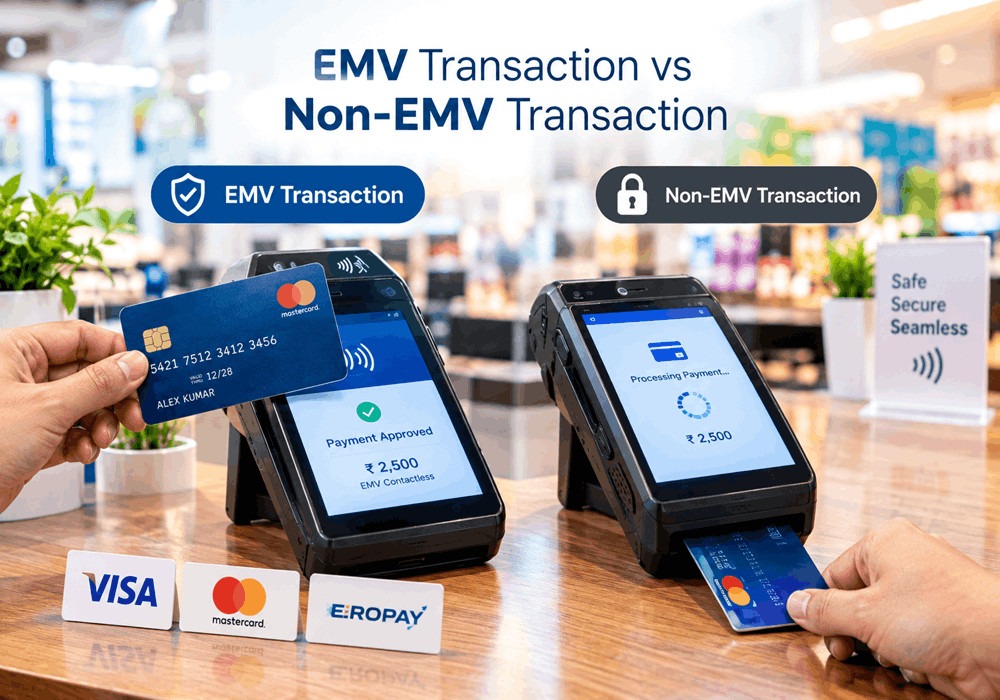
In EMV-based payment ecosystems, the process of selecting the correct application on a chip card is one of the most fundamental and technically critical elements in ensuring a predictable, secure, and standards-compliant transaction flow, and during EMV Level 3 (L3) certification this logic is evaluated with extreme precision because any deviation even a subtle ordering difference, a missing tag, an incorrect priority setting, or a misalignment with kernel-specific behavior can lead to certification failure, interoperability issues, and unpredictable acceptance experiences in live merchant environments. Application Selection is not merely a basic matching mechanism between AIDs (Application Identifiers); instead, it represents a structured decision-making process governed by EMVCo specifications, terminal capabilities, card profiles, priority indicators, candidate list construction rules, and user interaction paths, all of which must be implemented flawlessly inside the terminal application and validated during L3 testing.
Why Application Selection Matters in EMV L3
The EMV L3 test plan includes extensive scenarios focused exclusively on verifying that the terminal correctly identifies, constructs, orders, displays, selects, and activates the right application without violating specification requirements, user experience expectations, or card scheme rules. This ensures that the terminal:
- Can handle both contact and contactless payment environments without ambiguity, meaning the terminal must differentiate between payment brands, co-branded cards, and multiple kernels while ensuring the correct one is activated for transaction processing.
- Can interpret complex card structures containing multiple AIDs, including those with overlapping RID components, extended AIDs, proprietary AIDs, debit/credit pairs, and optional fallback applications.
- Respect cardholder preference indicators and terminal configurations, ensuring that the user’s prior selection or the card’s priority list is followed exactly as defined by the EMVCo specification.
- Avoids incorrect application activation, which can lead to transaction decline, mis-routing to the wrong scheme, incorrect CVM selection, or mismatches in cryptographic profiles.
- Ensures consistent behavior across all kernel types, since contact kernels (Mastercard, Visa, RuPay, Amex, JCB, Discover) and contactless kernels (qVSDC, MSD, PayWave, PayPass, ExpressPay, RuPay Contactless, JCB Contactless, D-PAS) all have different configuration and ordering requirements.
Overview of the EMV Application Selection Process
- The Application Selection process is typically divided into the following steps:
- Reading Application Identification Data from the Card
- Matching AIDs Supported by the Terminal with those on the Card
- Constructing the Candidate List
- Prioritizing the Candidate List
- Performing Final Selection
- Initiating the Selected Application Definition File (ADF)
Each of these steps is tested individually and in combined scenarios during EMV L3 certification to ensure conformance across edge cases, multi-application cards, proprietary applications, and co-branded card scenarios.
Terminal AID List: Configuration and Importance
Before the terminal can perform candidate list creation, it must maintain a well-defined AID list including:
- Full length AIDs
- Partial AIDs
- Priority indicators
- Kernel mapping information
- Contact/contactless capability flags
- Terminal supported application attributes (e.g., EMV mode, MSD mode, qVSDC mode)
Terminal AID List Requirements
- The terminal AID list must contain properly configured full AIDs that represent each supported scheme, and these AIDs must exactly match EMVCo-defined or scheme-defined values, meaning the slightest mismatch, additional byte, or incorrect structure will cause the terminal to reject valid card applications or mistakenly trigger a fallback mechanism which directly results in a certification failure during L3 testing.
- The terminal must support partial selection when enabled, which requires the presence of partial AIDs defined in accordance with the EMVCo specification, allowing the terminal to match a subset of leading bytes with card-present applications, and this becomes particularly important in markets where multiple regional schemes share overlapping identifiers or where co-branded cards embed proprietary extensions beneath parent RIDs.
- Priority indicators must be interpreted correctly, meaning the terminal must use the application priority indicator (if present) when multiple AIDs from the same scheme exist on the card or when the card defines a logical preference order, ensuring that the terminal does not override cardholder or issuer preferences unless explicitly permitted by configuration.
- Kernel mapping must be consistent, which means each AID must be directly linked to a specific EMV kernel in the terminal architecture, ensuring the correct contact or contactless kernel is invoked, because any incorrect mapping (e.g., Visa AID linked to Mastercard kernel) will cause immediate test case failures during L3 certification.
Reading Application Data from the Card
Once the card is powered on (contact) or presented (contactless), the terminal issues the SELECT PPSE (contactless) or SELECT 1PAY.SYS.DDF01 (contact) command to retrieve the directory files that list available applications.
What the Terminal Must Extract
- ADF Name (Application Identifier)
- Application Priority Indicator
- Language Preference (optional)
- PDOL (Processing Options Data Object List)
- FCI Template
- Application Label / Preferred Name
- Issuer Code Table Index
Correct Card Reading Behavior
- The terminal must interpret the FCI Template structure with precision, ensuring it correctly extracts the DF Name, proprietary templates, application labels, and nested tags without ignoring optional fields or misreading tag lengths, because L3 test tools deliberately inject cards with edge-case structures to validate parsing robustness.
- The terminal must correctly process PDOL even when empty, meaning if the card does not specify PDOL, the terminal must still proceed correctly to the GET PROCESSING OPTIONS command using a NULL PDOL data field, otherwise the flow breaks and leads to erroneous transaction initialization.
- The terminal must gracefully handle missing, malformed, or proprietary tags, which is crucial because EMV L3 certification includes test cases where tags are reordered, absent, or non-critical, verifying that the terminal logic is flexible while still maintaining compliance with expected EMVCo behavioral rules.
Constructing the Candidate List
Candidate List creation is where most L3 certification issues occur, because this step depends heavily on:
- Terminal configuration
- Partial/full matching rules
- AID ordering
- Scheme priority
- Cardholder preference
Key Rules for Candidate List Construction
- Full AID match takes priority over partial AID match.
- The terminal must compare card AIDs in order of appearance.
- Partial AID matches may be allowed or disallowed depending on configuration.
- Applications explicitly blocked or disabled by the terminal must not appear on the candidate list.
- Proprietary AIDs must be included only when permitted.
Candidate List Creation Logic
- For every AID detected on the card, the terminal must check against its own AID list using both full and partial comparison logic, meaning the terminal must sequentially inspect each terminal-supported AID and evaluate whether the card-provided AID begins with the same sequence of bytes or matches completely, and during L3 testing the test tool provides cards with nearly identical AIDs to verify that the terminal chooses the correct match using the EMV-specified longest-match-wins rule.
- The terminal must avoid duplicates in the candidate list, which sounds trivial but is a frequent L3 certification failure, especially when multiple entries exist for the same RID in the terminal configuration or when card-based priority indicators cause reordering that the terminal must reconcile to avoid duplication.
- The terminal must not include applications that are disabled, meaning configuration flags such as “AID disabled,” “contactless not allowed,” “kernel not supported,” or “scheme temporarily deactivated” must override any card-based presence, ensuring that the terminal does not attempt to activate an unsupported application that would later produce APDU errors.
- When the card contains multiple AIDs associated with the same scheme, the terminal must apply issuer-defined priority indicators to maintain correct transaction order, and this logic is tested through multiple test scenarios containing Visa + Visa Debit, Mastercard Credit + Maestro, or RuPay + Proprietary AIDs, ensuring that the terminal respects issuer ordering.
Prioritizing the Candidate List
After constructing the candidate list, the terminal must order it correctly.
Rules Involved
- Use Application Priority Indicator if present.
- Use terminal priority if the card does not specify.
- Follow user preference for explicitly selected applications.
- Maintain strict ordering for co-branded cards as per scheme rules.
Candidate List Priority Handling
- The terminal must prioritize applications first using the card’s Application Priority Indicator, which is an issuer-set parameter allowing card programs to control which application should be selected first, and this is especially important in multi-application cards where one AID represents the domestic debit scheme while another represents an international brand; incorrect ordering leads to scheme-mandated L3 failures.
- If multiple AIDs share the same priority value, the terminal must use its internal ordering configuration, which might be based on market rules (e.g., domestic scheme preferred first), merchant settings, regulatory mandates, or scheme issuer agreements.
- User-selected preferences must override card or terminal priorities, meaning if the terminal is configured to allow cardholder selection, and the user selects a particular application (e.g., credit vs debit), then this selection must take precedence in the final candidate list ordering, and L3 test tools specifically include manual selection test scripts to verify this behavior.
User Interface Requirements for Candidate List Display
If more than one application is eligible, the terminal may need to display a menu for the user to choose from.
Descriptive UI Requirements
- Application Label or Preferred Name must be displayed.
- The list must be ordered according to the final priority sequence.
- The terminal must not show disabled or hidden AIDs.
- User selection must be captured reliably.
Long Descriptive Bullet Points on UI Logic
- The terminal must always display the application label unless explicitly disabled, meaning the user must see “Credit,” “Debit,” “Visa,” “Mastercard,” or scheme-defined readable names rather than internal codes or AID strings, ensuring consumer comprehension and compliance with scheme branding policies.
- The terminal must avoid overwhelming the user with too many choices, and EMV L3 certification includes checks ensuring that only relevant AIDs are displayed and that proprietary or background AIDs (such as loyalty applications) are excluded when not appropriate.
- User input must not time out too quickly, as EMV L3 evaluators check whether the terminal provides sufficient time to choose, and “auto-select after timeout” behavior must match specification requirements.
Final Application Selection
Once the priority list is applied, the terminal selects the top application unless:
- The user chooses another application.
- Cardholder confirmation is required.
- Terminal configuration forces automatic selection.
Core Behaviors to Validate in EMV L3
- Correct SELECT AID APDU construction
- Correct response parsing
- Handling AID-not-found errors
- Correct fallback behavior
Handling Application Selection Errors
Common EMV L3 scenarios include:
- AID Not Found
- Application Blocked
- SELECT Response Missing Files
- Incorrect ADF
- Wrong Kernel Activated
Error Handling Requirements
- The terminal must detect when a selected AID is not supported by its kernel, and automatically move to the next candidate without freezing or terminating prematurely, because EMV L3 test cards intentionally include unsupported AIDs to validate error resilience.
- The terminal must reject applications that return invalid FCI templates, ensuring that malformed or incomplete APDU responses do not cause undefined behavior or incorrect transaction flows.
- The terminal must fall back to another application or to a magnetic stripe (if allowed) only under conditions permitted by the scheme’s fallback rules, and L3 certification includes strict checks ensuring no premature or unauthorized fallback is triggered.
During EMV L3 certification, Application Selection accounts for nearly 30–40% of all test cases, making it one of the largest sources of failures. Poorly implemented selection logic not only causes certification rejections but also leads to:
- Customer support escalations
- Higher transaction declines
- Incorrect routing
- Scheme compliance violations
- Loss of merchant trust
For this reason, manufacturers and software developers must follow a rigorous development and testing approach, including:
- Reviewing EMVCo Book 1 & Book 3 thoroughly
- Validating all edge cases with real and simulated cards
- Performing multi-kernel testing
- Ensuring accurate terminal configuration management
- Conducting pre-certification L3 dry runs.