
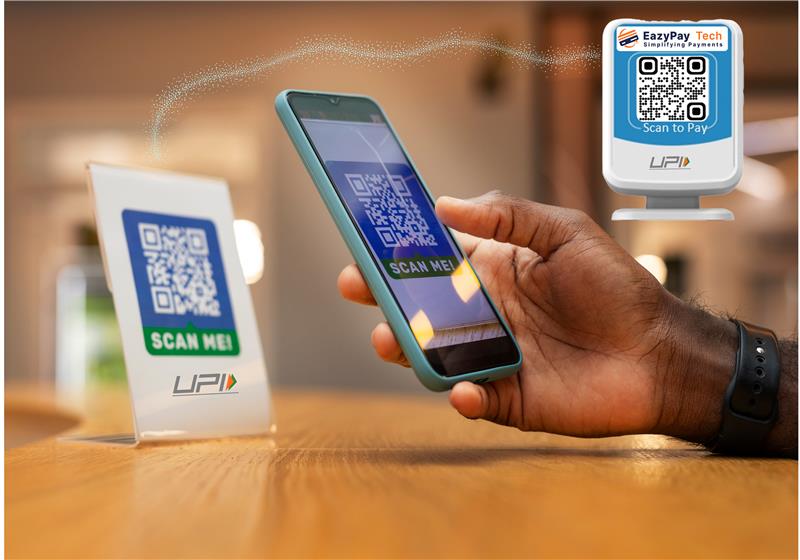
The Payment Soundbox has become one of the most powerful in the Indian digital payment’s ecosystem. From small shopkeepers to large retail chains, this device has simplified the way merchants receive instant payment confirmations. Each time a customer pays via UPI, the Soundbox announces the receipt of money, building trust between buyer and seller. But behind this simple voice notification, there is a complex flow of transactions involving multiple parties. Two of the most important participants in this process are the Issuer and the Acquirer. Understanding their roles is key to understanding how a Payment Soundbox works in the UPI framework.
What is an Issuer in UPI Payment Soundbox?
In the UPI ecosystem, the Issuer refers to the customer’s bank the financial institution that issued the UPI-linked account or card. Whenever a customer initiates a payment through a UPI application like PhonePe, Google Pay or Paytm, the request is directed first to the Issuer bank. The Issuer verifies the availability of funds, authenticates the credentials entered by the customer, and authorizes the debit from the account.
In the context of the Payment Soundbox, the Issuer plays a critical role because without the successful approval from the Issuer, no transaction can be completed or announced by the Soundbox.
- Example: A customer uses Google Pay to scan a QR code on the Payment Soundbox. If their UPI ID is linked to an HDFC Bank account, HDFC Bank acts as the Issuer.
- Responsibilities of Issuer in Payment Soundbox transactions:
- Validates the customer’s UPI credentials and ensures secure payment initiation.
- Debits the transaction amount from the payer’s account.
- Confirms transaction status to the UPI switch (NPCI).
- Works with the Acquirer to finalize settlement and enable the Payment Soundbox to announce “Payment Received.”
Thus, the Issuer ensures that the payer side of the Payment Soundbox transaction is successfully handled.
What is an Acquirer in UPI Payment Soundbox?
While the Issuer focuses on the customer’s side, the Acquirer represents the merchant’s side in the transaction. The Acquirer is the bank or payment service provider (PSP) that enables merchants to accept UPI transactions through QR codes, POS terminals, and especially through the Payment Soundbox.
The Acquirer is responsible for onboarding merchants, providing them with the Payment Soundbox device, generating their QR code, and ensuring smooth settlement of funds into the merchant’s account. Once the transaction is confirmed by the Issuer and routed through NPCI, it is the Acquirer who credits the merchant’s account and simultaneously updates the Payment Soundbox with a voice notification.
- Example: If a merchant is using a Paytm Soundbox linked with an ICICI Bank account, then ICICI Bank is the Acquirer.
- Responsibilities of Acquirer in Payment Soundbox transactions:
- Onboards merchants after completing their KYC process.
- Issues the QR code and provides the Payment Soundbox device.
- Processes incoming UPI payments and ensures they are routed correctly.
- Credits the final settlement amount to the merchant’s bank account.
- Sends real-time transaction confirmation to the Payment Soundbox so that it can announce the payment received.
In simple terms, the Acquirer ensures that the receiver side of the Payment Soundbox transaction works seamlessly.
Step-by-Step Flow of UPI Transactions in a Payment Soundbox
The functioning of a Payment Soundbox becomes clearer when we look at the transaction process step by step.
- Payment Initiation
- The customer scans the merchant’s QR code displayed on the Payment Soundbox.
- The UPI app requests payment authorization from the Issuer bank.
- Issuer Bank Authorization
- The Issuer verifies the customer’s credentials, checks the available balance, and authorizes the debit.
- Transaction Routing via NPCI
- The UPI switch operated by NPCI routes the transaction from the Issuer to the Acquirer.
- Acquirer Bank Processing
- The Acquirer bank receives the authorization and credits the merchant’s account with the payment amount.
- Payment Soundbox Notification
- The Acquirer bank updates the Payment Soundbox in real-time.
- The Soundbox plays a voice alert confirming that the payment has been received.
Transaction Flow Diagram for Payment Soundbox
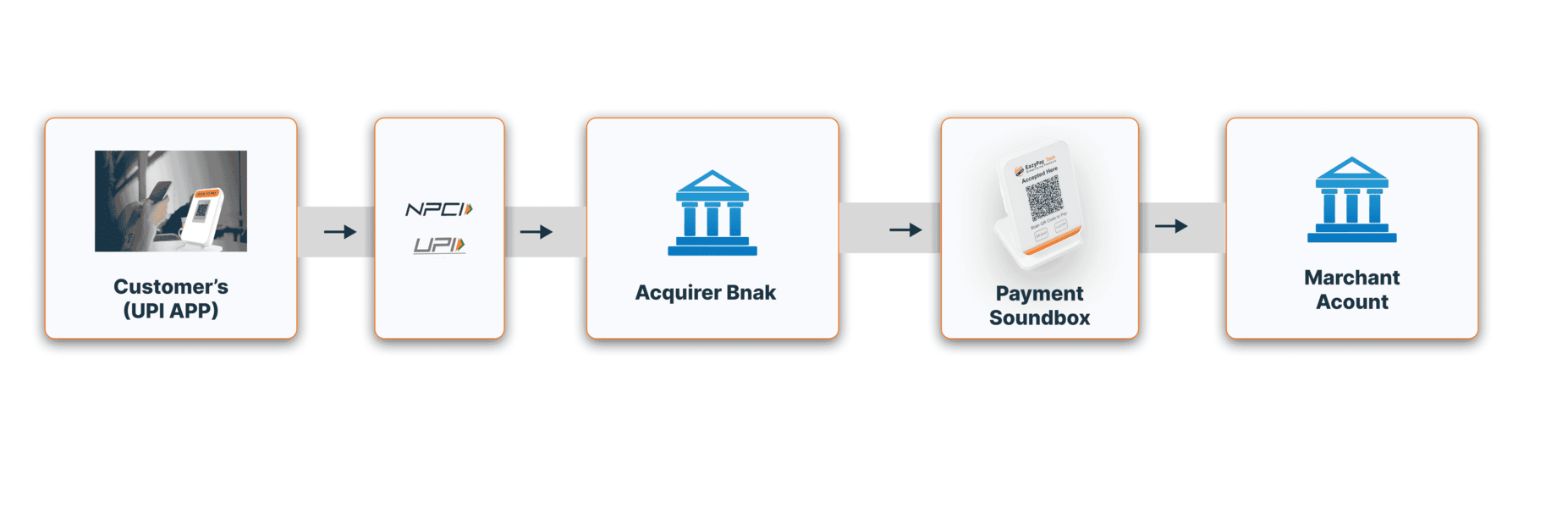
This flow shows how both the Issuer and the Acquirer collaborate to make the Payment Soundbox a reliable and instant payment acceptance device.
Why Understanding Acquirer and Issuer Matters for Payment Soundbox Users
For merchants, fintech providers, and payment solution companies, it is crucial to understand the roles of the Acquirer and Issuer in the Payment Soundbox ecosystem:
- Merchants gain clarity on how their settlements are processed and which party ensures funds are deposited into their accounts.
- Customers benefit from transparency and trust, knowing that their Issuer bank securely processes every transaction before the Payment Soundbox confirms it.
- Payment Service Providers and Banks can troubleshoot issues better by identifying whether a delay or failure originates at the Issuer’s side or the Acquirer’s side.
The Payment Soundbox has redefined merchant payments by offering instant confirmation, enhanced trust, and greater convenience. While the device announces payments in real time, the true enablers of this smooth experience are the Issuer bank, which ensures secure debit of customer funds, and the Acquirer bank, which facilitates merchant onboarding, payment acceptance, and settlement. Together with NPCI’s UPI switch, they form the backbone of the Payment Soundbox ecosystem, making it one of the most successful digital payment solutions in India and beyond.