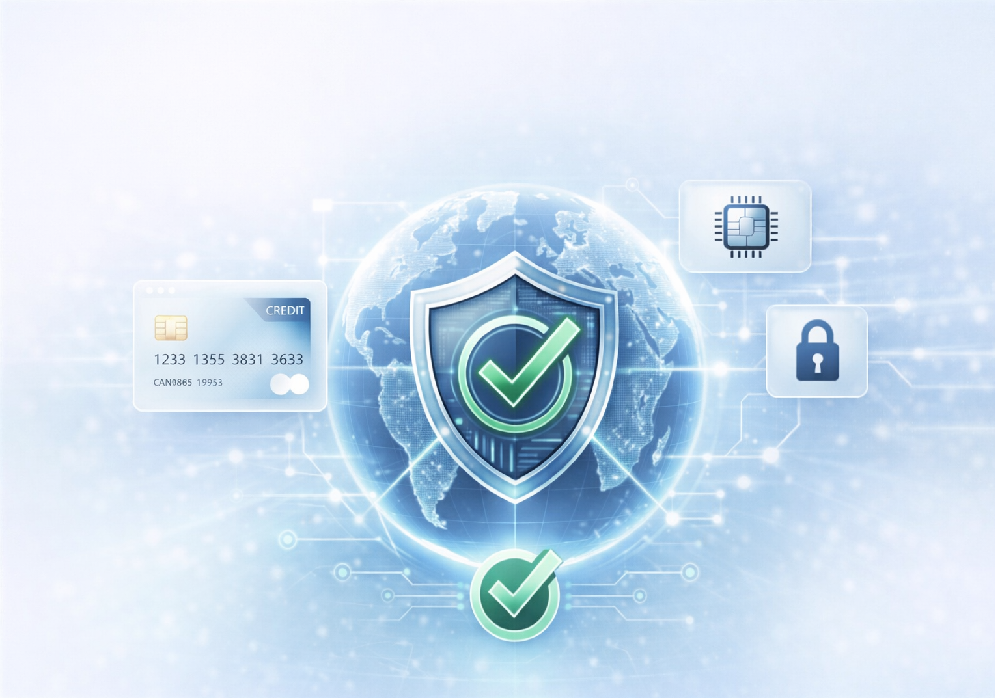
In the modern digital economy, where billions of payment card transactions are processed every day across retail stores, e-commerce platforms, mobile payment applications, and automated payment systems, protecting sensitive payment data has become one of the most critical responsibilities for organizations operating in the financial and payment ecosystem. Businesses today must not only deliver seamless payment experiences but must also ensure that every transaction is protected against increasingly sophisticated cyber threats, data breaches, and payment fraud attempts that target cardholder data during processing and transmission.
For banks, fintech companies, payment service providers, payment gateway operators, and merchants, maintaining a secure payment infrastructure is no longer simply a regulatory requirement—it has become a strategic necessity that directly affects customer trust, brand reputation, and operational continuity. As attackers continue to exploit vulnerabilities in payment systems, organizations must implement robust security technologies that ensure cardholder data remains protected at every stage of the transaction lifecycle.
One of the most effective and globally recognized technologies for protecting payment data is Point-to-Point Encryption (P2PE), a security architecture designed specifically to encrypt sensitive payment card information immediately when it is captured and maintain that protection throughout the entire transaction journey until it reaches a secure decryption environment.
At EazyPay Tech, we help banks, fintech organizations, payment device manufacturers, and merchants implement secure and compliant payment infrastructures by supporting PCI P2PE solutions, payment terminal security architecture, and PCI compliance consulting services that ensure payment systems meet global security standards while maintaining operational efficiency.
This comprehensive guide explores what PCI P2PE is, how it works, why it is critical for modern payment security, and how organizations can implement it effectively to strengthen their payment infrastructure.
What is Point-to-Point Encryption (P2PE)?
Point-to-Point Encryption, commonly referred to as P2PE, is a specialized payment security technology designed to protect cardholder data by encrypting sensitive payment information immediately at the point where it is captured, such as within a secure payment terminal or card reader device. Unlike traditional encryption models where sensitive data may travel through several systems before encryption occurs, P2PE ensures that the cardholder data becomes encrypted the moment it is entered into a secure device, preventing it from being exposed to potentially vulnerable systems within the merchant environment.
This immediate encryption process ensures that sensitive information such as the Primary Account Number (PAN), card expiration details, and other cardholder data elements is transformed into unreadable encrypted data before they pass through the merchant’s internal systems, point-of-sale software, or network infrastructure. As a result, even if attackers manage to gain unauthorized access to the merchant network or attempt to intercept transaction data during transmission, the encrypted information remains unusable and cannot be interpreted without the proper decryption keys.
By creating a secure encrypted tunnel between the payment device and the payment processor’s secure environment, P2PE dramatically reduces the exposure of sensitive payment data to cyber threats, internal misuse, and malicious software attacks that target payment systems.
What is a PCI-Validated P2PE Solution?
A PCI-validated P2PE solution refers to a point-to-point encryption implementation that has undergone extensive security assessment and validation by the PCI Security Standards Council, the global standards body responsible for maintaining and governing payment card security standards.
The validation process ensures that the entire P2PE solution—from payment devices and encryption mechanisms to key management procedures and secure decryption environments—meets strict industry requirements designed to protect payment card data throughout its lifecycle.
To achieve PCI validation, a P2PE solution must demonstrate compliance across several critical security domains, including:
- Secure payment device architecture capable of protecting cardholder data at the point of interaction
- Strong encryption methodologies that prevent unauthorized access to sensitive information
- Secure key generation, storage, and management processes that ensure encryption keys cannot be compromised
- Strict device lifecycle management procedures covering manufacturing, shipping, deployment, and maintenance
- Controlled decryption environments where encrypted cardholder data can be safely decrypted and processed
Once a solution successfully passes the rigorous validation process, it is listed in the official PCI P2PE solutions directory maintained by the PCI Security Standards Council, providing organizations with assurance that the solution meets globally recognized security standards.
For businesses that process payment card transactions, selecting a PCI-validated P2PE solution significantly enhances payment security while also simplifying the process of maintaining PCI DSS compliance.
How Point-to-Point Encryption Protects Payment Transactions
To understand the importance of P2PE within a payment environment, it is helpful to examine how encrypted transactions are processed during a typical card payment.
Encryption at the Point of Interaction
The first stage of a P2PE transaction occurs when a customer initiates a payment by inserting, swiping, or tapping their card on a secure payment device such as a POS terminal or contactless payment reader. At this moment, the payment device captures the cardholder data and immediately encrypts it using secure cryptographic algorithms embedded within the device’s hardware security module.
This process ensures that the cardholder data is encrypted before it leaves the payment device, preventing the merchant’s point-of-sale software, internal networks, or other systems from ever accessing the sensitive information in its original form.
Secure Transmission Through Merchant Systems
Once the cardholder data has been encrypted, the encrypted transaction payload travels through the merchant’s systems, including the POS application, payment gateway, and transaction routing infrastructure. Since the information remains encrypted throughout this stage, even if attackers attempt to intercept the data or compromise systems within the merchant network, they will only encounter encrypted data that cannot be interpreted or misused.
This layer of protection significantly reduces the risk of payment data breaches caused by malware, network interception attacks, or insider threats targeting merchant systems.
Encryption in a Secure Payment Processing Environment
The final stage of the P2PE process occurs when the encrypted transaction reaches the payment processor’s secure decryption environment. Within this highly controlled infrastructure, which operates under strict PCI DSS security requirements, the encrypted cardholder data is decrypted using protected encryption keys so that the transaction can be authorized and processed by the card network.
Because the decryption environment is tightly controlled and monitored, the exposure of sensitive cardholder data is minimized to only those systems that are designed and certified to handle it securely.
P2PE as Part of a Multi-Layer Payment Security Architecture
In modern payment systems, P2PE is rarely used as a standalone security measure. Instead, it is integrated with several other technologies that together create a layered security model designed to protect payment transactions against multiple types of threats.
EMV Chip Technology
Chip-based card authentication systems based on EMV technology protect against counterfeit card fraud by generating unique cryptographic transaction codes for each payment.
While EMV ensures that the card being used is authentic, P2PE ensures that the data transmitted during the transaction remains secure.
Tokenization
Tokenization replaces sensitive cardholder data with unique digital tokens that can be stored and reused for future transactions without exposing the actual card details.
Even if a token is compromised, it cannot be reverse-engineered to reveal the original card information.
Combining Security Technologies
When P2PE, EMV authentication, and tokenization are combined, organizations create a powerful payment security architecture capable of protecting transactions at every stage—from card authentication to data transmission and long-term storage.
Key PCI P2PE Requirements
The PCI Security Standards Council defines strict requirements that all validated P2PE solutions must meet to ensure that cardholder data remains protected across the entire payment ecosystem.
These requirements cover several critical areas of payment security.
Encryption Standards
P2PE solutions must implement strong, industry-approved cryptographic algorithms to ensure that encrypted cardholder data cannot be decrypted without the proper cryptographic keys.
Secure Payment Devices
Payment terminals used in P2PE environments must be tamper-resistant and designed to detect any unauthorized attempts to access the device’s internal components.
If tampering is detected, the device must automatically disable its cryptographic capabilities to prevent data exposure.
Key Management Processes
Encryption keys must be generated, distributed, stored, and rotated using strict key management procedures that prevent unauthorized access or duplication.
Device Lifecycle Security
The security of payment devices must be maintained throughout their lifecycle, including manufacturing, transportation, installation, operation, and retirement.
Each stage must be documented through secure chain-of-custody procedures.
Secure Decryption Environment
Decryption of cardholder data must occur only within highly secure processing environments that comply with strict PCI DSS security requirements.
Benefits of Implementing PCI P2PE
Organizations that implement PCI-validated P2PE solutions gain several strategic advantages related to payment security, compliance management, and operational efficiency.
One of the most significant benefits is the reduction in PCI DSS compliance scope, since encrypted cardholder data never enters the merchant’s internal systems in an unencrypted form. This dramatically reduces the number of systems that fall under PCI DSS audit requirements, simplifying the compliance validation process and reducing administrative overhead.
P2PE also provides a powerful defense against common cyber threats targeting payment environments, including point-of-sale malware attacks, network-based interception attempts, and insider threats seeking access to sensitive financial information.
In addition to strengthening security, implementing P2PE can reduce the financial impact of potential data breaches. Even if attackers gain access to encrypted transaction data, the absence of decryption keys ensures that the information remains unusable.
From a business perspective, demonstrating the use of advanced payment security technologies helps organizations build stronger trust with customers, partners, and regulatory bodies.
Merchant Responsibilities in a P2PE Environment
Although implementing a PCI-validated P2PE solution significantly reduces the merchant’s exposure to cardholder data, merchants still maintain certain responsibilities to ensure the security of their payment environment.
Organizations must maintain accurate records of all deployed P2PE payment devices, perform regular inspections to detect signs of tampering, and ensure that employees handling payment devices are properly trained to identify suspicious activities.
Additionally, merchants must implement clear incident reporting procedures that enable rapid response in the event of suspected device compromise or security incidents.
Implementing PCI P2PE with EazyPay Tech
At EazyPay Tech, we help organizations design and implement secure payment infrastructures that meet the highest global security standards.
Our PCI P2PE consulting and implementation services support banks, payment service providers, fintech companies, and device manufacturers throughout the entire deployment process.
Our services include:
- PCI P2PE architecture consulting and implementation planning
- Secure payment terminal integration for POS and SoftPOS systems
- Payment device lifecycle security management
- Encryption key management architecture design
- PCI DSS compliance consulting and audit preparation
- Payment security infrastructure design for fintech platforms
With extensive expertise in EMV kernel development, payment terminal software, and global payment certification standards, our team enables organizations to deploy secure payment solutions that protect customer data while ensuring regulatory compliance.
Strengthening Payment Security for the Future
As digital payments continue to grow across global markets, protecting cardholder data has become a critical requirement for any organization involved in payment processing.
Point-to-Point Encryption provides one of the most effective methods for protecting sensitive payment information from the moment it is captured until it is securely processed. By preventing cardholder data from ever entering merchant systems in an unencrypted form, P2PE significantly reduces the risk of data breaches while simplifying compliance with global payment security standards.
Organizations that invest in PCI-validated P2PE solutions are not only strengthening their payment infrastructure but also demonstrating a long-term commitment to protecting customer trust and maintaining secure digital commerce environments.
Ready to Implement PCI P2PE for Your Payment Infrastructure?
If your organization is planning to deploy secure POS terminals, SoftPOS solutions, payment gateways, or fintech payment platforms, implementing PCI P2PE should be a fundamental part of your payment security strategy.
EazyPay Tech provides expert guidance and technical support for organizations looking to implement secure, PCI-compliant payment infrastructures.
Contact EazyPay Tech today to:
- Deploy PCI-validated P2PE solutions
2. Reduce PCI DSS compliance complexity
3. Strengthen payment infrastructure security
4. Protect cardholder data across your payment ecosystem
Get in touch with EazyPay Tech today and build a future-ready secure payment infrastructure.