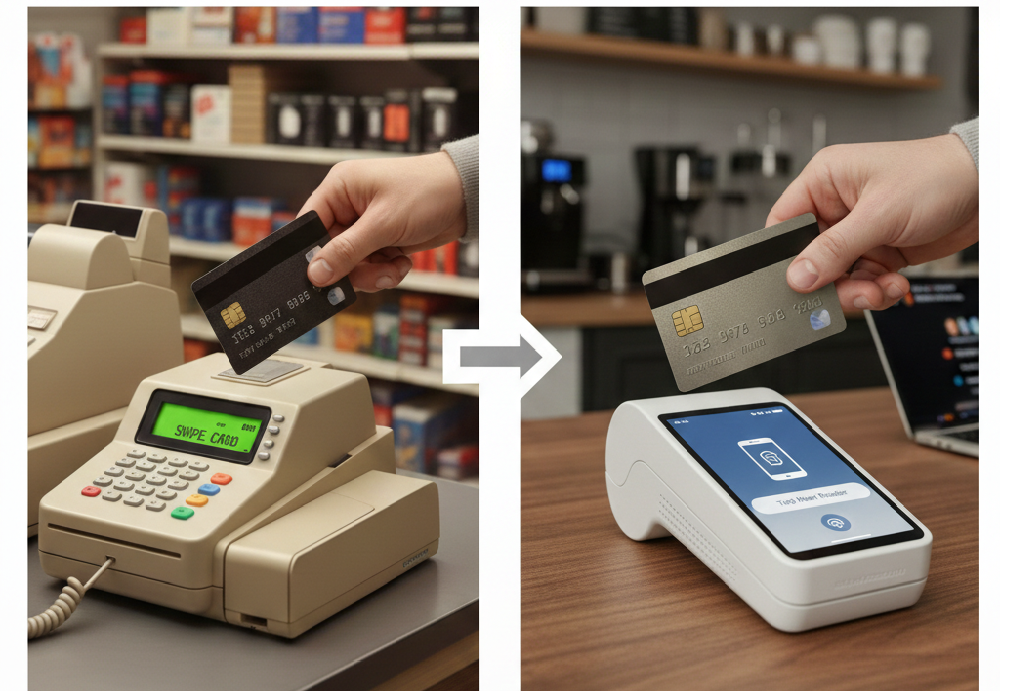
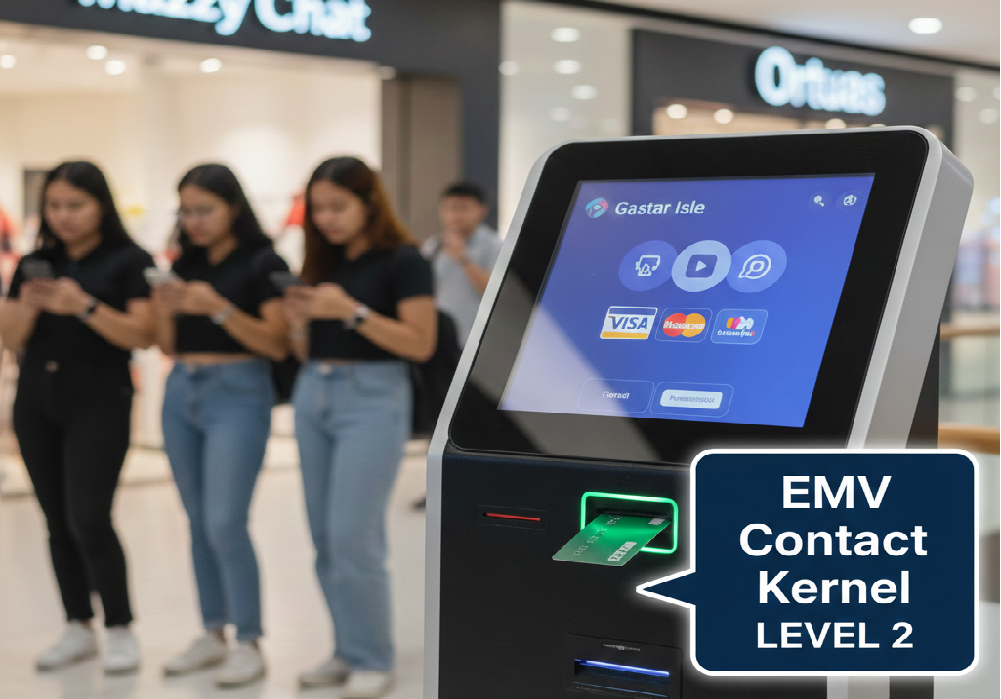
In the complex and tightly regulated world of EMV payments, ensuring that every EMV transaction occurs within the strict timing, sequence, and performance limits defined by card schemes is essential not only for the terminal’s certification but also for its usability in real-world merchant environments, where delays of even a few milliseconds can degrade the user experience, increase transaction abandonment rates, and trigger interoperability failures. Within EMV L3 Certification, Transaction Timing and Latency Testing plays a critical role in validating that a terminal, POS device, SoftPOS solution, kiosk, ATM, or QR-soundbox-based EMV acceptance module processes all EMV commands, APDUs, kernel logic steps, online authorization messages, and issuer responses within mandated time windows.
Why Timing and Latency Matter in EMV L3 Certification
Lengthy, Descriptive Explanation
Because an EMV transaction is essentially a synchronized and state driven communication exchange between the terminal and the chip card where each APDU command must be correctly structured, transmitted, interpreted, responded to, and logged in a strictly defined sequence any deviation in timing (too fast or too slow) can create fatal interoperability issues. Timing failures can cause a card to assume that the terminal is non-compliant, forcing fallback to magstripe, cancellation, or unpredictable error states.
Core Timing Requirements Verified in EMV L3
The following sections describe key timing dimensions with long descriptive sentences and technical clarity.
APDU Command/Response Timing
- A compliant terminal must issue every APDU to the ICC (Integrated Circuit Card) within the maximum allowed command-processing intervals, ensuring that the chip is not subjected to excessive waiting time that can cause timeout conditions or inadvertently force it to reset its internal state machine.
- EMV L3 test tools measure how long the terminal waits between sending commands such as SELECT PPSE, SELECT AID, GET PROCESSING OPTIONS (GPO), READ RECORD, GENERATE AC, and EXTERNAL AUTHENTICATE, ensuring that the terminal neither rushes nor delays execution beyond acceptable thresholds.
Transaction-Level Maximum Completion Time
- Most schemes define strict global transaction time limits—commonly 500ms, 700ms, 1500ms, or up to 2000ms depending on the card program—for the complete EMV contact or contactless transaction to occur between card insertion/tap and final terminal decision, and L3 testing ensures that the terminal meets these targets even under maximum load or worst-case firmware execution scenarios.
Online Authorization Latency Constraints
- Because EMV contact and contactless flows heavily depend on the speed of online host authorization, the terminal must ensure that network latency, encryption overhead, packet retransmission, and message parsing do not exceed allowed host turnaround times, typically within 2–3 seconds for most card schemes.
- EMV L3 testing simulates slow networks, retry conditions, and host timeouts to validate whether the terminal gracefully handles delays without violating scheme rules.
Kernel Execution Timing (Critical for L2 + L3)
- A terminal’s EMV L2 kernel, although already L2-certified, must still demonstrate during L3 that its internal decision-making steps such as AFL parsing, AIP/ODA-based capabilities, CVM decisioning, risk management execution, and cryptogram generation cycles remain stable and efficient under various card profiles.
Timing and Latency Tests Performed in EMV L3 Certification
End-to-End Transaction Timing Tests
These tests measure the entire lifecycle:
- Card powered on → Application selection → Online/offline decision → ARQC generation → Online message → Issuer response → TC or AAC generation → Completion.
- The L3 tool records timestamps for each stage and verifies it never exceeds defined thresholds.
Inter-APDU Timing Measurement
- For every APDU exchange, the inter-command delay must be within defined limits.
- For example:
- Max 100–200 ms between GPO and first READ RECORD
- Max 200–300 ms between second GENERATE AC and terminal action analysis.
The exact values vary by card scheme, but L3 ensures compliance across all test cases.
Contactless Latency & RF Field Stability Tests
- Because EMV contactless (qVSDC, PayPass, payWave, RuPay qSparc) require extremely fast tap-and-go experiences, the terminal must demonstrate sub-500 ms responsiveness in:
- Kernel activation
- Contactless selection
- PPSE/AID processing
- AC generation
- Terminal decision
- RF stability tests check that the terminal does not produce gaps in field power that distort timing.
Online Host Simulation Timing Tests
- L3 tools introduce artificial network delays and measure whether the terminal still complies with maximum ping, DNS resolution, socket establishment, message send/receive cycles, and re-attempt intervals.
UI Response Timing Tests
- Although not directly related to EMV data flows, card schemes require terminals to display key messages (PIN entry prompt, remove card, online processing message, decision result) within certain latency windows to prevent user confusion.
Typical Timing Failures Observed During EMV L3 Certification
Below are the most common failures that lead to rejection or require retesting:
- Terminal sending APDUs too quickly, causing card buffer overflow.
- Terminal sending APDUs too slowly, causing card timeout and reset.
- Online authorization takes too long due to inefficient network stack.
- Terminal failing to respond to an issuer script within required time.
- Contactless kernel take too long to produce a decision, especially with multi-AID cards.
- UI response lag causing “Card Removed” or “Insert Card Again” confusion.
How Terminal Manufacturers Can Optimize Timing and Latency
Detailed Technical Recommendations
- Optimize kernel implementation by reducing unnecessary memory copies, redundant checks, and deep nested loops.
- Use hardware acceleration for crypto operations (AES, RSA, SHA) to reduce AC generation time.
- Use real-time operating systems (RTOS) or optimized threading models to prevent task blocking.
- Tune APDU state machines to avoid gaps between commands.
- Improve TCP/IP networking stack to reduce handshake and retransmission delays.
- Reduce UI rendering overhead using lightweight fonts, cached UI elements, or GPU-accelerated drawing.
- Use non-blocking I/O for network and card communication.
Role of EazyPay Tech in EMV L3 Timing & Latency Readiness
EazyPay Tech provides comprehensive support for timing-related certification challenges:
- EMV L3 Pre-Certification (Contact + Contactless)
- Timing Diagnostics and Latency Optimization
- Protocol Analyzer Logging
- TMS-based Remote Profiling
- Kernel Integration Debugging
- Full L1/L2/L3 Advisory
- Issuer and Host Simulation Testing
- Custom APDU Timing Profiling Tools
Our engineering team helps OEMs, fintechs, terminal manufacturers, SoftPOS developers, and banking partners reduce timing delays, achieve faster approvals, and fully align with major schemes: Visa, Mastercard, RuPay, Amex, Discover, JCB, UnionPay.
If you want EazyPay Tech to assist your company with EMV L3 timing compliance, kernel integration, payment terminal development, or pre-certification debugging, reach out to us for expert guidance.
➡️ Contact EazyPay Tech for EMV L3 Certification Support, Timing Optimization, and Pre-Compliance Testing.