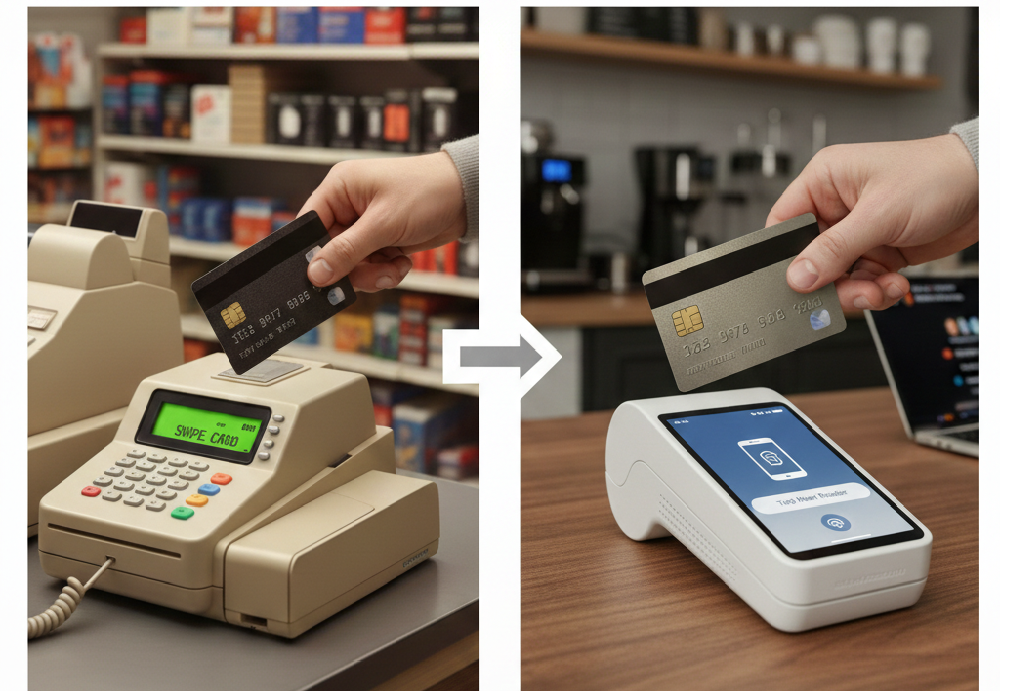
Modern payment ecosystems operate at the intersection of speed, convenience, and security. Every card transaction, whether executed through a physical POS terminal, a mobile application, an e-commerce checkout page or a SoftPOS solution triggers a complex chain of interactions involving multiple systems, networks, and third parties. While this complexity enables seamless customer experiences, it also introduces significant risk. Cardholder data has become one of the most targeted digital assets, making payment environments prime targets for cybercriminals, fraud rings, and advanced persistent threats.
This persistent threat landscape is the reason PCI compliance exists as a mandatory global security framework rather than a best-practice guideline. The Payment Card Industry (PCI) standards were established to create a uniform, enforceable and technically rigorous approach to securing card data across the entire payment lifecycle. PCI compliance is not simply about passing audits; it is about embedding security into payment design, implementation and operations.
Understanding the PCI Framework and Its Purpose
The PCI Security Standards Council (PCI SSC) governs and maintains PCI standards. Established by major global card networks, the council develops technical specifications that address real-world payment security risks observed across regions, industries, and technologies. PCI standards are continuously updated to reflect changes in attack patterns, infrastructure models, and software development practices.
Importantly, PCI is not a single monolithic standard. It is a layered framework, with each standard focusing on a specific segment of the payment ecosystem. This modular approach ensures that security controls are proportionate, targeted, and enforceable without unnecessarily burdening unrelated systems.
At a strategic level, PCI standards aim to:
- Prevent unauthorized access to cardholder data
- Reduce the probability and impact of data breaches
- Standardize security expectations across global payment participants
- Provide regulators, banks, and card schemes with measurable assurance
PCI DSS: The Core Standard for Protecting Cardholder Data
What PCI DSS Really Protects
PCI DSS (Payment Card Industry Data Security Standard) is the foundational security standard that governs how cardholder data is handled. Its primary objective is to protect sensitive payment information, specifically Primary Account Numbers (PAN), cardholder name, expiry date, and sensitive authentication data from exposure, misuse, or compromise.
Unlike many regulatory frameworks, PCI DSS is technology-agnostic but control-specific. It does not dictate which firewall vendor or encryption library to use; instead, it defines what security outcomes must be achieved and validated through evidence.
Applicability and the Critical Importance of CDE Definition
One of the most misunderstood aspects of PCI DSS is scope determination. PCI DSS does not automatically apply to every system within an organization. It applies specifically to the Cardholder Data Environment (CDE) and any systems that can impact its security.
The CDE includes:
- Systems that store cardholder data
- Systems that process or transmit cardholder data
- Systems connected to or capable of influencing those systems
Improperly defined CDE scope often results in:
- Inflated audit scope and cost
- Missed compliance gaps
- Audit failures due to overlooked dependencies
A thorough PCI DSS applicability review requires detailed payment flow mapping, network topology analysis, segmentation validation, and system dependency identification. This foundational step determines the success or failure of the entire compliance journey.
Deep Dive into PCI DSS Requirements
PCI DSS consists of 12 core requirements, organized into six security objectives that collectively address infrastructure security, data protection, access control, monitoring, and governance.
Rather than being checklist items, these requirements are interdependent controls. For example, encryption alone is ineffective without proper key management, access control, and monitoring. PCI DSS enforces security as a system, not as isolated technologies.
Effective compliance requires translating requirements into:
- Technical controls (firewalls, encryption, logging, MFA)
- Operational processes (incident response, change management)
- Governance artifacts (policies, procedures, training records)
Gap Analysis and Risk-Based Remediation
A PCI DSS gap analysis is the bridge between current state security and certification readiness. This assessment identifies where existing controls fall short, evaluates the likelihood and impact of exploitation, and prioritizes remediation based on risk rather than convenience.
Organizations that skip or rush in this step often encounter delays during audits, increased remediation costs, and repeated evidence requests. A structured gap analysis enables predictable timelines, controlled budgets, and smoother audits.
PCI DSS Audits, ROC, and AOC Explained
Depending on business classification, PCI DSS validation may involve a self-assessment or a formal audit conducted by a Qualified Security Assessor (QSA). Large merchants and service providers are required to undergo full assessments resulting in a Report on Compliance (ROC).
The ROC is a comprehensive technical document detailing how each applicable PCI requirement is met, supported by evidence, testing results, and assessor validation. The Attestation of Compliance (AOC) is the formal declaration of compliance status shared with banks, card networks, and partners.
PCI 3DS: Securing Authentication in Card-Not-Present Transactions
Why PCI 3DS Is Essential in Digital Payments
As payment channels shift toward e-commerce, in-app purchases, and remote transactions, fraud patterns have followed. Card-not-present transactions inherently lack physical verification, making authentication controls critical.
PCI 3DS (Three Domain Secure) addresses this gap by defining security and operational requirements for authentication infrastructure used in online card payments.
Scope of PCI 3DS Certification
PCI 3DS applies to three core components:
- Access Control Server (ACS), which performs cardholder authentication
- Directory Server (DS), which routes authentication messages
3DS Server (3DSS), which integrates merchants into the 3DS ecosystem
Certification ensures that authentication of data, cryptographic processes, access controls, and monitoring mechanisms meet strict security expectations.
Business Impact of PCI 3DS Compliance
Beyond compliance, PCI 3DS certification delivers tangible business benefits. It reduces fraud exposure, improves authorization rates, supports regulatory authentication mandates, and strengthens trust between issuers, acquirers, and merchants.
PCI P2PE: Minimizing Exposure Through End-to-End Encryption
Understanding PCI P2PE Beyond Encryption
PCI Point-to-Point Encryption (P2PE) is not simply about encrypting card data. It is about ensuring that sensitive data is never exposed in plaintext within merchant environments.
P2PE solutions encrypt card data at the point of interaction—typically within secure, validated devices—and ensure it remains encrypted until it reaches a controlled decryption environment.
Scope Reduction and Compliance Efficiency
One of the most significant advantages of PCI P2PE is PCI DSS scope reduction. By removing card data exposure from merchant systems, organizations can significantly simplify compliance requirements, audits, and ongoing security operations.
However, achieving P2PE validation requires strict control over device handling, key management, logistics, and monitoring.
PCI P2PE Audit Complexity
PCI P2PE assessments are rigorous and include validation of:
- POI device security and tamper resistance
- Encryption boundaries
- Cryptographic key lifecycle management
- Chain-of-custody procedures
- Incident response and monitoring
Successfully validated P2PE solutions gain strong market credibility.
PCI Secure Software Framework (SSF): Securing Payment Software at Scale
Why PCI SSF Was Introduced
Traditional application security models struggled to keep pace with agile development, cloud deployments, and modular payment architectures. PCI Secure Software Framework (SSF) was introduced to modernize payment application security validation.
PCI SSF Components Explained
PCI SSF consists of:
- Secure Software Standard (S3), which defines technical security controls within applications
- Secure Software Lifecycle (Secure SLC), which governs how software is built, tested, deployed, and maintained
Together, they ensure security is embedded throughout the software lifecycle, not bolted on at the end.
Strategic Value of PCI SSF Alignment
Organizations aligned with PCI SSF benefit from reduced remediation cycles, predictable certification outcomes, and stronger security maturity. PCI SSF is particularly critical for SoftPOS providers, mobile payment apps, SDK developers, and cloud-native payment platforms.
How PCI Standards Work Together as a Unified Security Model
PCI standards are designed to complement one another:
- PCI DSS secures environments
- PCI P2PE minimizes exposure
- PCI 3DS strengthens authentication
- PCI SSF secures software foundations
Organizations that adopt a multi-standard strategy achieve stronger security with lower long-term operational effort.
PCI compliance is not a one-time certification milestone; it is an ongoing security commitment. Organizations that treat PCI as a strategic program rather than an audit exercise gain lasting benefits: reduced breach of risk, improved regulatory confidence, stronger customer trust, and scalable payment growth.
In an environment where payment security failures directly translate into financial loss and reputational damage, PCI compliance stands as a non-negotiable foundation for sustainable digital payments.