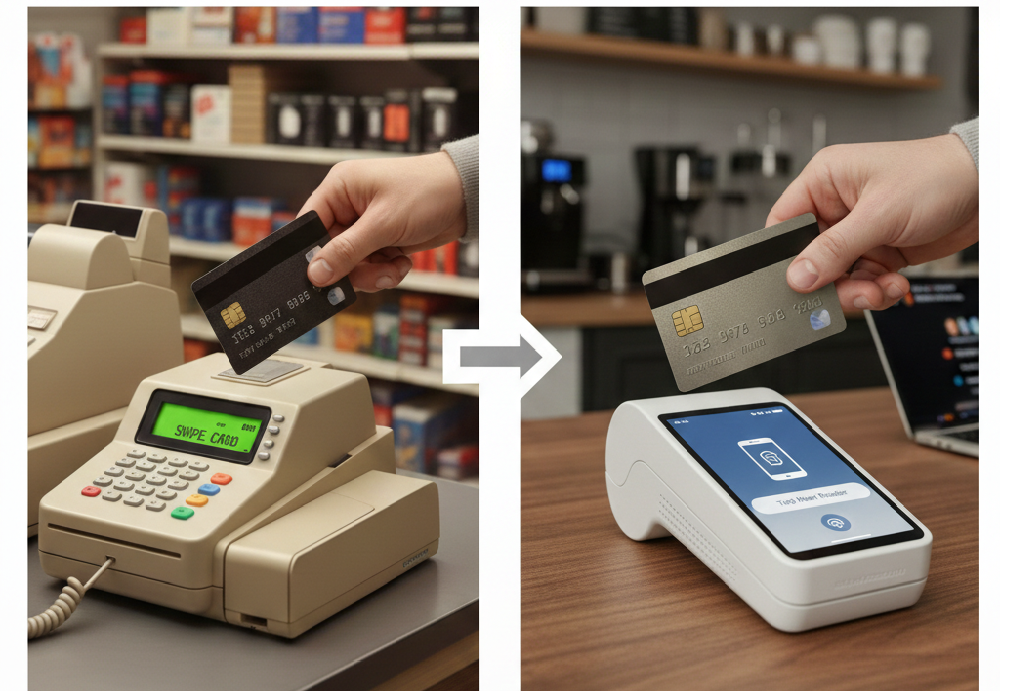
In an era where digital payments underpin global commerce, securing every card transaction has become mission-critical for banks, merchants, OEMs, and fintech providers. As fraud techniques grow more sophisticated, legacy payment technologies can no longer meet modern security expectations. This has positioned EMV technology and specifically the EMV Contact Kernel as the global benchmark for secure card-present transactions.
At EazyPay Tech, we specialize in EMV Contact Kernel development, integration, testing and certification, enabling payment device manufacturers and financial institutions to deploy globally compliant, fraud-resistant payment solutions.
What Is an EMV Contact Kernel?
EMV (Europay, Mastercard, and Visa) is the internationally mandated standard governing secure chip-based card payments. While the EMV chip card often gets the spotlight, the true intelligence of an EMV transaction resides in the EMV Contact Kernel.
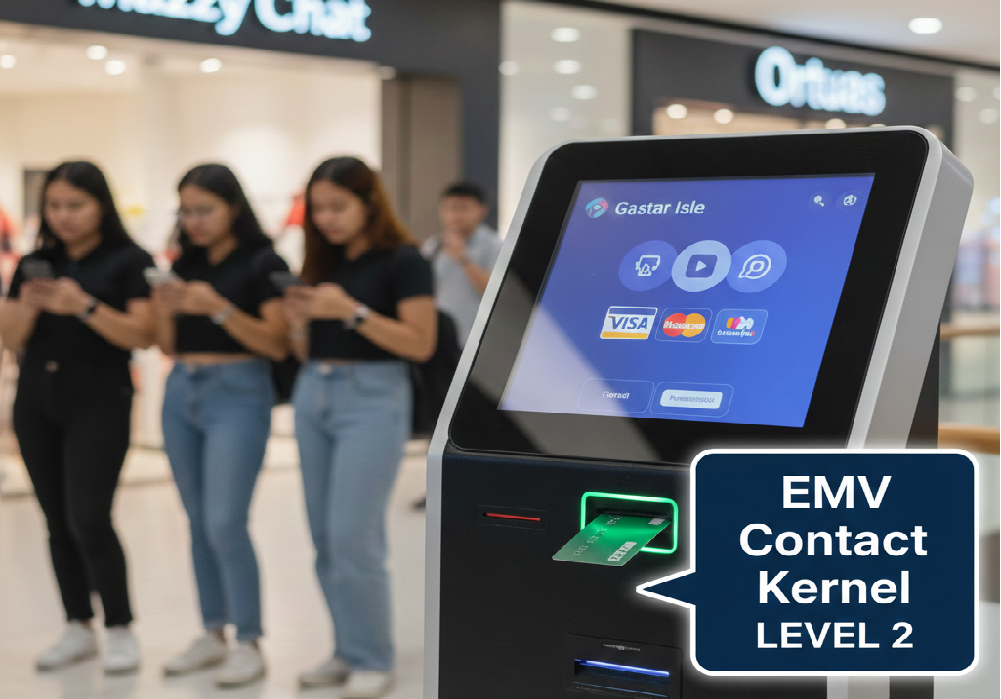
The EMV Contact Kernel is a EMV Level 2 certified software component embedded inside POS terminals, ATMs, kiosks, and payment devices. It governs how a payment terminal communicates with an EMV chip card, enforcing protocol rules defined by global payment schemes such as Visa, Mastercard, RuPay, American Express, and Discover.
Unlike magnetic stripe transactions that rely on static, easily compromised data, EMV Contact Kernels enable dynamic cryptographic processing, ensuring that every transaction is unique, authenticated, and resistant to fraud.
How the EMV Contact Kernel Works
EMV Contact Kernels follow a rigorously defined transaction flow designed to secure each phase of a card-present payment.
1. Secure Card and Terminal Interaction
When a cardholder inserts an EMV chip card into a terminal:
The terminal activates the embedded microprocessor chip, which operates as a secure computing environment.
The EMV Contact Kernel initiates mutual authentication, verifying both the card and the terminal are genuine and uncompromised.
A trusted communication session is established, preventing man-in-the-middle or replay attacks.
This step ensures that only certified terminals and authentic cards participate in the transaction.
2. Dynamic Cryptographic Data Exchange
One of EMV’s most powerful security innovations is its use of dynamic transaction data:
The EMV chip generates a unique transaction cryptogram for every payment.
This cryptogram is derived from transaction counters, unpredictable numbers, terminal data, and issuer-defined keys.
All data exchanged between the card and terminal is encrypted and integrity-protected.
Because the cryptogram is valid for only one transaction, intercepted data cannot be reused—effectively eliminating card cloning and counterfeit fraud.
3. Issuer Authorization and Risk Validation
Once cryptographic processing is complete:
The terminal sends an authorization request to the acquiring bank, which routes it to the card issuer.
The issuer validates the cryptogram, card authenticity, account status, spending limits, and risk parameters.
A decision—approval or decline—is returned with a secure authorization response code.
This issuer-driven validation ensures real-time fraud control without exposing sensitive cardholder data.
4. Cardholder Verification and Transaction Completion
To finalize the transaction:
The EMV Contact Kernel enforces the configured Cardholder Verification Method (CVM), such as PIN or signature.
For chip-and-PIN transactions, PIN verification occurs securely within the EMV environment.
Upon successful verification and approval, the transaction is completed and securely logged for audit and reconciliation.
Why EMV Contact Kernels Are Critical to Payment Security
1. Industry-Leading Fraud Protection
EMV Contact Kernels use advanced encryption, secure key management, and dynamic authentication to reduce counterfeit card fraud by over 80% in EMV-migrated markets. This makes EMV the most trusted standard for card-present transactions globally.
2. Global Interoperability and Scheme Compliance
EMV ensures seamless interoperability across:
Banks and issuers
Acquirers and processors
POS, ATM, and kiosk manufacturers
Regional and international payment networks
This guarantees consistent transaction behavior across countries and payment ecosystems.
3. Fraud Liability Shift
In EMV-enabled regions, liability for counterfeit card fraud shifts to the non-EMV-compliant party. This has made EMV adoption mandatory for merchants and financial institutions seeking to reduce financial risk and regulatory exposure.
4. Enhanced Consumer Trust
Consumers associate EMV transactions with safety, reliability, and global acceptance. Secure PIN-based authentication and chip technology significantly improve customer confidence in physical and hybrid payment environments.
EazyPay Tech’s EMV Contact Kernel Expertise
EazyPay Tech delivers end-to-end EMV Contact Kernel solutions, including:
EMV Level 2 Contact Kernel development
Scheme-specific customization (Visa, Mastercard, RuPay, AmEx, Discover)
Kernel integration with POS, ATM, and Smart POS platforms
EMV Level 2 testing and certification support
Pre-compliance analysis and certification readiness
Long-term maintenance and scheme updates
Our expertise helps OEMs, banks, and fintechs accelerate time-to-market while ensuring full compliance with global EMV and payment network mandates.
The Future of EMV Contact Kernels
As payment ecosystems expand toward contactless, SoftPOS, unattended terminals, and transit systems, EMV Contact Kernels remain the backbone of secure in-person payments. Their role continues to evolve, supporting hybrid acceptance models while maintaining the highest security standards.
Organizations that invest in certified EMV kernel implementations today are better positioned to scale globally, meet regulatory demands, and deliver trusted payment experiences.
FAQ
EMV Contact Kernel is the software embedded within EMV cards and payment terminals that facilitates secure communication during transactions. It ensures enhanced security and reliability by using embedded microchips to store and process data securely.
EMV Contact Kernel enhances security through dynamic data exchange and encrypted communication. Each transaction generates a unique cryptogram, reducing the risk of counterfeit fraud by making intercepted data useless for future transactions.
Key benefits include enhanced security against fraud, global acceptance and interoperability, a shift in fraud liability to non-compliant parties, and increased consumer confidence due to robust security measures.
The process involves card and terminal interaction, dynamic data generation, authorization requests sent to the card issuer, issuer verification, and completion of the transaction with cardholder verification (PIN or signature).
EMV technology is important for merchants because it significantly reduces the risk of fraud, ensures compliance with global payment standards, and shifts liability for fraudulent transactions to non-EMV compliant parties, encouraging the adoption of secure payment systems.